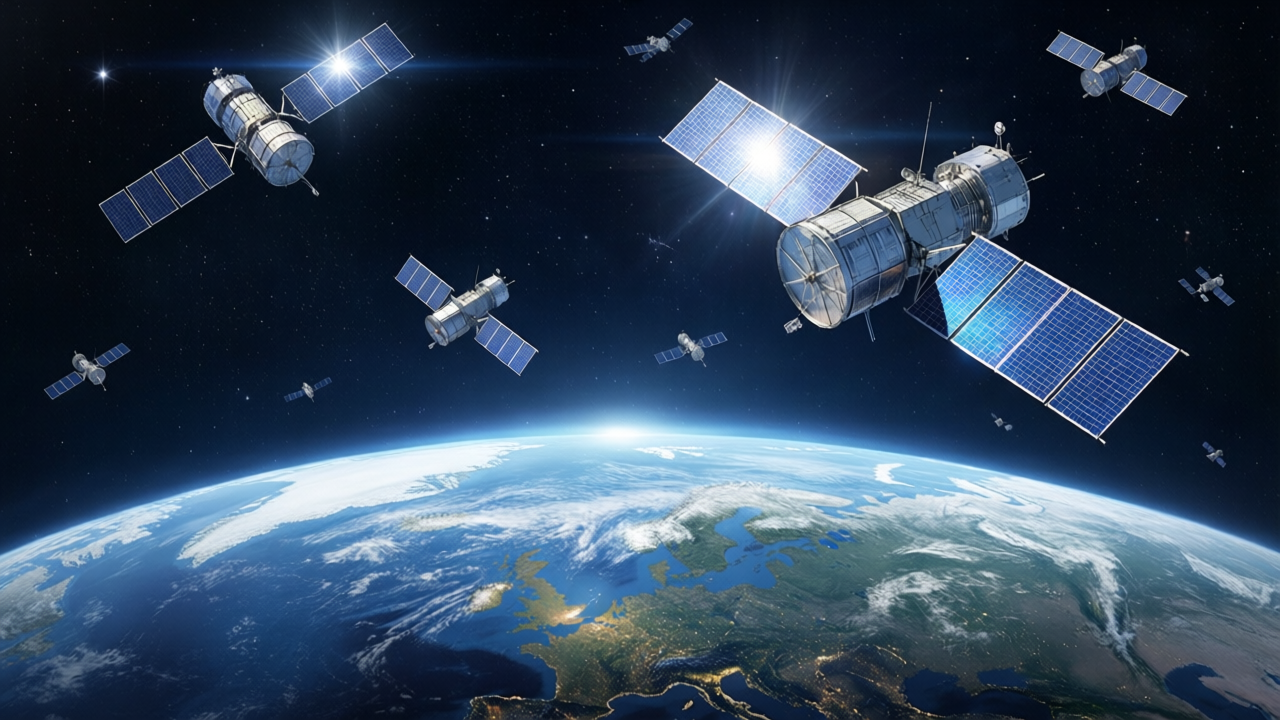
Or do we really need to put our servers next to the moon?
There’s a problem with artificial intelligence, and it’s not the one most people worry about. It’s not the existential threat, the job losses, or even the fact that your bank’s chatbot will confidently tell you your account balance is “unavailable.” No — it’s that data centres are thirsty. They guzzle electricity like a pub quiz team on a Wednesday, drink water faster than you can say “sustainability,” and the locals are increasingly saying “absolutely not in my backyard.”
So the tech industry, in its infinite wisdom, has decided the solution is to put the data centres in space.
Not “eventually, in some theoretical future.” We’re talking now. Google is in advanced talks with SpaceX to launch orbital data centres via their “Project Suncatcher.” The Wall Street Journal broke the story on 12 May, and since then it’s been like watching a group of very rich people try to explain why they need to put a spreadsheet in low Earth orbit.
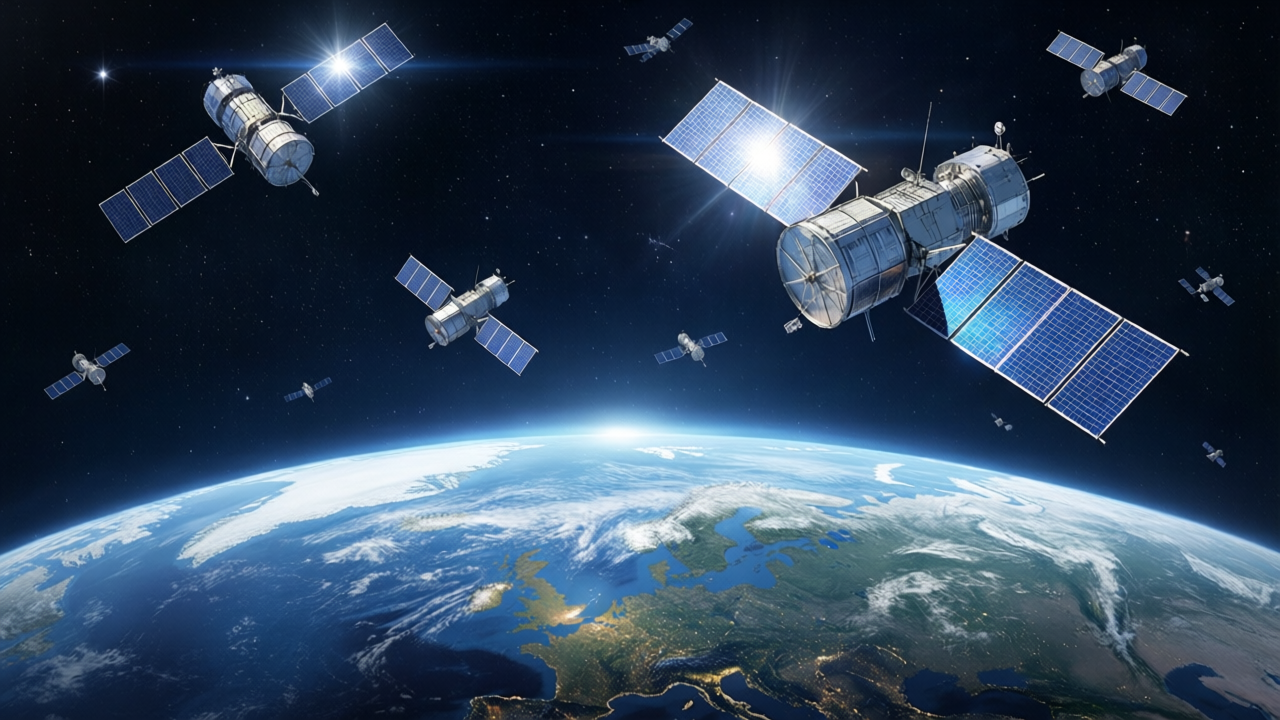
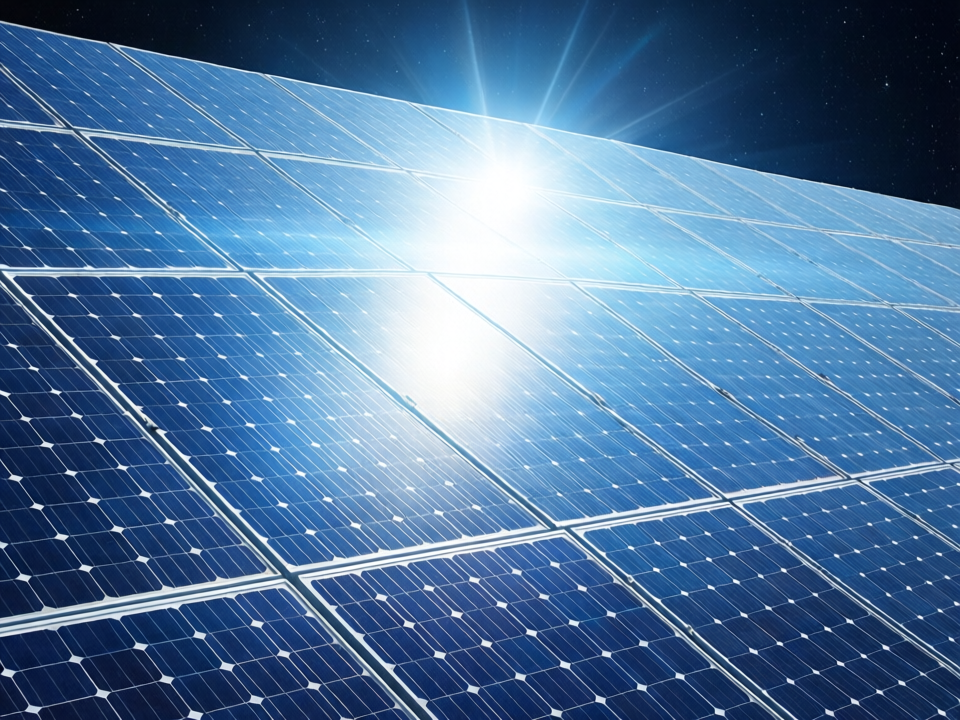
The pitch is seductive in its simplicity. On Earth, data centres face three problems: they need massive amounts of electricity, they need even more water to cool the servers, and increasingly, nobody wants them nearby. Space solves all three — you get continuous solar power (the sun never sets in orbit), the vacuum of space acts as a natural heat sink, and the local population is “zero” because, well, there are no residents.
Except that getting anything into space currently costs around $7,000 per kilogram, and you’d need something closer to $200 to make the economics work. But let’s be honest — at what point does “let me run the numbers” become “the numbers are fine” when you’re Elon Musk?
Who’s In On This?
It’s not just SpaceX. This has become something of a gold rush, and the participants are the usual suspects with slightly different branding:
Elon Musk’s SpaceX wants up to a million data-centre satellites in orbit. Yes, that’s not a typo. In January 2026, SpaceX merged with xAI in a deal valued at $1.25 trillion — the single most audacious corporate merger in history. The stated goal? To unify AI development with the launch infrastructure needed to put AI compute in space. Musk told Reuters that the SpaceX IPO would “bankroll the launch of up to 1 million data-centre satellites.” Because apparently the thing the world needs most is a satellite per person, each one running some version of Grok.
Jeff Bezos’ Blue Origin isn’t having all the fun. Speaking at Italian Tech Week in Turin, Bezos predicted “giant gigawatt data centres” in space within 10 to 20 years. His TeraWave network plans 5,408 satellites. Not a million, but 5,408 is still the sort of number that makes astronomers want to move to Antarctica.
Google’s Project Suncatcher is the most concrete plan so far. They’re in talks not just with SpaceX but “other companies” for launch deals. A Reuters report on 12 May confirmed Google has been speaking with multiple launch providers. First test is planned for spring 2027.
Cowboy Space — and yes, that is the actual name — raised $275 million in Series B funding last week to build rockets specifically designed to launch solar-powered AI data centres. They’ve filed FCC plans for up to 20,000 orbital data centres in their “Stampede” constellation. The company was previously called something else and rebranded mid-funding round. I’ve had more coherent career changes.
Starcloud reached a $1.1 billion valuation after raising $170 million, positioning itself as pure-play orbital compute infrastructure. They’re the sort of company that makes you realise “space tech startup” has gone from “niche” to “the fastest way to hit unicorn status.”
And if all that wasn’t enough, India is jumping in too. Space company Pixxel has partnered with AI firm Sarvam to build “Pathfinder,” India’s first orbital data centre satellite, scheduled for Q4 2026. It’s a 200kg satellite that will process AI workloads directly in orbit. Meanwhile, China’s main space contractor has vowed to build “digital-intelligence infrastructure” for space-based computing. Even Nvidia unveiled a space-ready AI computing module at GTC, because apparently the thing holding back the revolution was that GPUs couldn’t survive a rocket launch.
The Earth Problem
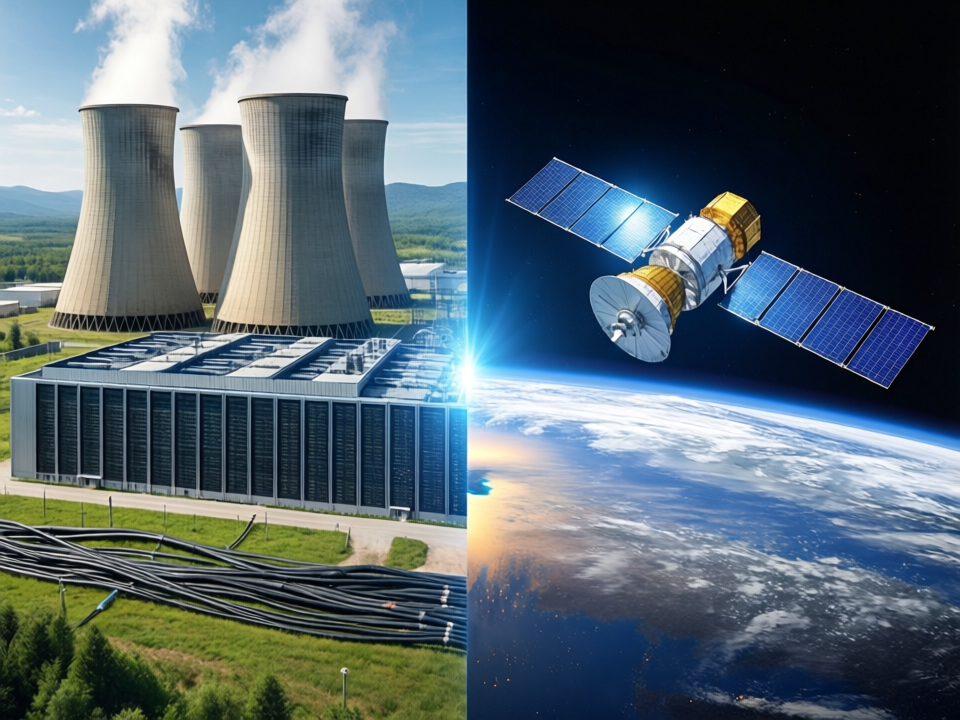
The reason this is happening isn’t just ambition — it’s that terrestrial data centres are running into a wall. Seven in ten Americans now reject data centres being built in their area. A backlash is spilling into French municipal elections, with at least 10 towns challenging AI data centres. European data centres face a space shortage that’s only going to get worse as capacity expands by 22% this year and still can’t meet demand.
And the water situation is dire. Data centres in the US are already drawing on freshwater supplies at rates that make environmental agencies nervous. Meta’s $200 billion Hyperion data centre in Louisiana is the most expensive private infrastructure project in American history, and it’s still not enough.
So when Google’s engineers look at a spreadsheet saying “we need X more gigawatts of compute and can’t find land for it” and then look up at the sky and think “you know what’s empty up there?” — I can see the logic. It’s just not the logic of someone who’s ever tried to assemble flat-pack furniture in zero gravity.
The Reality Check
Here’s where it gets complicated, because physics doesn’t care about your Series B funding.
Launch costs. At $7,000 per kilogram to low Earth orbit, launching a data centre server rack is wildly uneconomical. You’d need launch costs to drop by a factor of 35. Starship is designed to get there eventually, but “eventually” has been the project timeline since 2014.
Reliability. Servers in orbit face cosmic radiation, thermal cycling between sunlight and eclipse every 90 minutes, and the constant vibration of rocket launches. A server that’d last five years in a climate-controlled room might last five days in low Earth orbit. SpaceX says they’re working on it. That’s the same thing people said about reusable rockets ten years ago — and they were right about that.
Latency. Data in low Earth orbit is about 400km up. The speed of light means a round-trip signal takes roughly 3-5 milliseconds. For some workloads that’s fine. For the sort of real-time inference that AI applications increasingly demand, it’s a non-trivial delay. And you’re now looking at satellite-to-satellite handoffs for a constellation, which adds more hops and more latency.
Environmental cost. There’s an irony in building “green” data centres powered by solar energy in space when every rocket launch burns thousands of tonnes of fuel and deposits soot and aluminium oxide into the upper atmosphere. A recent analysis noted that SpaceX’s own FCC filing for a million satellites would involve thousands of launches. The environmental benefit of solar power in orbit is offset by the carbon cost of getting there.
The rocket bottleneck. Cowboy Space raised $275 million partly because “there aren’t enough rockets.” Even if Starship works as planned, the sheer volume of launches needed to deploy thousands of data-centre satellites would consume most of the world’s launch capacity. It’s like solving a parking problem by building a car factory.
So Is It Actually Feasible?
The honest answer is: the idea is brilliant, the execution is a herculean challenge, and the timeline depends entirely on whether you believe Starship can become the space freighter that Musk promises.
For niche workloads — satellite data processing, space-based AI inference on imagery, edge computing for deep space missions — orbital data centres make perfect sense. Process the data where it’s generated, don’t beam gigabytes of raw imagery down to Earth just to crunch it in a basement in Nevada. India’s Pathfinder satellite is exactly this kind of practical application.
For replacing terrestrial data centres? Not yet. Not even close. The economics don’t work, the engineering challenges are enormous, and the launch infrastructure simply doesn’t exist at the scale needed. But five years from now, when Starship is flying routinely and launch costs have dropped by an order of magnitude, the conversation might look very different.
What’s remarkable isn’t whether it’ll work. It’s that in 2026, the conversation has moved from “that’s impossible” to “when will it be viable.” That’s the same trajectory reusable rockets followed. The difference is that rockets only needed to work once to be revolutionary. Data centres in space need to work perfectly, thousands of times, to be economical.
But then again, someone once said the same thing about putting a phone in your pocket that could do more computing than the Apollo guidance computer. So here we are, watching billionaires try to move the cloud literally into the sky.
I’ll have my data centre where it can’t be bothered to take a call from a satellite, thanks. But I’ll admit it — the idea has charm. Even if the egg on my breakfast table would be deeply unimpressed by all this hubris.
Sources
- Google in talks with SpaceX for Suncatcher orbital data center project — Reuters, via MSN (12 May 2026)
- Report: Google and SpaceX in talks to put data centers into orbit — TechCrunch (12 May 2026)
- Cowboy Space raises $275 million to launch AI data centers on brand-new rocket — Space.com (11 May 2026)
- Starcloud raises $170 million Series A to build data centers in space — TechCrunch (30 Mar 2026)
- Data centres in space? Jeff Bezos says it’s possible — Reuters, via Yahoo News
- Pixxel to develop India’s first orbital data centre satellite powered by Sarvam AI — Fortune India
- NVIDIA Launches Space Computing, Rocketing AI Into Orbit — Yahoo Finance