English Football Finally Bans the Goalkeeper Tactical Timeout — and the Rule Itself Admits the Problem Was the Game’s Own Making
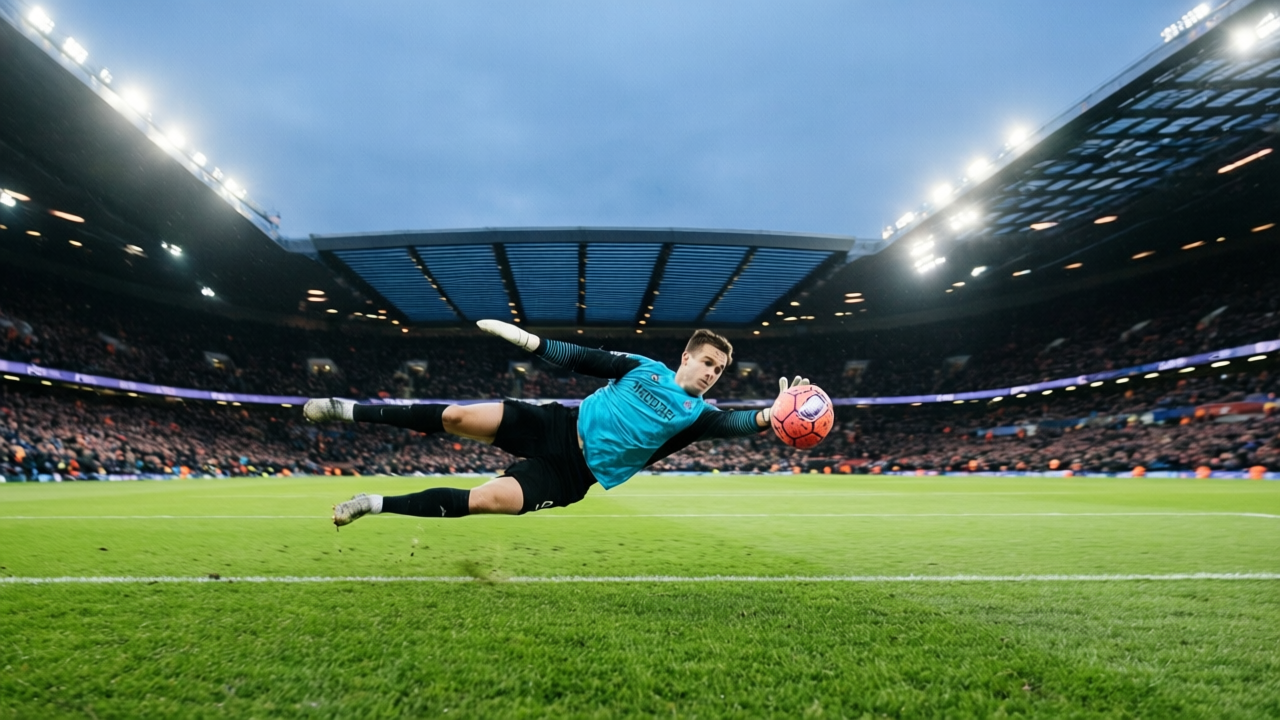
It’s one of those things every Premier League viewer has noticed at some point: the goalkeeper goes down, the physio waddles onto the pitch, and suddenly every outfield player has materialised at the touchline like they’ve just been summoned for a team meeting. The manager is shouting instructions. The keeper is perfectly fine to walk off. The opposition’s momentum — and any hope of a second goal in the 89th minute — is thoroughly extinguished.
As of the 2026/27 season, English football has officially tried to do something about it.
The Rule
The Football Association, Premier League, EFL, National League and Women’s Super League have all agreed to a trial — approved by IFAB, the body that writes the Laws of the Game — designed to eradicate what has become known as the “goalkeeper tactical timeout.”
The mechanism is elegantly simple. If the referee signals that medical staff can come onto the pitch to treat a goalkeeper, the coach has 10 seconds to nominate an outfield player to leave the pitch for at least one minute after play restarts. If no one is selected within those 10 seconds, the captain goes off instead.
The first game to feature the trial is the Carabao Cup preliminary round tie between Tranmere and Rochdale on 1 August 2026.
The Incidents That Made This Inevitable
This didn’t emerge from thin air. Over the past year or so, several high-profile moments crystallised the problem from annoying quirk to rule-change-worthy crisis.
In November 2025, Leeds United manager Daniel Farke publicly accused Manchester City’s Gianluigi Donnarumma of feigning injury to “bend the rules” and break up play. Leeds fans had been regularly booing goalkeeper treatment stoppages throughout the 2024/25 season, and Farke’s comments turned a widespread suspicion into a named allegation.
In December 2025, during Newcastle’s 1-0 victory over Manchester United, Gary Neville — then on Sky Sports — suggested that Newcastle goalkeeper Aaron Ramsdale had gone down after receiving an instruction from full-back Lewis Hall, who himself had been directed by Newcastle boss Eddie Howe. “I am going to be a little bit cynical,” Neville said. “I think Eddie Howe said ‘stop the game’.”
Newcastle fans have, in fact, accused their own Nick Pope of similar behaviour “once or twice,” according to The Mag, Newcastle’s independent fan publication.
What the Rule Actually Says — and What It Doesn’t
The rule, as described by Pro Ref (the organisation managing Premier League officials, led by Howard Webb), aims to “address occasions where goalkeeper injuries have been used to disrupt momentum, slow the game down or create opportunities for tactical instruction.”
There are exceptions — and they’re sensible ones. The rule doesn’t apply if a free-kick is awarded for a foul on the goalkeeper and they immediately require treatment. It doesn’t apply if the goalkeeper and an outfield player have collided and both need attention. It doesn’t apply if the goalkeeper is bleeding. These carve-outs protect genuine medical emergencies from being punished.
The trial builds on a series of measures already introduced across the professional game: the goalkeeper eight-second rule (implemented last season, forcing keepers to release the ball within eight seconds rather than holding it indefinitely) and a five-second countdown for throw-ins and goal kicks that are unfairly delayed.
The Real Story Isn’t the Rule — It’s What It Reveals
What makes this genuinely interesting — beyond the tactical mechanics — is what the existence of the “goalkeeper tactical timeout” tells us about the state of modern football.
This wasn’t always a thing. The goalkeeper timeout is a product of the modern Premier League’s obsession with data-driven, marginal gains. Managers now have analysts in the technical area feeding real-time statistics, opposition patterns, and substitution strategies. The goalkeeper treatment window became the only guaranteed opportunity for a mid-game team talk — a pause in play that didn’t cost a substitution and didn’t require a genuine injury to an outfield player.
The game has become so analytically optimised that players are using the referee’s concern for player welfare as a tactical weapon. The physio — whose job is literally to keep people safe — has been repurposed as a tactical timeout button.
Pierluigi Collina, IFAB’s head of referees, flagged this as a priority at IFAB’s AGM in February 2026. At the World Cup that summer, he told officials to prevent players from going to the technical area on all stoppages, not just goalkeeper treatment. The problem isn’t confined to England — it’s a global phenomenon that the sport’s rule-makers are finally acknowledging.
Will It Work?
The Australian A-League is trialling a stricter variation where the captain always has to leave the field, removing any strategic choice about which player goes off. English football’s approach is softer — the coach picks, giving them a tactical decision to weigh against the original “accidental” injury.
The three-minute hydration breaks already provide natural team-talk opportunities, which somewhat undermines the keeper timeout’s utility regardless. The real test will be whether managers find a way to game this rule too — and whether referees consistently enforce the 10-second deadline.
The rule won’t eliminate tactical cynicism from the game. It will simply shift where it happens. But it’s a sign that football’s governing bodies are finally admitting something that fans have known for years: the goalkeeper “injury” was never about the goalkeeper at all.
Sources: BBC Sport (27 July 2026), Premier League official announcement (27 July 2026), Sky Sports (27 July 2026), The FA Law Changes 2026/27, The Mag (July 2026).