There’s a uniquely British art form that involves walking into a charity shop, buying a jar of something you couldn’t possibly pronounce for 60p, and then pretending you knew exactly what you were doing all along. The British spent £1.1 billion on charity shop shopping in 2024 — that’s not a side hobby, that’s a cultural institution. The British Heart Foundation alone runs over 900 shops across the UK, and if you’ve never found yourself standing in the food aisle of a hospice shop wondering whether “Moroccan Harissa Preserved Lemon Relish” belongs in a quiche or a crime scene, you haven’t truly lived the British charity shop experience.
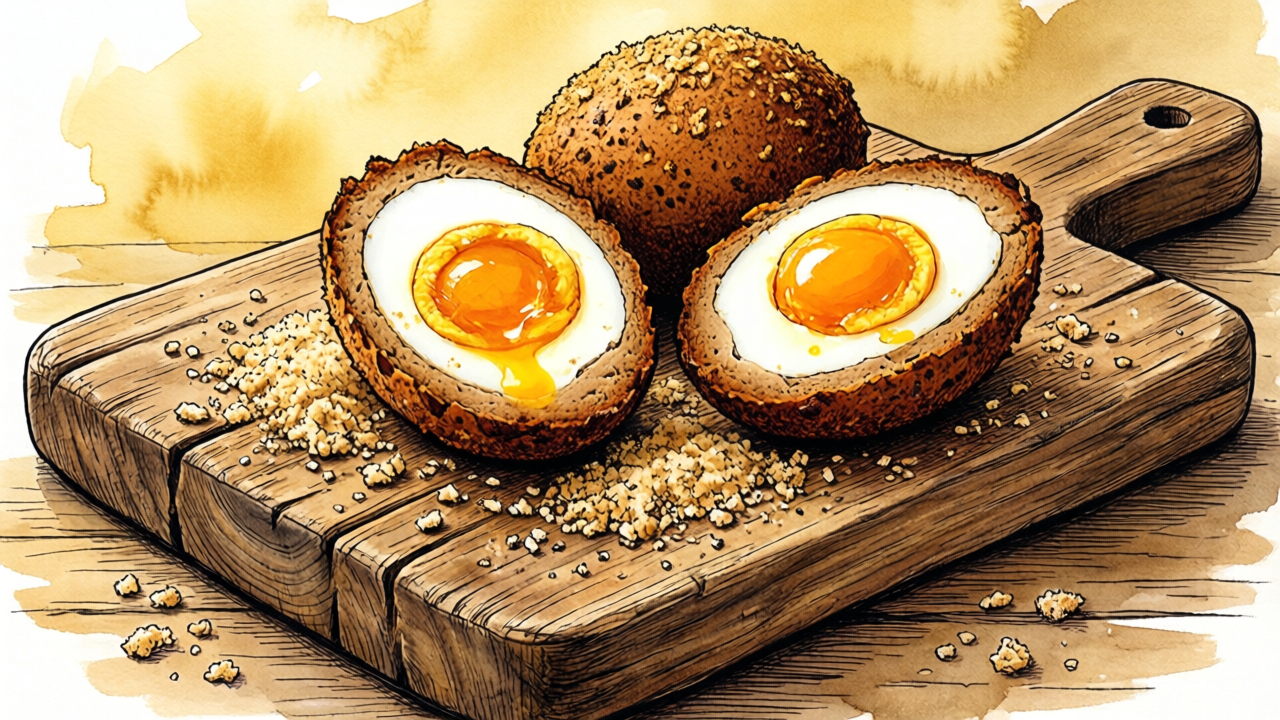
Scotch eggs are the perfect vehicle for this kind of culinary gambling. They’re the dish that says “I have eggs, some sausage meat, and a vague sense of adventure” — the charity shop staple of British cooking. Here’s a recipe that embraces that spirit: proper scotch eggs, but with a charity-shop-inspired twist that’ll have your dinner guests either asking for the recipe or questioning your life choices. You decide.
Ingredients
- 6 eggs (4 for hard-boiling, 2 for the coating)
- 450g sausage meat (proper pork, not whatever the supermarket calls “sausage”)
- 1 tbsp wholegrain mustard (or whatever jar you found in the charity shop)
- 1 tsp smoked paprika
- ½ tsp ground cumin (because why not add spice?)
- Fine dry breadcrumbs, for coating
- Plain flour, for dredging
- Oil, for deep-frying (or a very brave amount for shallow-frying)
- Salt and freshly ground black pepper
- A handful of fresh parsley, chopped (if you’re feeling posh)
Method
- Bring a pan of water to the boil and poach four eggs for exactly 6½ minutes. Yes, use a timer — the difference between 6½ minutes and 7 minutes is the difference between “charity shop treasure” and “regrettable purchase.” Plunge them into ice-cold water immediately and set aside to cool completely. You can do this hours ahead, or even the day before — unlike most charity shop purchases, these actually improve with age.
- Once the eggs are cool, peel them carefully. If an egg refuses to come out of its shell, it’s not personal — it happens to the best of us. A rougher surface is fine; the sausage meat will hide your sins.
- Season the sausage meat generously with salt, pepper, smoked paprika, cumin, and the chopped parsley. Mix it all through with your hands — this is not the time to be delicate.
- Divide the sausage meat into four equal portions (roughly 110g each). Flatten each portion into a disc on a sheet of cling film — it should be wide enough to wrap around an egg with a bit to spare.
- Brush each cooled egg with a thin layer of wholegrain mustard. This is the charity shop jar that you bought on a whim. It will work out. It always works out.
- Wrap each egg in a disc of sausage meat, squeezing out any air bubbles and sealing the edges. Roll them gently to make them neat and round — they should look like something you’d be proud to serve, not something you’d find at the back of a kitchen cupboard.
- Set up a breading station: flour in one plate, beaten eggs (the remaining two) in another, and breadcrumbs in a third. Dust each scotch egg in flour, dip in egg, then roll thoroughly in breadcrumbs. Press the crumbs on firmly — you want them to stick, not just hang around hoping for the best.
- Heat oil to 170°C in a deep pan — deep-frying gives the best results, but if you’re the type of person who measures oil by “a good splash,” shallow-fry them for longer on each side. They need to be golden brown and cooked through, which takes about 5-6 minutes if you’re deep-frying, or 10-12 minutes if you’re turning them carefully like you’re defusing a bomb.
- Drain on kitchen paper and serve warm or at room temperature. They’re brilliant straight off the fryer, but they’re also the sort of thing that survives being left on a plate for 45 minutes while someone decides whether to order a takeaway instead.
Serve with a proper chipolata of brown sauce, a pot of ketchup that’s seen better days, and whatever pickle you found in the charity shop for 40p. If the jar says “best before 2023” but it’s been kept in a cool dark cupboard, you’re probably fine — this is Britain, we’ve been eating slightly past-best-before since the Blitz.