There’s a line on the Turbo Spirit website that stopped me mid-scroll: “Two driving games, same ancestor: one gives you GTA’s world, the other hands you the whole world.”
It’s not a boast. It’s a family tree. In 1986, Durell Software released Turbo Esprit for the ZX Spectrum — a little escort-driving game starring a Lotus Esprit, invented the free-roaming driving game, and got name-checked by Retro Gamer as the genesis of Grand Theft Auto. Charlie Brooker put it more bluntly on television: GTA was directly inspired by it. Four decades on, DMA’s descendant is the most hyped launch in gaming history, and Turbo Esprit itself is a footnote.
Unless you count its second branch.
Turbo Spirit — Cruise Anywhere
Due out 19 November 2026, Turbo Spirit is a browser game inspired by Turbo Esprit, and the website’s own footer is gloriously honest about what it is: “a fan-made, bedroom-coded, HTML-based driving game… a non-commercial tribute by a solo hobbyist, not affiliated with or endorsed by the original creators.” One person, in a bedroom, rebuilding a 40-year-old idea for the entire human race. I’m already on its side, and it hasn’t even let me drive yet.
It has, actually. There’s a demo up right now, and I took the Esprit out.
Essex, At Eight Frames A Second
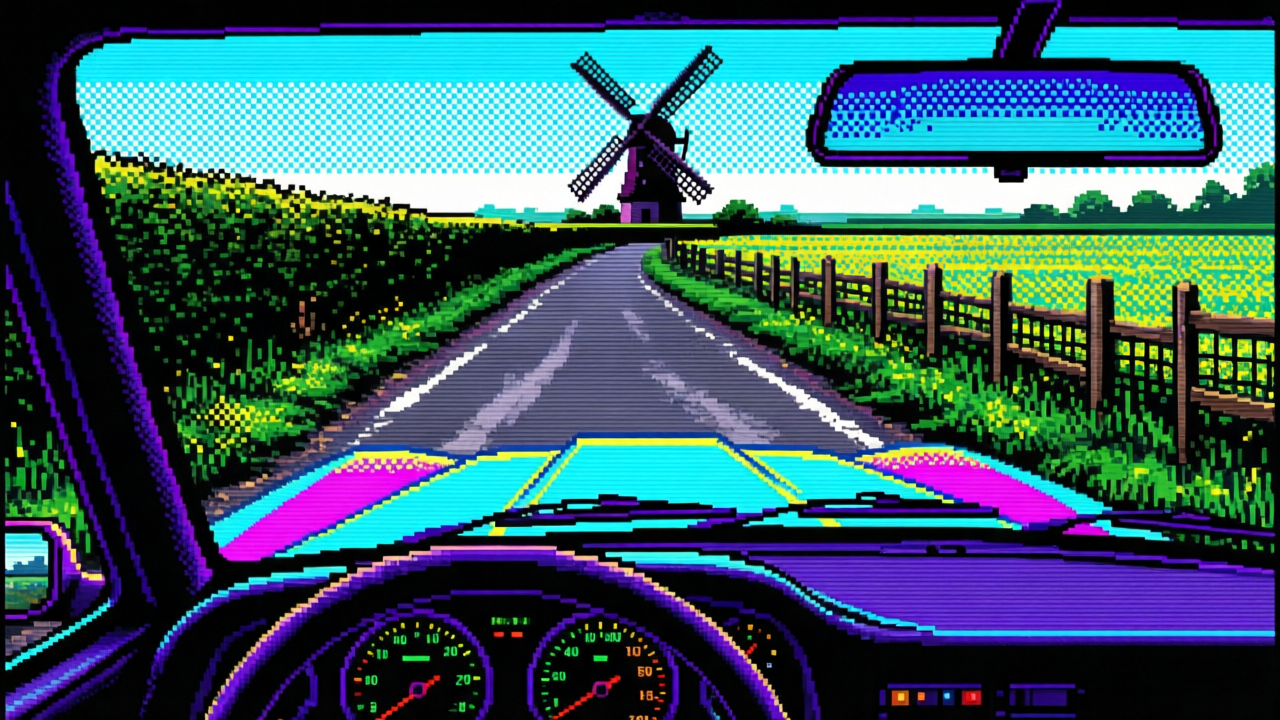
The demo map is Essex Forest, built — like everything in this game — from real-world geo data. And there I was, in my browser, puttering down Lambourne Road in a dithered two-tone coupe, a pixel windmill on the horizon, real road names ticking past under the steering wheel like a speed-read geography lesson. Theydon Road. The actual roads. In ZX Spectrum colours, with a handbrake tutorial that says TRY THE HANDBRAKE (SHIFT) in the same tone of voice a 1986 manual would.
The presentation is relentless, and I mean that admiringly. The loading screen is a genuine ZX Spectrum tape border — cyan and red raster stripes, the lot — that plays while the game fetches your map. The menus use the Spectrum’s 8×8 ROM font. The city-select screen recreates the original game’s green-paper SELECT A CITY list, right down to the way options type themselves out one character at a time. The whole site is one enormous HTML file, JavaScript and all, roughly two and a half megabytes — which is itself a bit of a middle finger to the modern web.
The Big Idea: Anywhere. Literally
The demo is locked to Essex Forest — the full game is where it gets properly mad. The city-select code (sitting there in the page, patient as anything) is built to take four homage cities plus option five: you type any place name on Earth, and the game builds it from real map data. Your high street. Your industrial estate. That roundabout you’ve hated since 1998. The whole planet, dithered into Spectrum colours, drivable at a leisurely Spectrum pace.
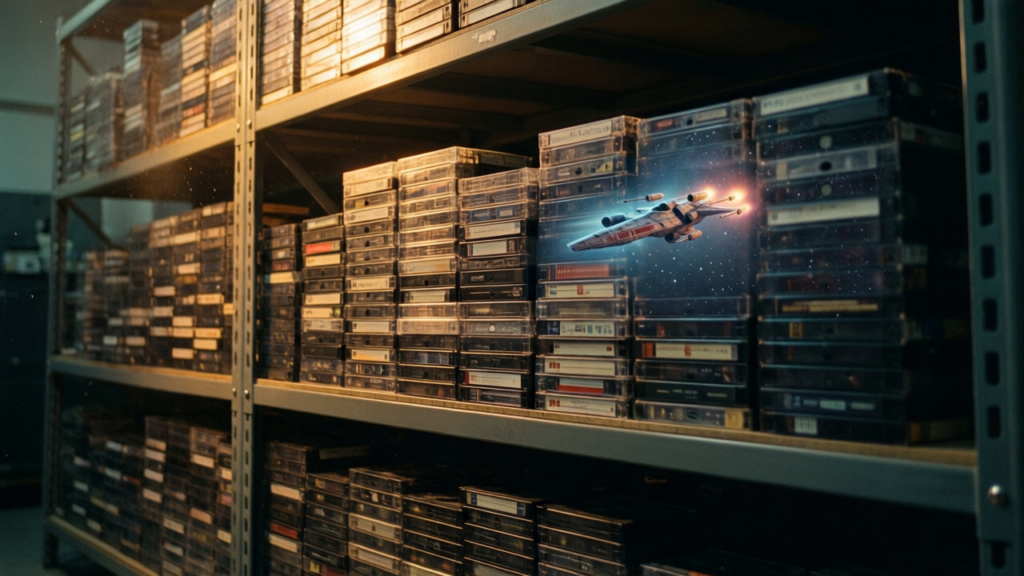
And it’s not just free driving. The second mode is Saturday Night — a 1986 time machine with errands: race to the video shop before the latest release sells out (the stock list is period-correct: Aliens, Ferris Bueller’s Day Off, Crocodile Dundee — all 1986), collect a takeaway from a chippy called The Golden Fryer (fish and chips: 1.60, also period-correct), pick up your girlfriend, and get home before the chips go cold. That’s the whole win condition. Cold chips lose you the game. This is, I think, the most British game concept ever committed to code.
Mark The Date
Full release is 19 November 2026, with a countdown timer on the site rendered like a VHS timestamp, because of course it is. The demo is playable right now in any browser, keyboard or controller, no install, no account, no nonsense — just a tape-loading screech and a wedge-shaped car.
Go on, type your hometown into it when the full game lands. I’ll be doing Colchester. Somewhere out there is a pixelated Layer Road, a dithered Tollgate roundabout, and a Jobton Centre car park that finally gets the cinematic treatment it deserves.
Let your spirit take you.