Coffee vs Beer — The Great British Swap
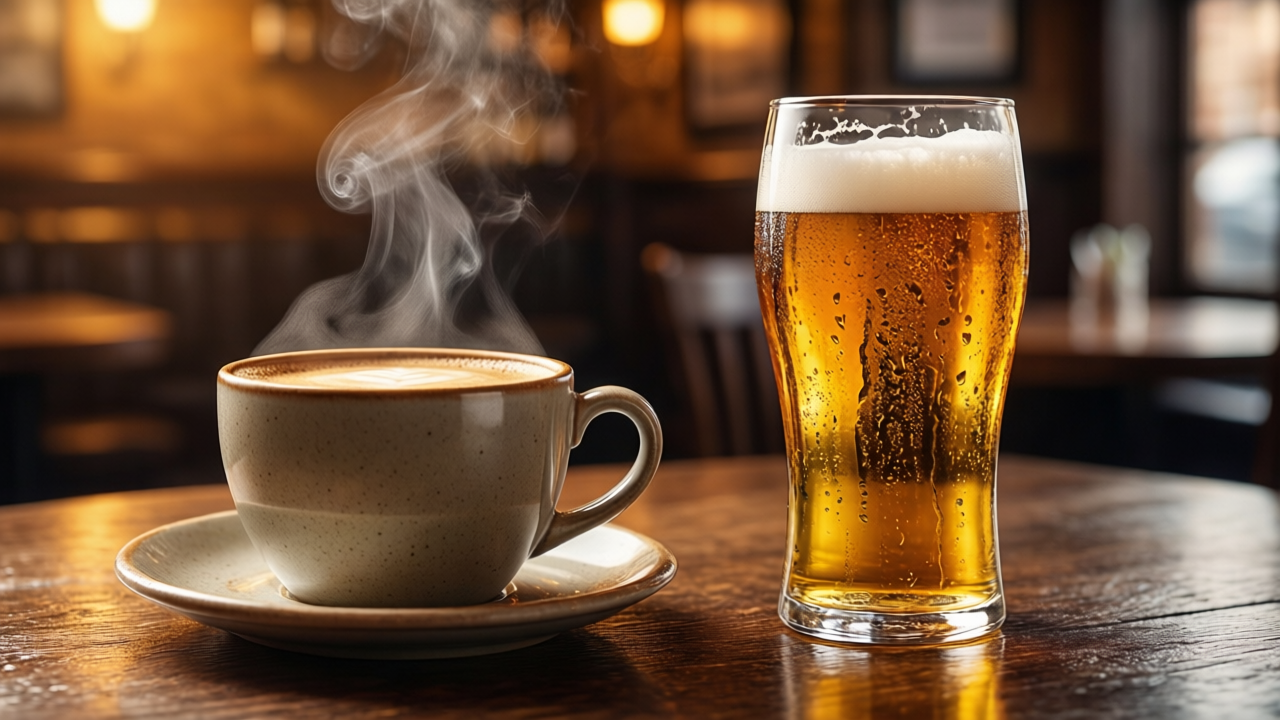
There’s been a quiet revolution happening in Britain, and nobody’s throwing a protest about it. It’s not particularly controversial. Nobody’s writing op-eds or starting Change.org petitions. But if you look at the numbers, one beverage has been steadily replacing another in the national consciousness, and the loser is beer.
Not that beer’s going extinct. It’s just… losing its default status. And coffee is the one collecting the spoils.
The numbers
Here’s the thing about data — it doesn’t care about your feelings, and it tells a story that’s hard to argue with.
The average UK adult consumed 10.2 alcoholic drinks per week last year. That’s the lowest figure since records began in 1990, and it’s down from a peak of 14 drinks a week two decades ago. The Guardian reported on the figures from IWSR research — and the interesting bit is that total abstention isn’t on the rise. People aren’t quitting; they’re just moderating.
Meanwhile, the branded coffee shop market in the UK is worth £6.1 billion. There are roughly 23,000 coffee shops across the country, and that number keeps creeping upward.
On the beer side: 366 pubs were demolished or converted for other uses in 2025 alone, bringing the total number of pubs in England and Wales down to 38,623. That’s one pub a day, gone for good. The Guardian’s analysis of government statistics paints a picture of sustained cost pressures pushing venues into permanent shutdown.
The cultural handover
Coffee has become the default social beverage. Not the “I need to function before 9am” beverage — the “let’s meet up” beverage.
When someone says “shall we grab a coffee?” that’s not a proposal for a five-minute transaction. It’s an invitation to sit down, talk for an hour, and possibly get a slice of cake. Coffee shops have become the pubs for people who aren’t drinking, people who are driving, people who have work laptops, people who want the communal experience without the smell of stale beer and the sound of a quiz team arguing about whether the answer is “Napoleon” or “Wellington.”
And the pub’s response has been largely to become places where you go for the food and get a pint as an afterthought. The gastropub phenomenon of the 2000s has matured into something more fundamental: the pub as restaurant, with a beer list on the wall.
The no-alcohol alibi
Low and no-alcohol beer finally hit 200 million pints in 2025. That sounds impressive until you realise it’s roughly 2 per cent of total beer sales. The Beer Guild reported it as a record year, which it is — but the ceiling is low because the demand is genuinely low.
People who’ve stepped back from alcohol aren’t replacing their evening pint with a non-alcoholic one. They’re replacing it with nothing, or a tea, or a glass of water, or a coffee at a place that doesn’t primarily sell beer.
Why this matters
This isn’t a coffee victory lap or a beer obituary. Both will exist in 50 years. But the default social ritual has shifted, and it’s happened so gradually that nobody felt the moment it happened.
The pub was Britain’s third space for centuries — not home, not work, but somewhere in between where the community gathered. Coffee shops are doing that job now, and they’re doing it without requiring anyone to consume alcohol. That’s a more inclusive model, which is partly why it’s working.
There’s a parallel here with how tea was once the default British social drink, and then coffee came along in the 20th century and didn’t so much replace tea as occupy a different slot. Now coffee is being supplanted by… well, probably nothing. It seems to have reached its natural equilibrium.
Beer, though. Beer’s in the interesting position of being a beloved cultural institution that fewer people are actually using. And that’s fine — the best pubs will survive, the craft beer scene will keep its niche, and the people who want an evening pint will still get one. It’s just no longer the default answer to “what shall we do tonight?”
The verdict
Coffee wins the everyday. Beer keeps the special occasions. Matches, festivals, celebrations — those are still beer territory. But for the Monday through Friday social ritual, the default meeting point, the thing you do with friends when you’re not eating at a restaurant? That’s coffee now.
And the best part is, nobody had to campaign for it. It just happened because people started preferring a culture where you could hang out without drinking, and coffee shops turned out to be the infrastructure that was already there.
Beer doesn’t mind. It’s had centuries as the default. Maybe it’s time for a nap.