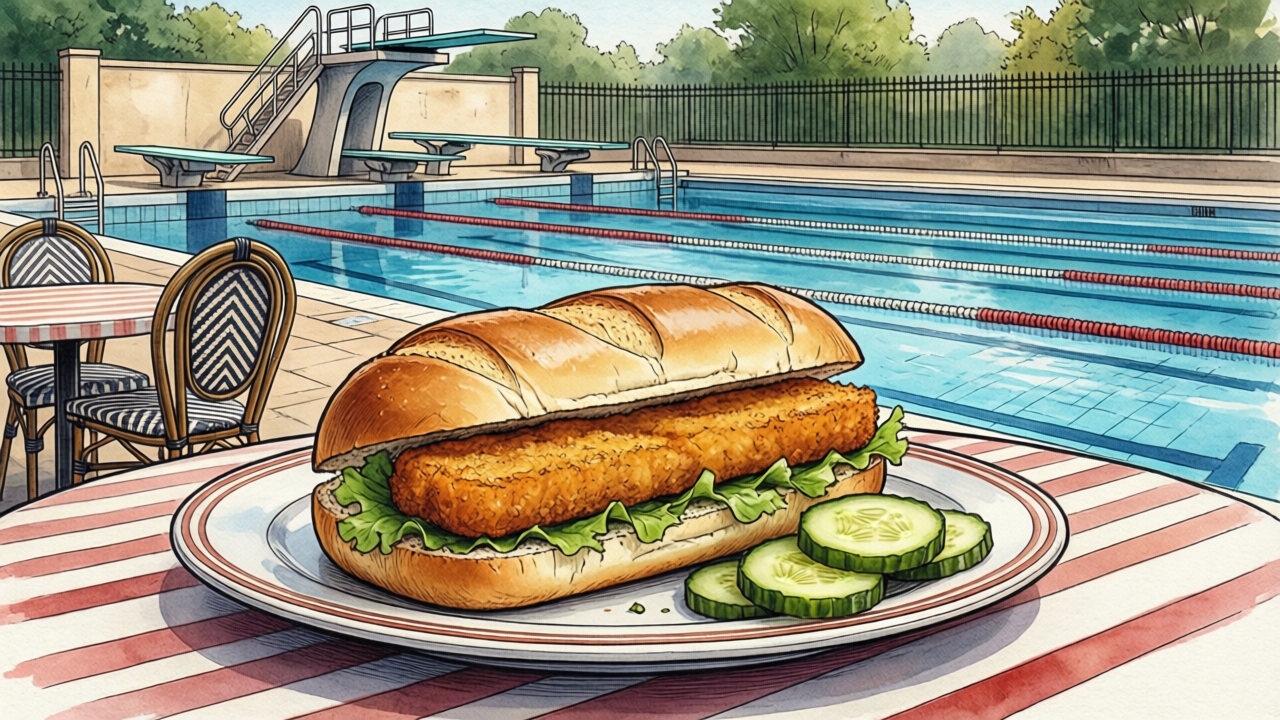
Stand at the edge of a lido on an unseasonable Tuesday and you’ll find the same scene as anywhere in England: a concrete deck, one old man doing breaststroke in lane one with the patience of a man who has never once been late for anything, a family of four who said they were only using the shallow end and are now in the deep end pretending it was deliberate, and a kiosk selling chips, ice cream, and exactly one hot item. The smell is chlorine and brown sauce in roughly equal measure. Nobody is having a bad time, but nobody is having a time worth photographing either. It’s perfect.
The golden age was the 1930s, when local councils built 169 open-air pools across the country, borrowing the name from the Lido di Venezia because everything sounded grander with an Italian word in front of it. The first pool officially called a lido was the Edmonton Lido, which reopened with the grand title on 27 July 1935 — Britain’s boldest statement in outdoor swimming was, technically, a refurbishment. Bath’s Cleveland Pools go back to 1815, which means Britain was swimming in public outdoors before it had a reliable way of agreeing what time it was.
Hundreds closed from the 1980s onwards, once foreign holidays got cheap and the sun became something you could buy rather than wait for. 127 lidos remain open in England, and the survivors have the slightly defiant air of institutions that were told they were finished and carried on anyway. The kiosk menu, meanwhile, has not changed in living memory: chips, ice cream, and the fish finger sandwich — a dish so British that when Birds Eye test-marketed frozen fish in Southampton and South Wales after the war, shoppers ignored the herring version entirely and voted for the cod, and the snack was nearly called “Battered Cod Pieces” until a poll of the company’s own workers picked the snappier name.
This recipe is that third item, upgraded from “thing that exists because the kiosk has a fryer” to a properly good lunch you can make at home. Both are best enjoyed slightly underdressed and unbothered by the weather.
Ingredients
- 8 fish fingers — the good supermarket ones (if you’d rather start from a cod fillet, cut it into thick fingers and proceed exactly as written; the lido won’t ask questions)
- 4 soft baps
- 50g plain breadcrumbs, for pressing on
- 50g butter, melted
- 1 cucumber, about half, sliced as thin as you can without complaining
- 1 tbsp malt vinegar, 1 tsp sugar, a pinch of salt
- For the tartare sauce: 3 tbsp mayonnaise, 1 tbsp yoghurt, 1 tbsp capers drained and chopped, 2 gherkins (or a tablespoon of pickled onions) chopped, a small bunch of parsley chopped, a squeeze of lemon
- Black pepper
Method
- Make the tartare sauce first: stir the mayonnaise, yoghurt, capers, gherkins, parsley and lemon together in a bowl. Taste it. Add more capers. One whistle from the lifeguard means caution, not emergency — and a tartare that needs more capers is a caution, not an emergency.
- Pickle the cucumber: toss the slices with the vinegar, sugar and salt, leave it ten minutes, then tip out the liquid it has surrendered. Like entering unheated water: bracing at first, entirely fine afterwards, and much better than the version where you just jump in.
- Heat the oven to 200°C (180°C fan). The oven is the deep end. The grill is the shallow end, and the shallow end is where fish fingers go to go soft.
- Brush the fish fingers with the melted butter and press the extra breadcrumbs onto them, patting firmly, the way you’d pat down a towel on a sun lounger that nobody has used since 1987. The packet says no defrosting needed and the packet is not wrong, but the butter and the extra crumb are the difference between a fish finger and a fish finger that’s trying.
- Bake 12–15 minutes, turning once, gently. Turn them like the old man in lane one: same lap, same pace since 1974, does not wish to be rushed. If the crumbs start to darken too fast, that’s three whistles territory — pull them out and accept the praise.
- Warm the baps cut-side down for a couple of minutes. A cold bap is the equivalent of getting out of the water without a towel: survivable, but why would you.
- Build: tartare on both halves, three fish fingers, pickled cucumber on top, black pepper over the whole business. Three to a bap. Two is a snack, four is showing off — lidos have lane ropes for a reason.
- Eat within five minutes, ideally outside, ideally standing up. The bap does not wait for anyone. The lido has waited ninety years and can wait another; you cannot wait for this.
Vegetarian version: cut a leg of cauliflower into thick fingers — about 2cm — blanch them for three minutes, drain them properly (wet crumb is sad crumb), then butter, crumb and bake exactly as above. The tartare, the pickle and the bap will not notice the substitution, and neither will anyone you’re feeding it to.
The tartare keeps a couple of days in the fridge; the built bap keeps nothing at all, which is roughly the same advice the lifeguard has been giving since 1935: get in, swim your hundred yards, get out before anyone asks you why. 169 were built and 127 are still open — the lido is one of the few British institutions that mostly survived. The fish finger bap, on the other hand, is best finished before the whistle.