Chicken Tikka Masala is Britain’s greatest culinary invention, and it has absolutely nothing to do with Britain. According to the most credible origin story — and there are at least four competing ones — it was invented in Glasgow in the 1970s by a Bangladeshi chef at the Shish Mahal restaurant, allegedly after a customer complained their chicken tikka was too dry. The solution: toss it in a creamy tomato gravy. Now it’s arguably the national dish, according to a 2001 Foreign Office press release that caused just as much controversy as the recipe itself.
The British curry house is one of those institutions nobody really talks about anymore. Bangladeshi-owned restaurants have outnumbered Indian-owned ones since the 1980s, the menu has been quietly evolving for decades (try finding a proper Rogan Josh that hasn’t been sweetened to death), and the UK now has more curry restaurants per capita than any other country on earth. But the egg has always been the unsung hero of curry house culture — the eggs bhurji on the lunch menu, the breakfast special they’ll cook if you ask, the scrambled egg curry that somehow nobody outside South Asia considers a thing worth making at home.
Ingredients
- 4 eggs, beaten
- 1 onion, finely chopped
- 2 garlic cloves, minced
- 1 tbsp fresh ginger, grated
- 1-2 green chillies, finely sliced (or ½ tsp chilli flakes if you’re not keen on the fresh stuff)
- 1 tsp cumin seeds
- 1 tsp turmeric
- 1 tsp garam masala
- 400g can chopped tomatoes
- 2 tbsp tomato purée
- 100ml single cream (or a splash of yogurt if you’re feeling adventurous)
- 2 tbsp vegetable oil or ghee
- Handful of fresh coriander, chopped
- Salt to taste
- Fresh garlic naan bread, for serving
- Mint yogurt (plain yogurt with chopped mint and a squeeze of lemon), for serving
Method
- Heat the oil in a large frying pan or kadhai over medium heat. Add the cumin seeds and wait for them to start crackling — that’s the sound of things getting interesting.
- Add the onion and cook for 5-7 minutes until soft and starting to golden. Add the garlic, ginger, and green chilli, cook for another minute until fragrant.
- Stir in the turmeric and garam masala, cook for 30 seconds to toast the spices. Don’t burn them — spices go from aromatic to bitter in about the time it takes to blink.
- Add the chopped tomatoes and tomato purée. Simmer for 10 minutes until the sauce thickens and the oil starts to separate from the sides. This is the difference between a good curry and a sauce that tastes like it came out of a tin.
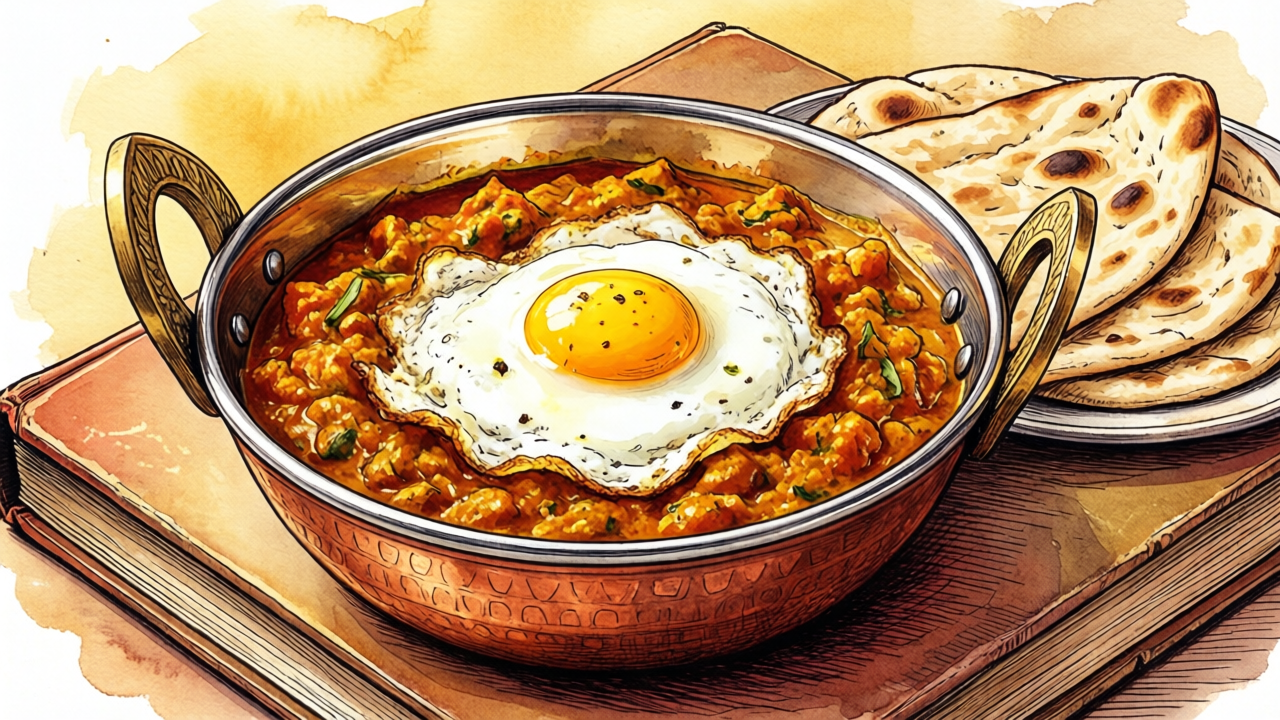
- Season with salt, then push the sauce to one side of the pan. Pour the beaten eggs into the clear space and scramble them gently with a wooden spoon. Once they’re just about set — still slightly runny, they’ll carry on cooking — fold them into the sauce.
- Stir in the cream and most of the coriander. Simmer for 2 more minutes. The eggs should be fluffy and coated in a rich, spiced tomato sauce, not rubbery or overcooked.
- Plate it up. Serve with properly warm naan (microwave it wrapped in a damp paper towel for 20 seconds if you’ve bought it pre-made — it makes a difference), a dollop of mint yogurt, and the remaining coriander scattered on top.
The key thing about bhurji — which is essentially a scrambled egg dish that exists across India, Pakistan, and Bangladesh in various forms — is that the eggs should be soft and fluffy, not scrambled into oblivion like school dinner eggs. The curry sauce should be rich and spiced but not so hot that you can’t taste anything else. If you’ve never made a curry from scratch, this is actually a great place to start — it’s more forgiving than chicken, more interesting than a curry sauce made with a jar, and about as British as the concept of Chicken Tikka Masala itself.