Linux Is Finally Killing AMD’s K5 — 30 Years Too Late
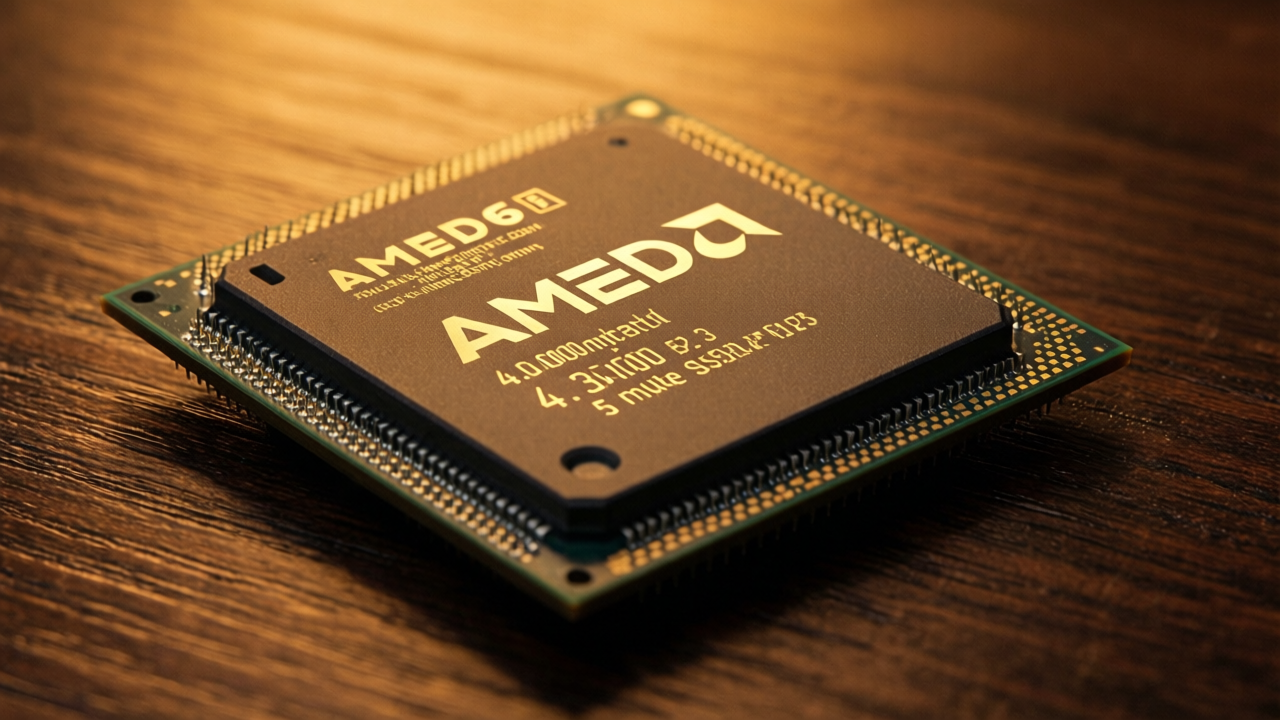
AMD’s K5 processor was the underdog that never really got to race. Released on March 27, 1996, it was AMD’s first entirely in-house x86 design — no more copying Intel’s blueprints, no more reverse engineering. This was the moment AMD said “we can design our own chips” and actually meant it.
The problem? It arrived late, ran hot, and couldn’t quite keep up with Intel’s Pentium. A superscalar RISC core hidden behind an x86 decoder, packing 4.3 million transistors on a 0.35-micron process. It was conceptually closer to Intel’s Pentium Pro than the Pentium it was supposed to compete with — ambitious, but the manufacturing limitations of the day kept it from reaching its potential. Clock speeds topped out at 133 MHz (the K5-PR200), and even then it struggled to match a Pentium running at lower frequencies.
It never gained acceptance among major PC manufacturers. AMD learned from the mistake and came back with the K6 — a redesigned chip that actually competed. But the K5 remained the one that got away.
Now, thirty years on, Linux is finally giving it the send-off it never got from the market.
The axe falls in kernel 7.2
A patch has been merged into the x86/cpu branch that removes support for TSC-less Pentium variants — and the K5 is the poster child. The Time Stamp Counter, a CPU instruction for high-resolution timing, was optional on the K5. Modern Linux has required TSC for so long that keeping the non-TSC code paths alive is pure maintenance overhead.
As the Phoronix report puts it: “TSC support can now be assumed as a boot requirement for modern Linux, with CONFIG_X86_TSC going to be made unconditional, allowing the removal of various non-TSC code paths from the x86 code in the kernel.”
This follows the removal of AMD Elan 32-bit SoC drivers earlier in the 7.2 cycle and the phasing out of i486 support in 7.1. It’s part of a broader cleanup — kernel developers are tidying up decades of legacy support for hardware that nobody actually runs Linux on anymore.
The K5 also caught the axe alongside some Cyrix chips that lacked TSC — another relic from the chaotic mid-90s x86 landscape when there were at least four or five companies trying to make compatible processors.
Why this matters
For anyone still running a K5 under Linux (and let’s be honest, that’s a very small number of people, mostly collectors and the mildly masochistic), kernel 7.2 will be your last hurrah. The chip that represented AMD’s first real shot at competing with Intel on its own terms is being formally retired by the operating system that millions of people actually use.
There’s something quietly poetic about this. The K5 failed commercially — it was late, it ran warm, and Intel had already moved on to Pentium Pro. But it proved AMD could design its own architecture, and that lesson directly led to the K6, the Athlon, and everything that followed. The chip that almost didn’t matter was the one that made everything else possible.
Now it’s time to let it go. Thirty years is a good run for a processor that barely had time to breathe when it was new.
Sources:
– Phoronix: AMD K5 CPUs The Latest To Be Retired
– Tom’s Hardware: AMD K5 removed from Linux kernel
– The Silicon Underground: AMD K5 CPU Not Quite What AMD Hoped
– Wikipedia: AMD K5