Linux 7.1 Says Goodbye to the 486 — 140,000 Lines of Ancient Code Deleted
The Intel 80486 has been running Linux since the early days of the project. Now, after nearly four decades, it’s finally time to let it go.
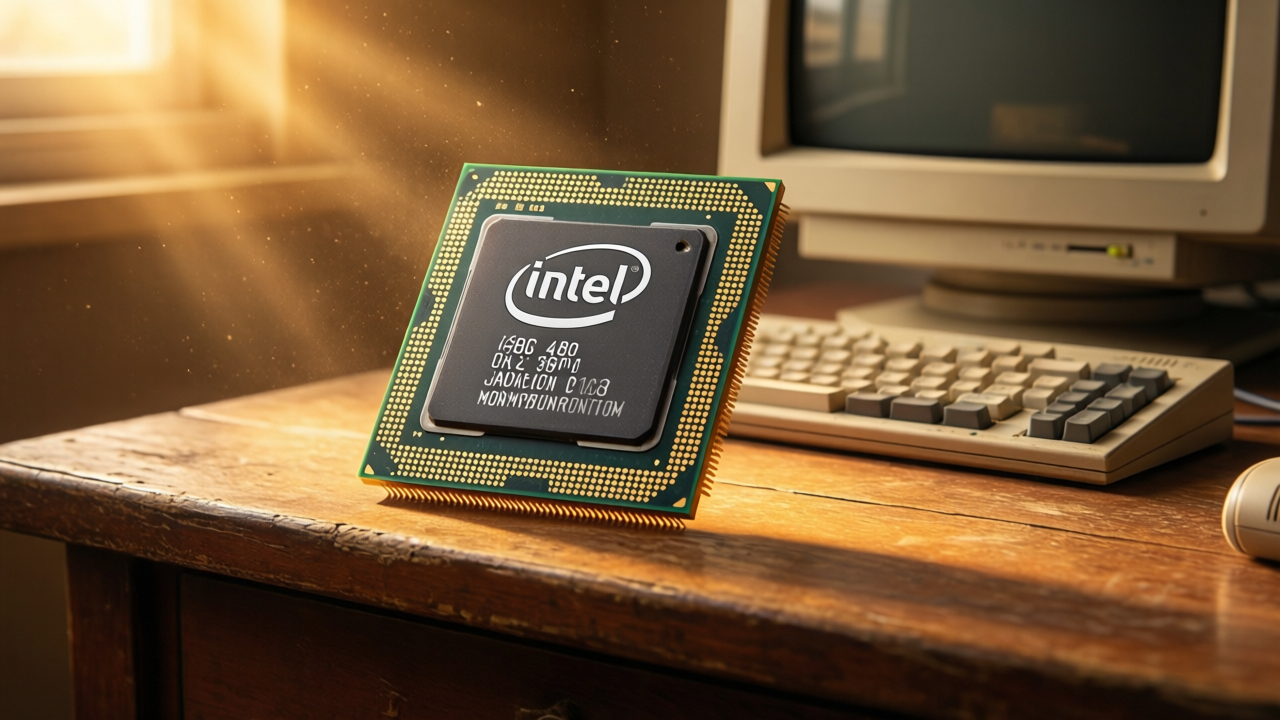
Linux kernel 7.1 was released on June 14, 2026, and among its changes is the long-promised removal of support for Intel’s 486 processor — the chip that defined personal computing in the early 1990s. The removal deletes more than 140,000 lines of code from the kernel, along with support for the Russian Baikal CPU family and ancient bus mouse ports.
A chip with a history
The 80486, nicknamed the “486” or “Four Eighty-Six,” was launched by Intel in 1989 as the successor to the 386. It was the first consumer chip to integrate a math coprocessor onto the main die — the “DX2” and “DX4” variants that overclock enthusiasts still talk about. It was replaced by the Pentium in 1993 and fully discontinued by Intel in 2007.
But the 486 didn’t die there. Third-party manufacturers like Cyrix (with the 5×86) and AMD (with the Am5x86) kept the architecture alive for years, pushing clock speeds into the 133MHz range — respectable performance even by mid-90s standards. If you’re running one of those clones, kernel 7.1 will no longer support them.
The removal was supposed to happen in 2025
This wasn’t planned at the last minute. The Register reported in May 2025 that kernel 6.15 would drop 486 support — but the change was cancelled at the last minute. Now it’s in. Linus Torvalds merged the primary removal patch in April 2026 (commit 0972ba56), and the cleanup is complete in 7.1.
Ingo Molnar, the kernel contributor who drove the removal, wrote in his patch: “In the x86 architecture we have various complicated hardware emulation facilities on x86-32 to support ancient 32-bit CPUs that very, very few people are using with modern kernels. This compatibility glue is sometimes even causing problems that people spend time to resolve, which time could be spent on other things.”
That’s a polite way of saying: nobody is running a 486 on a 2026 Linux kernel, and maintaining code paths that nobody uses is a waste of developer time.
History repeating itself
This isn’t the first time Linux has said goodbye to ancient silicon. Ingo Molnar was also the driving force behind removing i386 (386) support in kernel 3.8 back in February 2013. At the time, he wrote: “Unfortunately there’s a nostalgic cost: your old original 386 DX33 system from early 1991 won’t be able to boot modern Linux kernels anymore. Sniff.”
The pattern is now clear: roughly one decade after a chip is superseded, it starts its journey toward kernel removal. The 386 was dropped 13 years after its last meaningful use. The 486 is being dropped roughly 20 years after discontinuation. The kernel is a living project, and its hardware support footprint naturally migrates toward what people actually use today.
What this means for retro computing
If you’re running a genuine 486 system — and yes, some people still do — you’ll need to stick with kernel 7.0 or earlier. Phoronix notes that additional 486-related code cleanup will follow in subsequent kernel versions, so don’t expect a quick reversal.
For the rest of us, the practical impact is zero. The number of Linux distributions shipping 486-compatible kernels is effectively zero, and any system running a 486 in 2026 is almost certainly running a distro that hasn’t been updated in years anyway.
But there’s something quietly poetic about it. The 486 was the chip that made PCs genuinely useful for the first time — integrated math coprocessor, onboard cache, 32-bit architecture. It powered the machines that introduced millions of people to computing. And now, 37 years after its introduction, the kernel maintainers have decided it’s time to let the past be the past.
Sources:
– The Register: Linux kernel 7.1 sends Intel 486 support to silicon heaven (Liam Proven, June 16, 2026)
– Ars Technica: Linux kernel maintainers are following through on removing Intel 486 support (April 2026)
– Phoronix: Linux 7.1 Phasing Out i486
– Git.kernel.org: Commit 0972ba56 — x86/platform: Remove 486 support