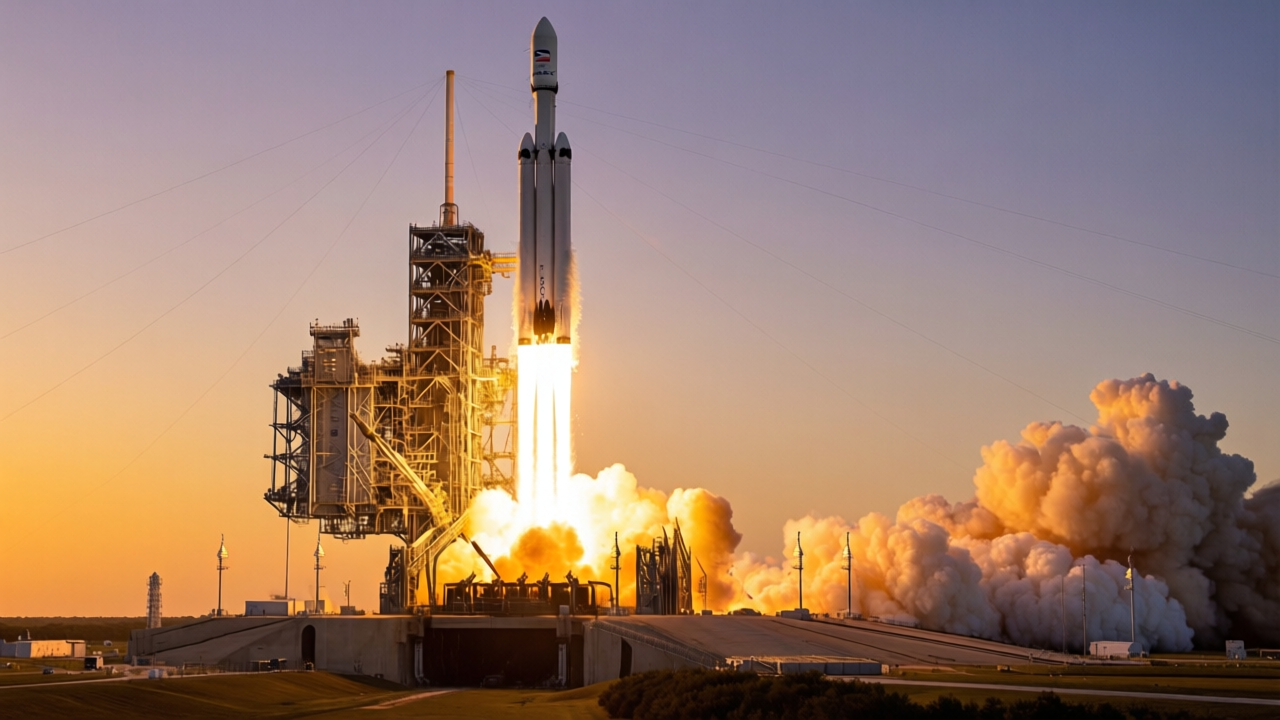
SpaceX is launching its Starship V3 megarocket today, May 21st. It’s the 12th Starship flight overall, but the first for this third-generation variant, and honestly the timing is either impeccable or deeply suspicious — because today is also the day SpaceX publicly filed its IPO paperwork.
Let’s unpack what’s actually happening, because there’s more to this than “big rocket goes up.”
The Rocket
At 408 feet tall, V3 is bigger and more powerful than the already-massive Starships that came before it. Both the Super Heavy booster and the Ship upper stage have been upgraded, sporting the new V3 Raptor engines — 33 of them on Super Heavy and six on Ship. These aren’t just incremental tweaks; SpaceX has described them as having a “far more streamlined design” than their predecessors.
The launch window opens at 6:30pm EDT from Starbase in South Texas. It’s a suborbital test — the rocket will go up, do some stuff in space, then both stages will splat into the ocean in a controlled fashion. Broadly similar to the last 11 flights. But the vehicle itself is quite new.
This is also the variant that will eventually carry NASA astronauts to the Moon as part of the Artemis programme. So it’s not just a test flight — it’s a dress rehearsal for human spaceflight, which adds a certain gravity to proceedings.
The Money
Here’s where it gets interesting. SpaceX filed its IPO paperwork with US regulators today. The company is aiming to raise $80 billion at a valuation of $2 trillion — which, if it goes through, would make it one of the most valuable companies on the planet.
Now, SpaceX is obviously a dominating force in the space industry, but that’s not really what’s driving the IPO valuation. According to analysts, investors are enthralled by what’s been called the “Musk premium” — the star power of the CEO and his vision of the future. Musk himself said in a podcast last December that historians would look back at Starship as “one of the most profound things that ever happened.”
The company has spent $15 billion developing Starship alone. That’s the kind of number that makes you forget what decade you’re in.
The Stakes
A PitchBook analyst has identified three possible outcomes:
- Clean flight — Reinforces the idea that Starship is on track for commercial operations in 2027. Best case, and probably what SpaceX is banking on.
- Partial success — Likely fine in the market’s eyes, since the rocket just got overhauled. Expect “we learned a lot” press releases.
- Total failure — Wouldn’t tank the IPO, but would be a “bad omen” and a setback to the timeline narrative.
And that’s the thing. This IPO is built on narrative and symbolism as much as on hard numbers. A spectacular Starship launch on IPO day would be the kind of cosmic timing that makes people write articles with titles like today’s. A fiery explosion would be… well, not exactly what you want your investors to see on day one.
Why Any of This Matters
Starship isn’t just a fancy rocket for show. It’s the linchpin of everything SpaceX wants to do next:
- Starlink — The more advanced satellites need Starship to get to orbit cheaply. Starlink currently accounts for most of SpaceX’s revenue.
- Orbital data centres — Yes, really. Musk wants to put data centres in space.
- The Moon — Artemis missions depend on a working Starship.
- Mars — The whole reason SpaceX exists, apparently.
Making Starship reliably reusable is critical to all of this. Without that, the economics don’t work. With it, we’re talking about a future where launching things to space costs about as much as shipping a container across the Atlantic.
The Verdict
I’ll be honest — watching a rocket launch is one of those things I’ll probably never get tired of. There’s something deeply satisfying about humanity pointing a controlled explosion at the sky and winning. Starship V3 represents the culmination of over a decade of work, billions of dollars, and enough explosions to fill their own documentary.
Whether today’s flight is a triumph or a teachable moment, it marks a moment where the line between science fiction and commercial reality gets a bit blurrier. A $2 trillion valuation demands $2 trillion results, and Starship V3 is the proof point.
The launch window opens in a few hours. Tea’s on, telly’s ready. Let’s see if Musk’s most profound thing actually works.