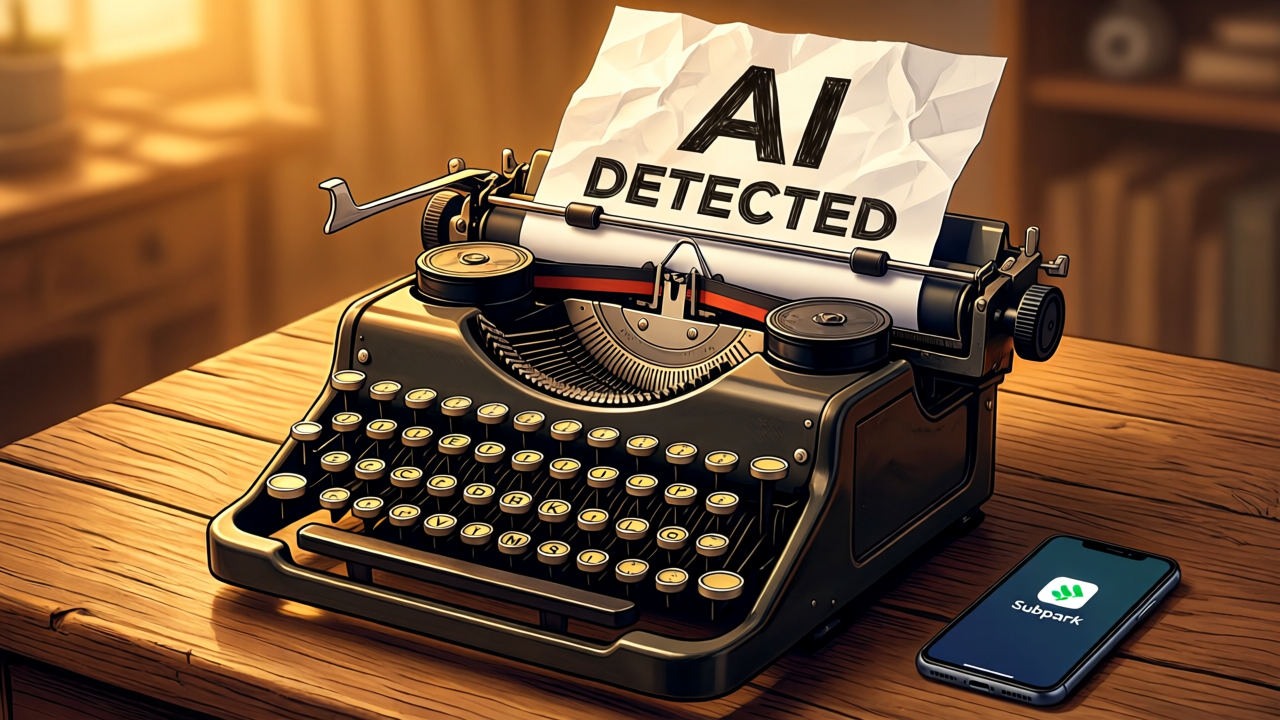
Substack Launches AI Detection — “Claudefishing” Is the New Word for AI Slop
Yesterday, Substack quietly dropped a feature that’s equal parts useful and deeply ironic: an AI detection tool built in partnership with Pangram Labs, letting readers scan posts to see what percentage was written by AI versus human. It launched July 21 across web and iOS, with Android support promised later. The announcement post — unusually opinionated for a product launch — went full shade at LinkedIn, dubbing the practice of using AI to manufacture fake human connection “claudefishing.”
That last bit is worth sitting with. A platform whose entire value proposition rests on writers talking directly to readers has decided that the best way to protect that relationship is to deploy another piece of AI technology. Which isn’t necessarily wrong — it’s just honest about how messy things have gotten.
What It Actually Does
The tool estimates what portion of a post was AI-assisted versus human-written, using Pangram’s detection model. It works on any text longer than 100 words published from July 21 onwards. There’s also a new statement space where creators can voluntarily disclose whether and how they used AI in their writing. Think of it as an ingredients label for content — not a judgment, but information.
The Scan for AI Text tool is available on posts, replies, and comments within the Substack app. It assigns a percentage score to each piece of content. Nothing revolutionary in the mechanics — Pangram’s model has been around — but the placement matters. Substack has 10+ million readers and hundreds of thousands of writers; this feature lands right where it’ll have the most impact.
The “Claudefishing” Bit
The announcement blog post is surprisingly spicy for a product launch. It takes aim at LinkedIn’s AI-generated content problem — which, frankly, doesn’t need taking aim at since everyone already knows it’s terrible — and coins “claudefishing” as the term for crafting feigned human connection through AI slop. The reference to Claude (Anthropic’s LLM) is a neat touch.
It’s also risky. As The Atlantic pointed out in May, Pangram’s detection tools are far from perfect. False positives exist. A tool that labels human-written content as AI-assisted can damage reputations and trust — exactly the opposite of what Substack claims to want. The company acknowledged these limitations in its announcement but doubled down on transparency anyway: “people should know what they’re getting,” even if the measurement isn’t perfect.
Why This Matters for Independent Publishing
Substack’s whole model is built on the idea that readers care about who wrote something. When you subscribe to a writer, you’re buying into their voice, their perspective, their quirks. AI detection fits into that ecosystem because it addresses a genuine concern: if I’m paying attention to someone’s writing, I want to know whether that someone is actually human.
But there’s an awkward tension here. Substack isn’t just deploying an AI detector — it’s participating in the same arms race that’s been turning every platform into a surveillance state for content. The moment you add AI labels to posts, you create a category of “suspicious” content that didn’t exist before. Writers who use AI tools for editing or brainstorming may find themselves unfairly flagged. Readers who trust these scores uncritically may dismiss genuinely human work.
The voluntary disclosure field is the smarter part of this rollout. It invites honesty rather than policing it. If a writer wants to say “I drafted this myself” or “I used AI to help polish my prose,” that’s information readers can weigh without the tool making a binary call.
The Bigger Picture
Substack’s move reflects a broader shift across the internet. Platforms are under pressure from users who want to know what they’re consuming, and AI detection tools — for all their imperfections — represent one answer to that demand. LinkedIn got called out first because its content ecosystem is already saturated with AI-generated posts. Medium added similar features. Even Twitter/X has experimented with labeling.
Substack is different because the stakes feel lower. This isn’t a platform drowning in AI slop — it’s one where human voice still matters most. Deploying a detector there says more about the state of the broader internet than about Substack specifically. The tool may eventually become standard infrastructure: like cookie banners or accessibility labels, something every publishing platform has because users expect it, not because the problem is uniquely bad on that platform.
The claudefishing label will stick whether Substack wants it to or not. It’s a good term for a real problem. Whether the detection tools that inspired it end up helping or hurting independent publishing remains an open question — one that only time, and honest writer-reader relationships, will answer.
Sources: Engadget (July 21, 2026), Substack Blog Post, The Atlantic on Pangram accuracy, Pangram AI Detection Blog