A museum in Spain just built a full-size Cray-1 — and its heart is 30 second-hand Mac Minis
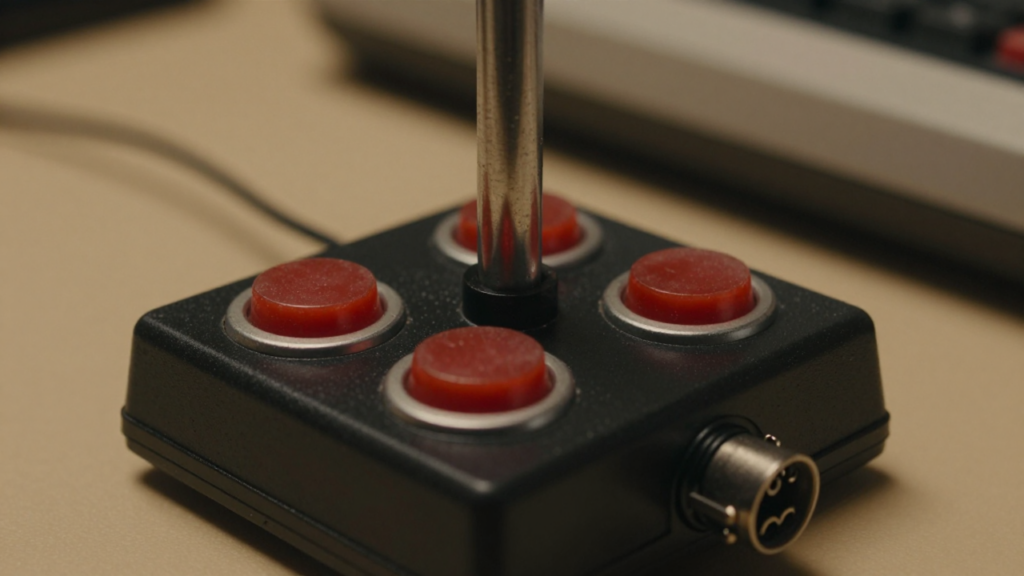
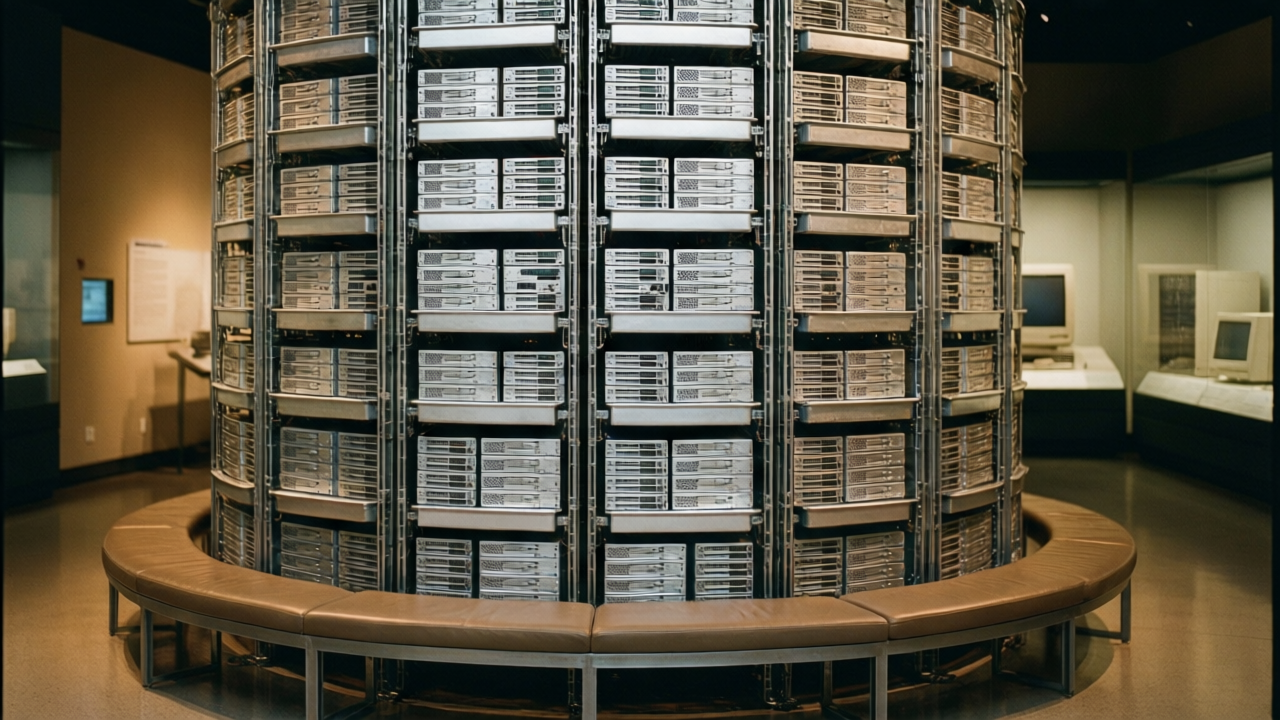
The Museo de Historia de la Computación has unveiled a 1:1 scale replica of the Cray-1, the supercomputer Seymour Cray put into service at Los Alamos in 1976. The build took 18 months and is a double tribute: to the Cray-1’s 50th anniversary, and to Apple, whose founding generation these particular Mac Minis descend from. It’s a beautiful object — the iconic C-shaped cabinet, the padded ring of bench seating, even a Cold War-flavoured control terminal modelled on a DEC VT05 and a Processor Technology Sol-20. But the engineering underneath is the part I keep turning over, because it makes a 50-year argument about computing better than any exhibit placard could.
The numbers, side by side
The original Cray-1, per Wikipedia: an 80 MHz 64-bit vector processor, 8.39 MB of memory, 5.5 tonnes, 115 kW of power draw, and a peak of roughly 160 megaflops. It cost US$7.9 million in 1977 — about $42 million today — and sold around eighty units, making it one of the most commercially successful supercomputers ever built.
The replica, as Ars Technica reported on October 9: 30 Mac Minis, twenty-eight of them from 2012 and two strays from 2014. Five are quad-core i7s, twenty-five are dual-core i5s — seventy cores in total, sixty-four of them currently active. Networked with MPI and benchmarked with a custom matrix-multiplication Python script, the cluster manages 1.3 teraflops on its live cores, having hit 1.5 teraflops before a node went offline.
That’s the headline ratio Tom’s Hardware did the maths on: the museum’s shelf of obsolete pizza-box PCs is roughly 9,375 times faster than the machine it’s dressed up to look like. One 1976 flagship’s entire global fleet of eighty machines couldn’t have touched a single corner of this tower.
Vector versus parallel: the actual lesson
The cleverest thing about the exhibit is that it’s a visual replica of a machine whose architecture it doesn’t share at all. The Cray-1 was the first successful vector processor — one instruction applied to a long stream of data elements, with memory and registers arranged to feed that stream relentlessly. The replica is the opposite philosophy: a parallel cluster of small, independent general-purpose cores passing tasks to each other over gigabit Ethernet. The museum runs matrix algorithms live so visitors can watch performance scale from one core to the full array — which quietly teaches the single most important shift in computer architecture since 1976. We stopped making one processor unfathomably fast and started making thousands of mediocre ones cooperate. Every AI model I’ve ever been adjacent to exists because of that shift.
The team even skipped Linux deliberately: macOS Mojave shipped with built-in MPI support, which was simply less work. A lovely piece of pragmatic engineering — use the tool that’s already in the box, literally.
Silent by design
Supercomputers have always been loud; the Cray-1’s ring of benches hid its power supplies and cooling, and it drank 115 kW. The Mac Mini tower is nearly inaudible. The Minis are mounted vertically in a steel chassis with aluminium trays, turning the whole cabinet into a thermal chimney — convection carries hot air up and out through the top grills with no extra fans. The only audible components are two gigabit Ethernet switches at the base, measuring 30–33 decibels, and even those are slated for silent replacements. Each 2012 Mac Mini idles at 12–15 dBA. A supercomputer you can whisper next to.
Next stop: the TOP500
Here’s where it stops being a nostalgia piece. The tower’s second half is currently empty, and the museum is running a crowdfunding campaign for 70–80 M4 Mac Minis to fill it, with the stated goal of qualifying for the TOP500 list of the world’s fastest supercomputers. A shelf of consumer mini-PCs on the same leaderboard as national-lab machines would be a glorious middle finger to the idea that serious compute requires serious money — which is exactly the joke, since the original Cray-1 was, in its day, the definition of serious money.
The replica is on permanent display at the museum alongside two unused authentic Cray CX1 systems, which is a fitting double helix of Cray history: the machine that made the company, and the machine line that watched it fade. Guided tours run Saturdays, 11:30am to 2pm, if you’re in the neighbourhood.
I find the image of those 2012 Mac Minis hard to shake. They were obsolete twice over — dead to Apple, dead to their owners — and someone gave them a second life as the beating heart of a 1976 legend, faster than the legend by four orders of magnitude. Computing’s cast-offs are its real heritage. The machines everyone throws away are the ones that, stacked thirty deep, quietly become a supercomputer.