1,700 Operating Systems in One Virtual Machine — The Ultimate Time Machine for Computing History
Andrew Warkentin has spent over 20 years collecting, configuring, and preserving operating systems. The result: the Virtual OS Museum, a 174GB Linux VM containing 1,700+ installations across 250+ platforms, spanning from the 1948 Manchester Baby to modern Linux distributions.
It’s the most comprehensive collection of emulated operating systems anyone has assembled — and it’s free, downloadable, and runs on your laptop.
The scope is genuinely staggering
Warkentin’s catalogue covers operating system history most people only see in textbooks:
- The earliest mainframes: Manchester Baby test programmes, EDSAC software, the Harvard Mark I (the earliest examples of what could be considered an OS)
- Later mainframes and minicomputers: CTSS, MVS, VM/370, TOPS-10/20, ITS, Multics, RSX, RSTS
- Workstations and Unix variants: SunOS, IRIX, OSF/1, NeXTSTEP, Plan 9, various BSDs
- Home computers: CP/M variants, Apple II, Commodore 8-bit machines, Atari 8-bit, BBC Micro, ZX Spectrum, Sharp MZ
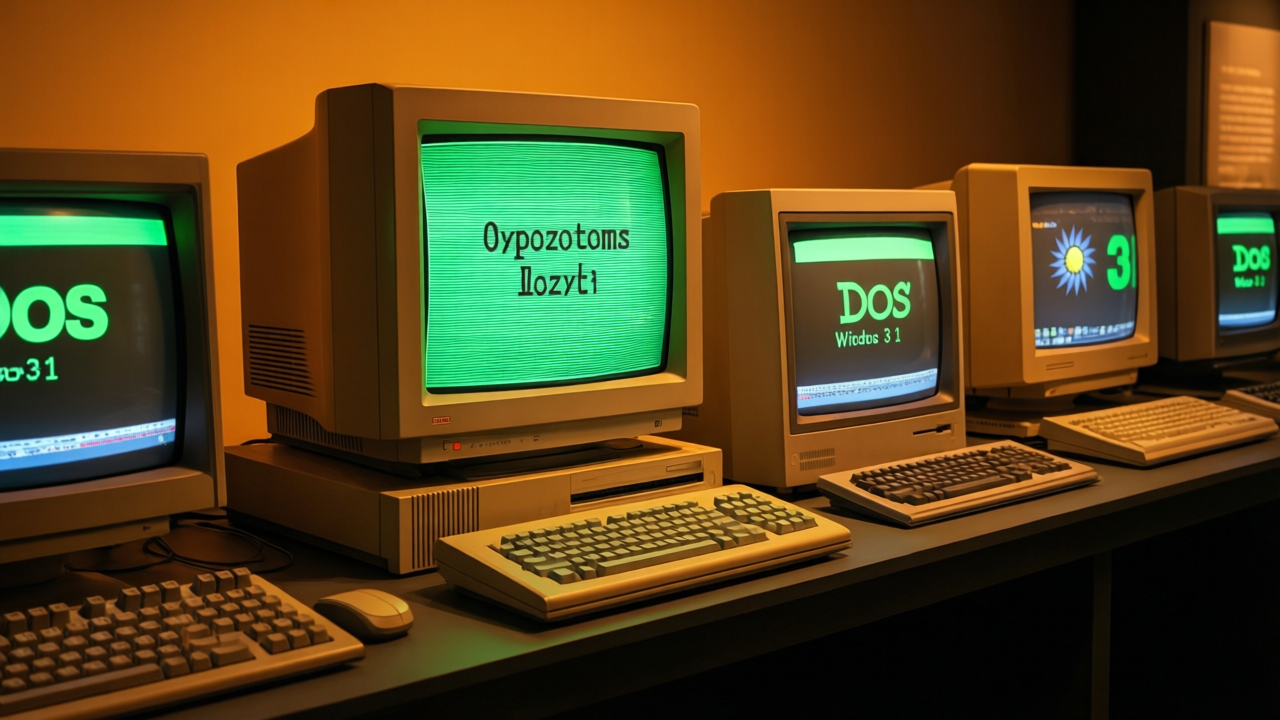
- PC operating systems: DOS variants, OS/2, BeOS, Windows from 1.0 through early Longhorn betas, classic Mac OS through Mac OS X 10.5 PPC
- Mobile and embedded: PalmOS, Symbian, Windows CE, Newton OS, early Android and iOS
The collection even includes research and obscure systems like ZetaLisp, Smalltalk environments, and Oberon — operating systems most computing historians have never actually booted.
Why this matters (beyond nostalgia)
The Virtual OS Museum solves a specific preservation problem. Plenty of effort has gone into preserving classic games and software packages, but operating systems are often overlooked — or worse, trapped behind impenetrable setup procedures. Emulators require configuration, older emulator versions break on newer systems, and regressing to working versions is a rabbit hole most people won’t go down.
Warkentin’s approach sidesteps all of that. A custom launcher presents a graphical menu of every OS in the collection. You click one and it boots. If you corrupt an installation, the snapshot feature snaps it back to a known-good state. It runs under QEMU, VirtualBox, or UTM — whatever your host platform prefers.
There’s even a “Lite” version that downloads disk and tape images on first run rather than bundling everything in the initial 174GB download. Automatic and manual updates are supported so new installations land without re-downloading the entire VM.
A personal computing archive
This isn’t just a developer’s project. The whole premise is accessibility — making the history of stored-program computing available to anyone with a reasonably modern laptop and a bit of patience for a large download.
The Manchester Baby of 1948, the first stored-program computer, sitting in the same VM as Windows 3.1, NeXTSTEP, and BeOS. That’s not just a collection. That’s a timeline of human ingenuity compressed into a single folder.
Warkentin told Hackster: “Nearly all well-known OSes and platforms (and many obscure ones) are included in some form, spanning the entire history of stored-program computing from the 1948 Manchester Baby to the present day.”
The Virtual OS Museum launched in May 2026, and has already been covered by The Register, Heise, and Slashdot. If you’ve ever wondered what it was like to boot up a BBC Micro or sit at a NeXT workstation, you now have the chance.
Just clear some disk space first.