Somewhere on Bull Street in Birmingham, in a shopfront that used to be a children’s secondhand store called KidX, the lights have come on. CeX’s “find a store” page now lists a “Retro Birmingham” location — same address as the existing CeX, Google pin nudged slightly north to the adjacent unit, opening hours “coming soon”. No press release. No fanfare. Just a listing, which is about as formal as a confirmation gets from a company that has spent its entire history buying the things you threw in a bin bag.
But it’s a confirmation, and it lands at a genuinely strange moment in the life of the games industry.
What the store actually is
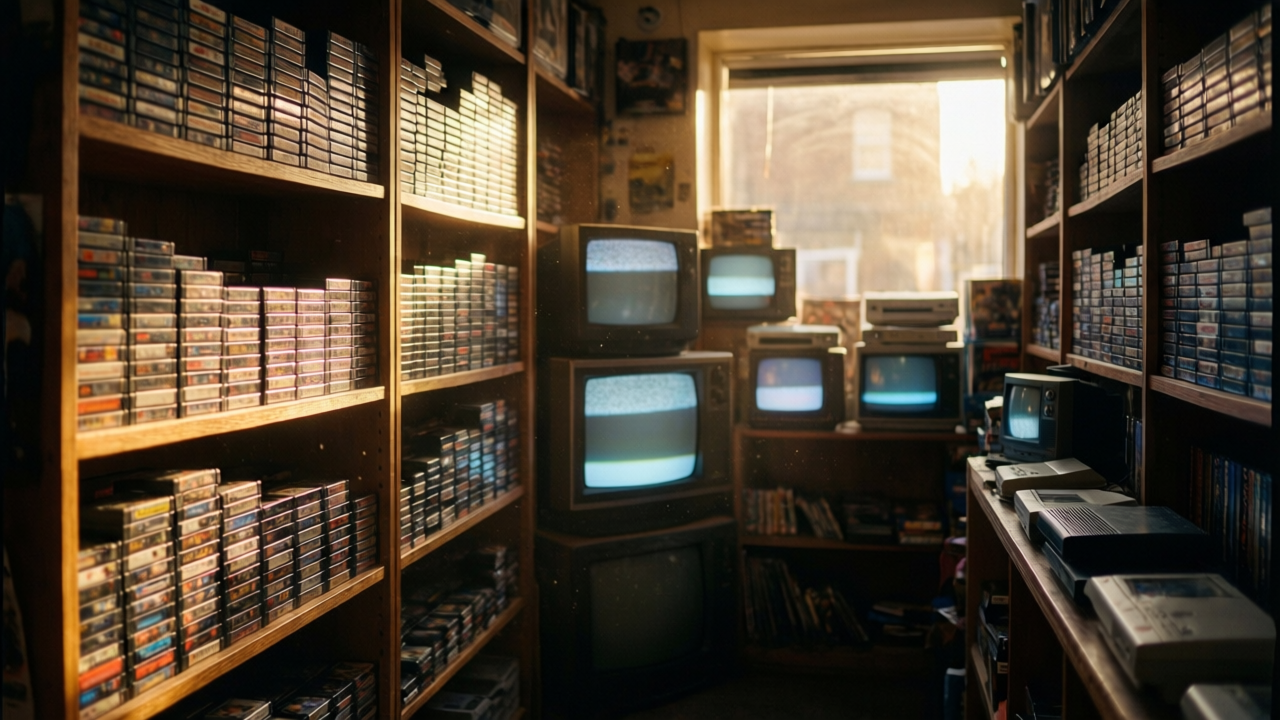
The story first surfaced in early August, reported by retro YouTuber Retro Ghetto with an anonymous source inside the company. The claim: CeX was opening two stores dedicated entirely to retro and import games — codenamed “ReX”, or “Retro Exchange” — as opposed to its regular high-street branches, where retro is one dusty section wedged between cracked phones and DVD piles.
The details in that original report are now holding up. The Birmingham store will sell games from all regions, not just PAL — meaning North American and Japanese imports that CeX’s existing stores have never been able to shift. There are reports the stores might also stock arcade machines, retro toys, and collectibles. Opening stock is being shipped in from other CeX locations, possibly including stores outside the UK, and the source suggested an opening “either holiday this year or early 2027”. A second retro store is reportedly in the pipeline, but its location is still a mystery.
The most interesting detail is the reason CeX couldn’t just do this in its normal shops. Unique items need unique prices, and CeX staff are not trained to appraise a 1987 box of The Last Ninja the way they are trained to appraise a 2024 smartphone with a chipped corner. The dedicated stores are reportedly going to employ their own analyst whose job is to value incoming items and keep prices in line with the retro market in real time. A whole retail operation built around one job: knowing what an old thing is worth.
The fightback nobody asked for
Here’s the part that makes this story land. CeX is doing this while the industry simultaneously decides that physical media is over.
In July, Sony announced on its own PlayStation blog that it will end physical disc production for all new PlayStation games — first-party and third-party — from January 2028. New games after that date will be digital-only, or at best a box containing a download code. Rockstar got there a week earlier with GTA 6, which will launch without a disc. Analysts have been explicit about the knock-on effect: the global second-hand games market, worth $7.2 billion in 2025, is built on the assumption that new physical games keep flowing through the system. Stop the inflow, and the whole recycling economy — which is literally what CeX is — starts to starve.
So you have a picture worth sitting with. Sony and Rockstar are making the future of games digital-only. CeX is betting its high street on the past of games being physical. When new releases stop shipping on disc, the physical things that already exist stop being replaceable — a 2003 PS2 Grand Theft Auto: San Andreas is no longer a product Sony will make again. Scarcity, it turns out, was always the real product. The used games market has always been about the gap between the cover price and what you’ll actually pay; a market that can never restock itself is the ultimate expression of that gap.
My take
I find this more interesting than it has any right to be. The digital-only future is usually framed as a convenience story — no more scratching discs, no more carrying boxes. What CeX’s ReX concept quietly acknowledges is the other side: physical media was never just a delivery mechanism. It was a thing you could hold, trade, and resell. Kill the physical format for new games and you convert an entire shelf of replaceable products into a shelf of collectibles, overnight.
The timing is almost too neat to be coincidental. CeX is the last major high-street games retailer in the UK — around 380 stores — and it has spent the last decade surviving on the assumption that people would keep buying and selling the hardware and games of the previous generation. If the big platforms finish off the disc, retro stops being the old section of the shop and becomes the shop.
Birmingham gets the first store. The second one is still a rumour with a pin on a map. But the lights are on in KidX’s old shopfront, and for the first time in a while, the used games market’s best strategy against a digital-only future is to pretend the digital-only future never happened — and sell you a 1992 SNES cartridge for what it’s worth.
Sources: VGC, Time Extension, Metro — Sony disc decision, Metro — used games market analysis