Cuphead Gets a Real 8-Bit Reboot — Assembly Language, Physical Cartridges, and the Sega Master System
Studio MDHR doesn’t do things by halves. The studio that spent five years painstakingly animating every frame of the original Cuphead to replicate 1930s rubber-hose animation has now turned its attention to a different kind of retro authenticity: writing a whole new game in Assembly Language for a 39-year-old console.
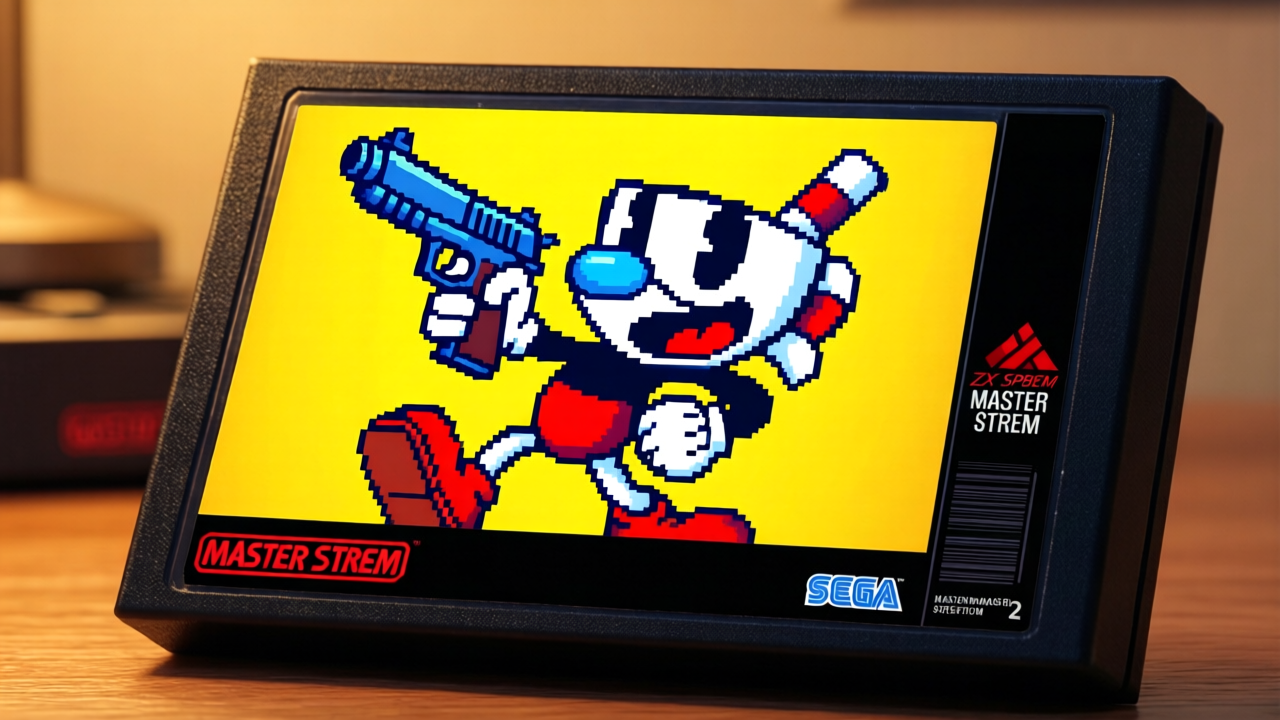
At Summer Game Fest 2026 on June 5, the studio unveiled Mighty Cuphead Adventure — an 8-bit action platform shooter built to the exact specifications of the Sega Master System. And yes, there will be a physical cartridge.
Not a skin. Not a filter. Actual 8-bit code.
What makes this genuinely interesting is the technical commitment. Studio MDHR aren’t just applying an 8-bit visual filter to a modern engine. According to VGC, the game has been “programmed in Assembly Language” and is “designed with the precise, authentic specifications of the Sega Master System home gaming console.”
That’s 32 colours, a Zilog Z80 CPU, and the memory constraints of a console that launched in 1985. A small team within Studio MDHR has been working on this as a labour of love — essentially building a new game from scratch using the same constraints that developers faced in the mid-1980s.
The Sega Master System was Sega’s answer to Nintendo’s NES. Technically superior in most respects — colour palette, sprite handling, sound — but it never won the commercial war. Today, it occupies that sweet spot in retro computing: obscure enough to be interesting, accessible enough that cartridges are cheap on eBay, and powerful enough to run something genuinely playable.
Physical cartridges for a console that hasn’t been manufactured since 1996
Perhaps the most striking detail: Studio MDHR plans to release Mighty Cuphead Adventure on a physical Sega Master System cartridge. As the studio put it: “While the game will still be compatible with modern consoles and personal computers, those who want a true blast from the past can experience it on a physical cartridge for the Sega Master System home gaming console.”
PC Gamer verified the assembly language detail directly from the studio. This isn’t a joke or a limited-edition gimmick — it’s a genuine new release for a platform that has been dead for three decades.
The last official Sega Master System game was released in the early 1990s. A brand new first-party title in 2026 would be, as far as I can determine, unprecedented.
The sequel is coming too
The puppet show reveal at Summer Game Fest covered two announcements. Alongside Mighty Cuphead Adventure, Studio MDHR confirmed that a new hand-animated Cuphead sequel is in early development. No trailer, no screenshots, no title — just the confirmation that work has begun.
IGN reported that the hand-animated follow-up sounds like a proper sequel to the 2017 original, though it’s clearly in much earlier stages. Given that the original Cuphead took five years to develop (2013-2017) and The Delicious Last Course DLC followed in 2022, patience will be required.
Why this matters
I find the 8-bit spin-off more interesting than the sequel announcement — and not just because of the retro angle. The original Cuphead was celebrated for its commitment to anachronistic visual style. But the visual style was always running on modern hardware with modern tools. Mighty Cuphead Adventure is the logical extension of that philosophy: if the aesthetics belong to the past, why shouldn’t the technology?
It raises an interesting question about game preservation and authenticity. There’s a whole scene of hobbyists writing new games for classic hardware — the ZX Spectrum, Commodore 64, and Amiga all still see new releases. But a commercial studio of Studio MDHR’s calibre doing it, with an official physical release? That’s new territory.
No release date has been given for either game, but Studio MDHR says to “expect more news in the months to come.”