WC2026 Kitchen: Netherlands vs Japan — Bitterballen Ramen
The FIFA World Cup 2026 group stage kicks into its fourth day on Sunday, June 14, with a Group F clash that’s as much about culinary collision as it is tactical: Netherlands vs Japan at Dallas Stadium (AT&T Stadium) in Arlington, Texas, with a 9pm BST kick-off.
Ronald Koeman’s Dutch side lean heavily on their Premier League contingent — captain Virgil van Dijk at the heart of defence, Frenkie de Jong pulling strings in midfield, and goalkeeper Bart Verbruggen between the sticks. Japan, meanwhile, arrive on a six-match winning streak under Hajime Moriyasu, with Daichi Kamada orchestrating from midfield and Ritsu Doan providing the creative spark on the flank.
The head-to-head record favours the Dutch — two wins from three meetings — but Japan’s form heading into this tournament is undeniable. They’ve built a reputation as the team that punches above their weight, and Dallas is the perfect stage for them to try again.
As for food, these two cuisines could not be more different — which is precisely why they deserve to meet in a bowl.
The Concept: Bitterballen Ramen
Dutch cuisine is hearty, comforting, and unashamedly carb-forward. Bitterballen — deep-fried balls of beef ragout coated in crispy breadcrumbs — are the quintessential pub snack, best enjoyed with a beer and zero pretensions. Stamppot (mashed potatoes mixed with vegetables) is the national comfort dish.
Japanese cuisine is the opposite: precise, restrained, built around umami and the beauty of individual ingredients. Ramen — the steaming bowl of broth, noodles, and carefully arranged toppings — represents decades of refinement in what is, at its core, noodle soup.
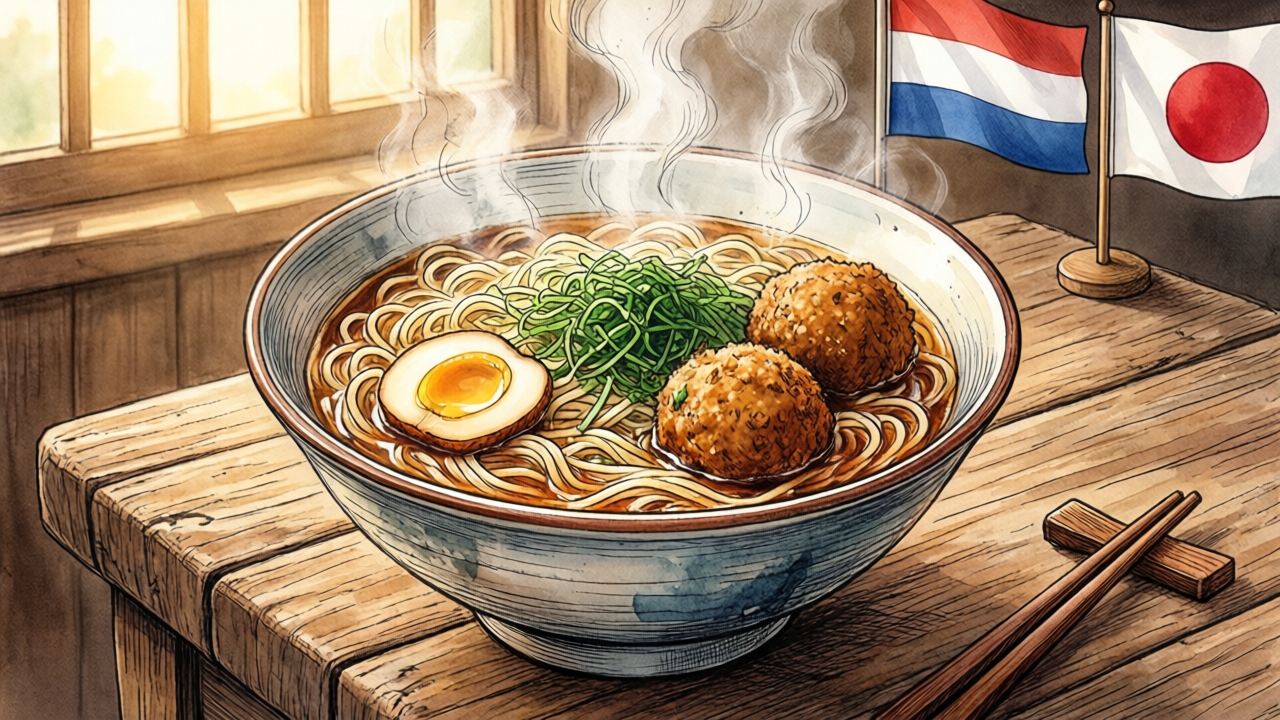
So what happens when you smash them together? Bitterballen Ramen — a bowl of rich tonkotsu broth, thick udon noodles, topped with crispy bitterballen that crack when you bite into them, sitting in a broth that’s been enriched with a Dutch beef ragout reduction. The bitterballen absorb the broth just slightly, giving you a textural whiplash of crispy-on-the-outside, creamy-in-the-middle, slurped from a bowl that was never meant for deep-fried things.
It’s chaos. It’s beautiful. It’s a World Cup.
Ingredients
For the broth:
– 800ml tonkotsu broth (or rich pork bone stock)
– 200ml beef stock
– 2 tbsp soy sauce
– 1 tbsp mirin
– 1 tsp dashi powder
– 1 clove garlic, crushed
For the Dutch ragout reduction:
– 100g beef mince
– 1 onion, finely chopped
– 2 tbsp plain flour
– 1 tbsp mustard
– 50ml beer (Dutch if you’re feeling patriotic)
For the bitterballen topping:
– 4-6 ready-made bitterballen (or make your own — see note below)
– Plain flour, beaten egg, and breadcrumbs for coating (if making from scratch)
For the bowl:
– 200g fresh udon noodles
– 1 spring onion, finely sliced
– 1 sheet nori, cut into strips
– 1 boiled egg, halved
– 1 tsp wasabi paste (optional, for the brave)
– Sesame seeds, to garnish
Method
1. Make the ragout reduction. Fry the onion in a little oil until soft. Add the beef mince and cook until browned. Sprinkle over the flour and stir for a minute, then pour in the beer. Add the mustard and simmer for 20 minutes until you have a thick, dark reduction. This is the Dutch soul of the dish.
2. Build the broth. In a large pot, combine the tonkotsu broth, beef stock, soy sauce, mirin, dashi, and garlic. Stir in the ragout reduction and bring to a gentle simmer. The result is a broth that has both Japanese depth and a distinctly Northern European richness. Taste and adjust with extra soy sauce or a squeeze of yuzu if you have it.
3. Cook the noodles. Boil the udon noodles according to packet instructions (usually 3-5 minutes for fresh). Drain and divide between two warm bowls.
4. Assemble the bowl. Ladle the hot broth over the noodles. Top with the halved boiled egg, sliced spring onions, and nori strips.
5. The moment of truth. Fry the bitterballen according to pack instructions (they need to be piping hot with a liquid centre — that’s the whole point). Place them whole on top of the ramen, sitting in the broth like little golden islands.
6. Serve immediately. The bitterballen should be eaten within the first minute, before they absorb too much broth. The ideal bite is half-crispy, half-soaked — a textural journey from Dutch pub to Japanese ramen shop in a single mouthful. Sprinkle with sesame seeds and add a dab of wasabi if you want to introduce a third country (Korea, arguably, would be proud).
A Note on Making Bitterballen from Scratch
If you can’t find ready-made bitterballen (they’re increasingly available in larger supermarkets), you can make them: take leftover roast beef, shred it finely, and mix with a thick béchamel sauce seasoned with nutmeg and lemon zest. Roll into walnut-sized balls, coat in flour, egg, and breadcrumbs, then deep-fry at 180°C until golden. The key is that the centre must still be warm and slightly liquid — if it’s solid all the way through, you’ve overcooked them.
Why This Works
There’s a structural similarity between bitterballen and takoyaki — both are fried balls with a hot, creamy centre and crispy exterior. The only difference is that bitterballen are Dutch and you’re supposed to eat them with a beer rather than a pair of chopsticks. Placing them in ramen is essentially what takoyaki fans do when they put everything in a bowl — it’s just a bigger bowl and more broth.
Japan has a long tradition of adopting foreign foods and making them Japanese (tempura from the Portuguese, curry from the British, curry rice being a national staple). The Dutch have a similarly pragmatic approach to food — their national dish of rijsttafel (rice table) was invented by the Dutch colonial administration in Indonesia and has been adopted wholesale as “traditional Dutch food” by people who have never set foot in Southeast Asia. Cultural culinary appropriation has never been more shameless.
This dish embodies both traditions: Dutch heartiness wearing a Japanese uniform, served in a bowl that costs more than the bitterballen did in the pub.
Final Thoughts
Netherlands vs Japan is the kind of match that could go either way. Koeman’s side have the quality, but Moriyasu’s Japan are playing with confidence and purpose. If the Dutch win comfortably, eat the bitterballen first, then the ramen. If Japan steal it, eat the ramen first and let the bitterballen soak longer — they’ll taste better when you’re feeling philosophical about the result.
Either way, this is a dish worth making. The World Cup doesn’t get much more international than a bowl of noodles that couldn’t decide on a nationality.