Sonic Gets a Pinball Machine — 35 Years After Sega Couldn’t Bother
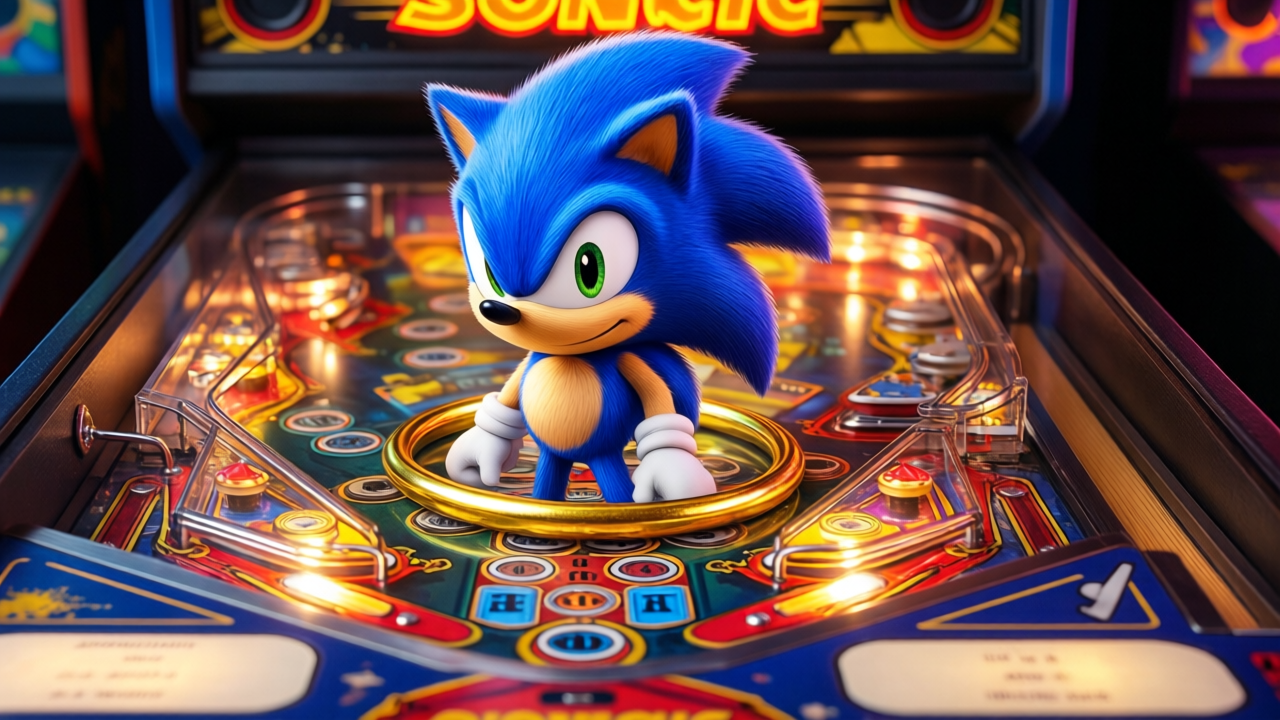
Sonic the Hedgehog turned 35 on June 23, 2026, and for his birthday gift, he finally got a pinball machine. Not a fan project, not an indie prototype — a full commercial table from Jersey Jack Pinball, designed by the legendary Steve Ritchie, with three editions starting at $9,999. The table, titled Gotta Go Fast! Sonic the Hedgehog Pinball, was unveiled at noon ET on Sonic’s actual birthday.
What makes this genuinely interesting isn’t just the table itself. It’s the absurd historical context that nobody in the press coverage seems to be dwelling on enough.
Sega Made Pinball Machines. Just Not Sonic.
Between 1994 and 1999, Sega ran its own pinball division — Sega Pinball Inc. — after acquiring Data East’s pinball assets for roughly $36 million. Over those five years, Sega Pinball produced nearly twenty machines, including tables for Apollo 13, GoldenEye, Independence Day, The X-Files, and Star Wars Trilogy. Licensed properties from other companies, all of them.
None of them starred the blue hedgehog whose face had built Sega’s entire brand identity.
Reports from that era indicate the corporate bureaucracy was so impenetrable that Sega’s own pinball engineers couldn’t get the Sonic logo cleared for internal fax forms. You could imagine a GoldenEye pinball table featuring Pierce Brosnan — but the character whose image drove Sega’s home console war against Nintendo never made it onto a table from Sega’s own factory.
Then, in October 1999, Sega exited pinball entirely, sold the division back to Gary Stern, and what is now Stern Pinball was born from Sega’s own operation. The irony is almost too neat: Sega built a pinball company, ran it for five years without ever using their biggest character, then handed the whole thing to a competitor.
Steve Ritchie Gets His Flow
The designer behind the Sonic table is Steve Ritchie, widely regarded as one of the greatest pinball designers in the history of the medium. Known as “The King of Flow” for his mastery of ball-handling and routing, Ritchie’s credits include Firepower, Black Knight, Terminator 2: Judgment Day, and The Getaway: High Speed II. He has over 40 years of pinball design experience.
He’s also the voice of Shao Kahn in Mortal Kombat II and delivered the iconic “Finish Him!” line. A man who can do both pinball design and Mortal Kombat voice work deserves more recognition than he gets.
Three Editions, One Question: Is This Worth $10k?
The machine comes in three tiers, all sharing the same playfield, code, and core gameplay:
- Arcade Edition ($9,999): Designed for commercial locations. Includes a 27-inch HD LCD display, Wi-Fi and Bluetooth connectivity, an 8-inch subwoofer, a player-capture high-score camera, and stainless steel ramps. No topper, no shaker motor, no edition numbering.
- Special Edition ($12,000): Adds Green Hill Zone battle cabinet artwork, Sonic Blue powder-coated armour, a dual-layer RGB acrylic battle topper, a shaker motor with haptic feedback, and non-reflective Invisiglass.
- Collector’s Edition ($15,000): Everything above, plus “Super-Sparkle” cabinet artwork, Knuckles Red metallic laser-cut armour, and a Sonic vs Dr Eggman mechanical topper.
All editions include JJP Immersive RGB lighting, micro-LED gold ring displays, and Bluetooth audio support. Orders are live through Jersey Jack’s website and authorised distributors, with a $1,000 deposit required.
Why This Matters
Twenty-seven years after Sega stopped making pinball machines, a third-party company in Elk Grove Village, Illinois, is shipping Sonic tables from its factory. The character whose face built an empire never appeared on a Sega pinball table, but gets a Ritchie-designed Jersey Jack in his mid-thirties.
There’s something quietly satisfying about that. The kind of licensing deal that corporate Sega couldn’t greenlight internally — not because of technical difficulty, but because internal politics are always harder than external ones — finally happened when someone outside the company actually wanted to make it.
For the pinball community, a Ritchie-designed Sonic table is basically a guaranteed classic. For retro gamers watching from the sidelines, it’s proof that the characters we grew up with are still finding new physical formats to inhabit. And for anyone who remembers Sega’s golden era, it’s a reminder that some of the best things happen when you stop trying to do everything yourself.
Sources: Tech Times, Time Extension, Polygon