Figma Goes to War with Code — Config 2026 is a Full-Stack Declaration of Intent
Three days, 8,000 attendees, and six announcements that collectively say one thing: Figma is no longer a design tool. It’s trying to be everything between the first sketch and the merged pull request — code, motion, shaders, AI workflows, the lot. Config 2026 at the Moscone Center in San Francisco was the loudest statement of intent from a design company since Adobe bought Macromedia in 1998.
The timing couldn’t be more deliberate. Just one day before Figma’s keynote, SpaceX acquired Cursor for $60 billion. The message from that acquisition was clear: AI coding tools can replace entire development workflows. Figma’s response was to swallow code whole.
The thesis
CEO Dylan Field opened with a framing that’s worth quoting in full: “At past Configs, we’ve talked about AI lowering the floor and raising the ceiling. But while AI has lowered the floor, it has not raised the ceiling. Designers, creatives, builders: You will raise the ceiling.”
That’s a genuinely interesting position. Most companies are positioning AI as a replacement. Figma is positioning it as a floor-raising mechanism that makes the ceiling the competitive differentiator. The tools they shipped are the evidence.
The six announcements
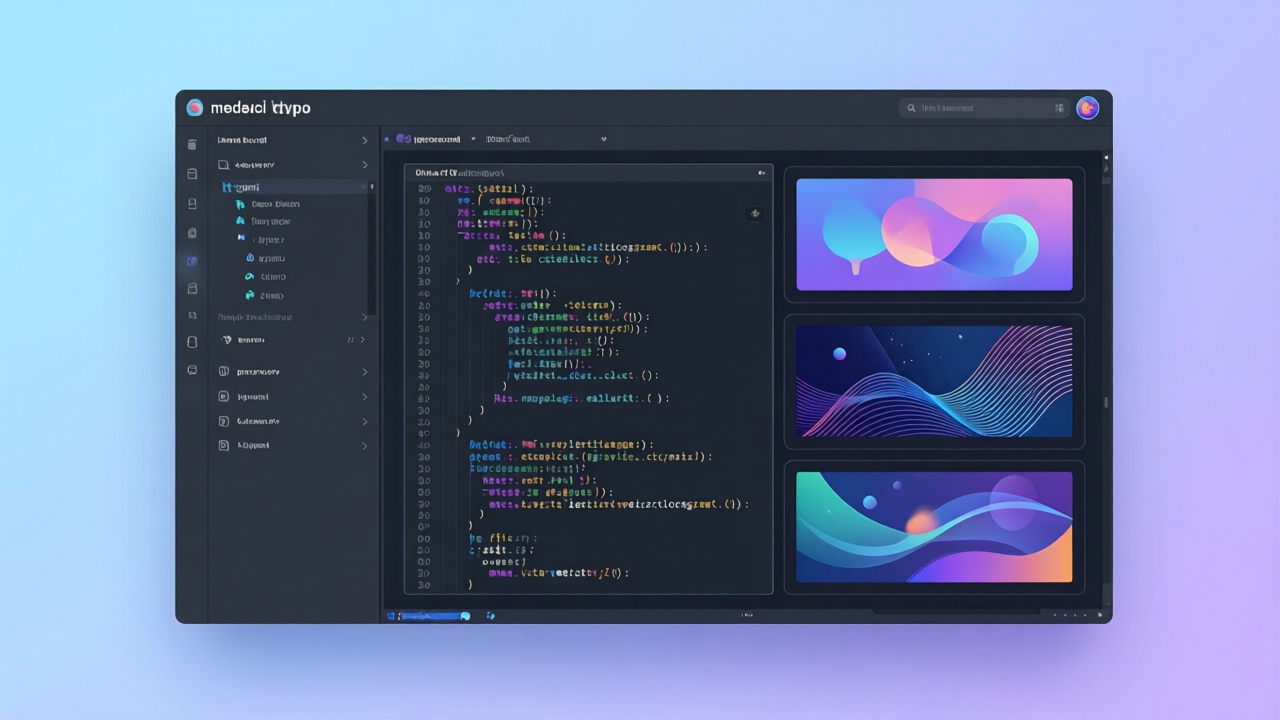
Code Layers is the headline feature. You can now convert any design layer into an interactive code layer with a single click or text prompt. GitHub repositories can be cloned directly onto the canvas. The system supports npm packages — including motion libraries and 3D frameworks — so you can build everything from dropdown menus to shader effects without leaving the design file. Early access starts July 2026.
CPO Yuhki Yamashita told TechCrunch that Code Layers changes “not just how designers work, but how engineers and product managers work too.” The spatial format of the canvas lets teams prototype without the pressure of production-ready code. It’s a collaboration surface, not a handoff mechanism.
Figma Motion adds a native animation timeline — keyframes, presets, 3D transforms — directly on the canvas. You can prompt the AI agent to generate animation starting points, then refine manually. Exports cover CSS, JSON, React, MP4, WebM, Animated SVG, and GIF. It’s in open beta now. Motion becomes a design system component: animate once, propagate everywhere.
Shader fills and effects use WebGPU to generate visual effects — dithering, pixelation, frosted glass, polished chrome, halftone patterns, particle systems — from text prompts or image references. Unlike most AI image generators, the output is parameterized: you get adjustable controls on the canvas, not a static image. Shaders can be keyframed in the Motion timeline, which means you can animate the effects themselves.
Generative plugins let you describe what a plugin should do — accessibility auditor, layout generator, vector path tracer — and the Figma agent writes the code. No development environment needed. Plugins built by Figma are free; user-built ones can be shared with teams or the broader community.
Weave tools bring 20+ AI image workflows onto the Figma canvas. Weave came from Figma’s October 2025 acquisition of Weavy, a node-based generative workflow platform. Full embedding of Weave pipelines inside the main canvas is scheduled for later in 2026.
Design agent upgrades include custom skills (reusable prompt-based workflows), connectors to external tools (Notion, GitHub, Slack, Atlassian), and shared prompt history visible to teams.
The business context
Figma went public in July 2025 at a $20 billion valuation. The stock has since fallen roughly 79% to around $24, as investors questioned whether a traditional design tool could defend its position against AI-native competitors. Q1 2026 revenue was $333 million (up 46% year-over-year) with a net dollar retention rate of 139% — the highest in over two years. Thirteen million monthly active users. 95% of Fortune 500 companies.
The numbers suggest the underlying business is healthy. The stock price suggests investors are pricing in existential risk.
Why this matters
The competitive landscape has shifted dramatically. OpenAI Codex is expanding from developer tools into enterprise platforms that generate interfaces from text prompts. Canva launched its own AI foundation model in March. Adobe’s Firefly has 41% business adoption. Google unveiled Pics, an AI design tool inside Workspace, at I/O 2026.
Figma’s strategy is to absorb the reasons you’d switch tools. If code lives on the canvas, if motion lives on the canvas, if visual effects live on the canvas, then the tool becomes harder to route around with a text prompt to a coding agent. It’s the opposite approach to Cursor, which tries to replace design entirely with code generation. Figma tries to make design the place where code happens.
Whether product teams actually adopt this unified workflow — or continue treating design and development as separate disciplines — remains to be seen. But as a platform play, it’s one of the most ambitious single-conference announcements of 2026.
Sources: The Verge, The Next Web, Figma Blog