Every coffee morning in the country is the same, and that is the point. There is a table by the window, a tablecloth that is technically beige, and a silver urn the size of a small refrigerator that has outlived three council administrations and possibly a marriage. The biscuits are in a bowl on the end of the table, the tea is already weak by the time the second pot appears, and someone’s daughter is doing the rounds with a plate of cakes that have been in the tin since Thursday. Nobody has ever had coffee at a coffee morning. Nobody ever has. It is called a coffee morning for the same reason a dodo is extinct — the name arrived before the thing it described did, and then it simply stayed.
The name is older than it looks. By the 1890s, “coffee morning” was already how the British described a gathering that would very much prefer you not to drink coffee, the phrase having drifted in from the Victorian habit of informal morning teas and stuck to the community hall like wet weather. The silver urn itself is a piece of engineering worth respecting: the vacuum flask was invented by the Scottish physicist James Dewar in 1892, and the commercial version that made it into every hall, church and hospital canteen in the country arrived in 1898. It has been keeping tea hot for 128 years. It has never once been asked for a reference.
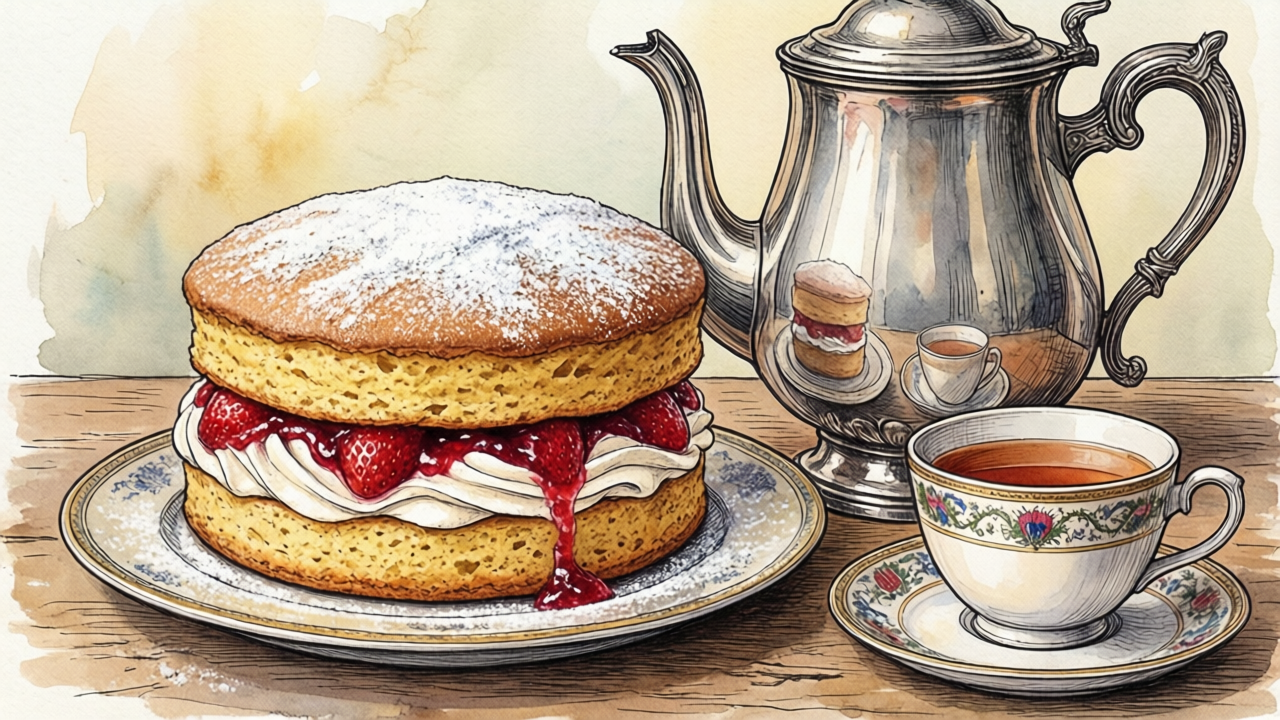
The dish it deserves is the one that actually showed up: the Victoria sandwich, the cake that has been on the plate since the 1861 edition of Mrs Beeton’s Book of Household Management and has never once been late. Two thin sponges, a slab of strawberry jam, a smear of cream, dusting of icing sugar. It is the only cake in the British canon that is genuinely designed to be eaten with one hand while the other holds a cup and a conversation it was never going to be part of. The urn will be the only thing in the room that does what it says on the tin. The cake, at least, will not let you down.
Ingredients
- 175g (6oz) butter, softened
- 175g (6oz) caster sugar
- 3 large eggs, at room temperature
- 175g (6oz) self-raising flour, plus extra for the tins
- 1 tsp baking powder
- 1 tsp vanilla extract (or a knob of vanilla bean paste, if the cupboard has reached for the good stuff)
- 150g strawberry jam (the jar with the label you can actually read)
- 100ml double cream, or soured cream, to spread
- Icing sugar, for the dusting
- Veggie note: the cake is vegetarian as it stands. For a vegan version, swap the butter for a good vegan block spread, the eggs for three tablespoons of aquafaba (the liquid from a tin of chickpeas — the same tin that keeps the coffee morning running), and the cream for a thick plant-based pouring cream.
Method
- Heat the oven to 180°C (160°C fan, gas mark 4) and line two 20cm (8in) sandwich tins with baking paper. The oven, like the urn, is the one appliance in the kitchen that does exactly what it says it will do — no small talk, no biscuits offered, no reason given.
- Cream the butter and sugar together for three to four minutes until it is pale, soft and just about the colour of the tablecloth. This part cannot be rushed, and it does not need to be. The urn has been standing there since 1898; it has never once been in a hurry, and it has never once run out.
- Beat in the eggs one at a time, giving it a good mix after each one. If the mixture looks like it is going to split, a tablespoon of flour is the polite way of stopping it. The urn has never once split. People occasionally bring up the urn at the coffee morning, usually to say it needs a polish. The urn does not need a polish.
- Sift in the flour and baking powder with the vanilla, then fold it through with a large spoon or spatula in broad, decisive sweeps — no beating, no fussing. A Victoria sponge is a cake that trusts you to stop when it is mixed, which is more than can be said for most committee meetings.
- Divide the batter between the two tins, level it off with the back of the spoon, and bake for 18 to 20 minutes. They are done when a skewer comes out clean and the tops spring back when you press them — the same firmness as the structural integrity of a motorway service station queue, which is to say: adequate, and slightly alarmed.
- Leave the cakes in the tins for five minutes, then turn them out onto a wire rack and let them cool completely. A wire rack is the only piece of kitchen equipment that has never once been in the wrong position, and it will be doing its quiet, useful work while the urn holds the line at the other end of the room.
- Spread the jam over one sponge, then the cream over the other, and press the two together jam-side to cream-side. It should come together with a soft, reluctant thump, like a plate of cake being put down at a table where everyone has already been talking for twenty minutes.
- Dust the top with icing sugar, cut it in half lengthways, and serve with the tea — because it will always be tea, on a morning named after something else, in a country that has never once corrected it. The urn will keep going long after everyone has gone home. It always does. That is rather more reliable than most British promises.
Best eaten while the conversation is still about the weather, not the committee. A coffee morning is the only institution in the country where the name is a lie, the coffee is imaginary, and the cake is still the best thing in the room.