For most of the twentieth century, the factory canteen was the most important room in Britain that nobody wrote about. It was where the shift ended, where the trolley appeared, and where a thousand opinions about the soup were formed in the space of one ladle. The food was rarely good. It was always hot, and it was always there, and in a country that has always found it easier to under-promise than to cook, those two things were the whole trick.
The word itself is a working-class one. It comes from the French cantine, the sutler’s shop in a military camp, which came from the Italian cantina, which just means “cellar”. A canteen is, etymologically, a cellar that learned to queue. Which is about right, because the best ones were low-ceilinged and fluorescent-lit and smelled of stock and institutional soap, and the queue moved at exactly the speed of the trolley’s wheels.
The factories came first. By 1789 the Cromford mill was employing 800 people, which is a lot of people for one building to feed, and in 1833 the first Factory Act set up the first factory inspectors, with the unenviable job of telling mill owners that their workers were, in fact, human. Nobody in 1833 was inspecting the soup. That, in the end, was the industrial revolution’s one remaining gap.
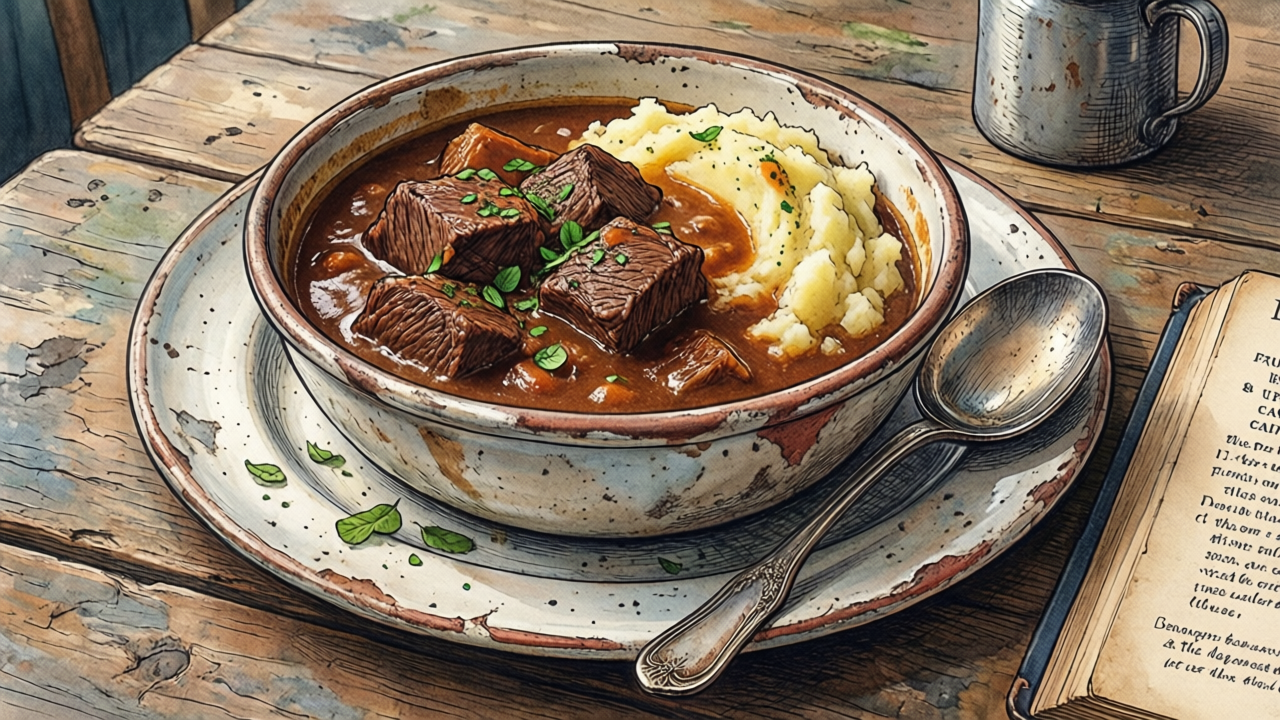
The recipe below is a beef shin stew, which is to say it is the canteen stew itself — the one that sat on the trolley in a bain-marie that had seen things and made the whole week bearable. Both reward the people who stand in a queue for something hot.
Ingredients
- 1kg beef shin, cut into chunks (beef chuck works — the stew forgives it)
- 2 tablespoons vegetable oil
- 2 onions, chopped
- 2 carrots, chopped
- 2 celery sticks, chopped
- 3 potatoes, thickly chopped
- 2 tablespoons flour
- 2 tablespoons tomato purée
- 300ml tin of chopped tomatoes
- 300ml ale (any decent dark beer will do)
- 600ml beef stock
- 1 bay leaf and a sprig of thyme
- Salt and black pepper
- Butter and a splash of milk, for the mash
Method
- Heat the oil in a large heavy-based pot and brown the beef in batches until coloured all over. Don’t crowd the pot — this is a queue, not a mosh pit. The browning should be the colour of a factory worker’s face in January: deeply tanned, slightly regretted.
- Set the meat aside and, in the same pot — do not wash it, the browned bits are the point — sweat the onion, carrot and celery for about ten minutes, until soft and no longer arguing with you. The onions should go the colour of the break-room wallpaper: a calm, institutional beige.
- Stir in the flour and cook for a minute, then the tomato purée, and let it darken. This is the roux, the canteen equivalent of a timesheet: nobody enjoys filling it in, but everything runs off it.
- Pour in the ale and let it bubble for a minute, then the stock, the tomatoes, the bay and thyme, and the browned beef back in. The alcohol burns off and the flavour stays — the same deal as the canteen bar at half past four: technically working hours, actually not.
- Bring to a bare simmer and leave it for two and a half hours, checking once an hour and adding a splash of water if it’s getting tight. The 1833 Act was the first law in the country to limit the hours children could work in a factory. This pot is not subject to it. It works longer hours and gets no say.
- Add the potatoes in the last forty minutes. They should fall apart when poked but hold together when served — the structural compromise of a canteen trolley.
- Mash a couple of potatoes with a knob of butter and a splash of milk, and pile it beside the stew with a generous ladle of gravy. Season at the end — the stew will have reached a firm opinion about seasoning by now, and it’s wiser to go along with it.
Veggie version: finely chopped button mushrooms and a tin of drained red lentils in place of the beef, vegetable stock instead of beef, and brown the mushrooms first. The stew won’t tell.
The stew keeps for three days in the fridge and gets better on day two, which is more than can be said for most British institutions. The trolley has come to you. It isn’t going anywhere.