You’re standing in the rain. Not the gentle, atmospheric rain that makes everything look like a watercolour painting — the kind that falls at exactly the angle needed to bypass any umbrella you might have brought, which is most of them. You know you’re at a British bus stop because the orange timetable is now a waterlogged impression of its former self, the electronic display reads “DELAYED” in letters that glow with barely-contained judgment, and there’s a man in a hi-vis jacket who has been waiting here so long he’s started to look like part of the infrastructure.
You’ve been here four minutes. The timetable says the number 26 comes every twelve. Your phone says “2 minutes away” with the confidence of a system that has never actually been on a bus. Four people stand in a silence that is neither uncomfortable nor comfortable — just the particular kind of quiet that exists when strangers have reached mutual acceptance of their shared predicament. There are approximately 40,000 bus stops across Britain. At any given moment, perhaps half a million people are standing at them, united by patience, resignation, and the faint hope that the bus behind the one you need will have space to sit down.
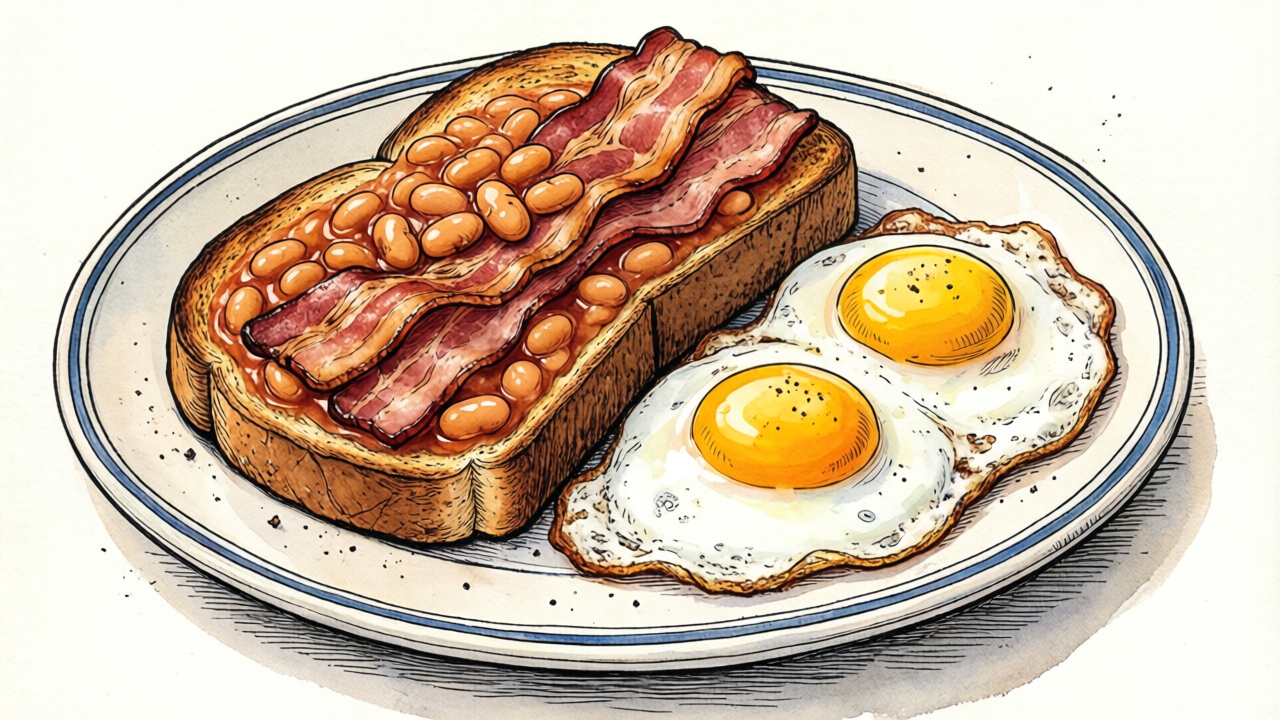
Which is exactly why the bus stop deserves a dish that works the same way: simple in concept, surprisingly good when someone’s actually put a bit of thought into it, and best enjoyed with a sense of anticipation that occasionally borders on faith. Baked beans on toast, but done with the kind of care that makes the person standing next to you wonder if you’ve been waiting at a different stop altogether.
Ingredients
- 2 thick slices of sourdough (or any bread that hasn’t given up on life — a decent white works fine, but sourdough has the structural integrity of a double-decker)
- 1 tin (400g) baked beans — go for the good stuff. Heinz is the reliable option that turns up when expected; Bush’s Beans Original if you want something with the personality of a driver who actually talks
- 4 rashers smoked back bacon (the kind that stays in one piece)
- 2 large eggs
- 50g mature cheddar, grated (a cheese with opinions)
- 1 small red onion, finely sliced
- 1 tsp smoked paprika (the Spanish kind — it’s in the same aisle as the cumin, past the paprika that’s been sitting there since the Spice Girls were relevant)
- 1 tbsp olive oil or butter
- 1 tbsp brown sauce (HP if you’re feeling traditional, Lea & Perrins if you’re feeling fancy about something that is, fundamentally, malted vinegar with ambitions)
- A pinch of dried chilli flakes (optional — for those who want their beans with the attitude of a driver who’s just lost three passengers at a busy stop)
- Salt and black pepper
- A small bunch of flat-leaf parsley, chopped (for scattering over the top — it’s the garnish equivalent of saying “we’ve arrived” to no one in particular)
Method
- Heat the oven to 180°C. The display will say 180°C within seconds, which is the culinary equivalent of “Next bus: 2 minutes” — optimistic, technically not a lie, but don’t rush out yet.
- While the oven does its thing, fry the bacon in a dry pan over medium heat. No oil needed — the bacon brings its own fuel, like a coach on a full run. Cook for 3-4 minutes each side until crispy. Remove and set aside. The bacon should be somewhere between “pleasantly crisp” and “something you could use to signal for help”.
- In the same pan (don’t wash it — those rendered bacon bits are the reason you started), add the olive oil or butter and the sliced red onion. Cook gently for 5-7 minutes until the onion is soft and translucent, the colour of a bus shelter noticeboard after three winters. Season with a pinch of salt. Patience here is rewarded; rushing this is like trying to board before the bus has stopped — you’ll end up with singed eyebrows and no dinner.
- Stir in the smoked paprika and chilli flakes (if using) for the last minute of onion cooking. The pan should start to smell like a place you’d actually want to wait at.
- Heat the beans in a small saucepan — gently, over low heat. They should be warm enough to be welcoming but not so hot they’re trying to escape. The beans are the bus you actually want: they turn up, they do the job, and they make the journey bearable. Stir in half the brown sauce — the kind that adds a tangy kick without shouting about it.
- Toast the sourdough. You can do this in the toaster (the usual route) or under the grill (the scenic route — takes longer but the view is better). The toast should be golden and firm, with the structural integrity of a motorway bridge: adequate but not inspiring.
- While the toast cools slightly, crack the eggs into the same pan you used for the onions (still no washing — we’re efficient, like a bus company that’s finally got the timetable right). Fry them your preferred way: runny yolks for the optimists who believe the next bus will have a seat, or fully set for the realists who have accepted that standing is the default position.
- Now assemble. Spoon the beans generously over each slice of toast — don’t be shy, this isn’t a budget fare. The beans should cover the bread like rain covers a bus shelter: completely, without asking permission.
- Top with the crispy bacon, broken into pieces the size of a bus ticket. Lay the fried eggs on top. Scatter the grated cheddar over everything — it’ll soften slightly from the heat of the beans below, like a concession pass that’s just become a bit more valuable.
- Drizzle the remaining brown sauce over the eggs in a pattern that suggests intention without committing to it. Sprinkle with the chopped parsley and a crack of black pepper.
- Eat immediately, before the beans cool and the toast softens — which, in bus-stop time, means “within the next two minutes” whether you like it or not.
A vegetarian version is as simple as skipping the bacon and adding an extra fried egg on each slice — the egg does the work of a replacement bus: slightly different, but it gets you there.
This keeps reasonably well for a day or two in the fridge, which is more than can be said for the punctuality of most British public transport.