There is a meal in the British diet that has been systematically misremembered, and it’s a good one. High tea. Not the scone-and-finger-sandwiches-in-a-porch affair — that’s afternoon tea, the low one, the one with the tiered stand and the quiet sense that you’re being judged on how you hold the spoon. High tea was something entirely different. It was the evening meal of the working classes: a proper hot pie, a mug of strong tea, and enough gravy to float a spoon, eaten at the dining table. The high table. Not the low little tea table by the parlour chairs — the one where you actually sat down and had dinner.
The whole thing is a bit of a mix-up the Victorians never quite sorted out and the rest of the world has never once bothered to. The Duchess of Bedford — Anna Maria Russell, the seventh one — is credited around 1840 with inventing the light afternoon tea, a pot of tea and a few nibbles to bridge the gap between luncheon and a supper that didn’t arrive until nine. Posh, low, a little bit faint. But down in the working-class household, “high tea” meant the real meal of the day, served at the high dining table because the low tables were reserved for the fancy stuff. The name stuck to the wrong end of the history, the way it does.
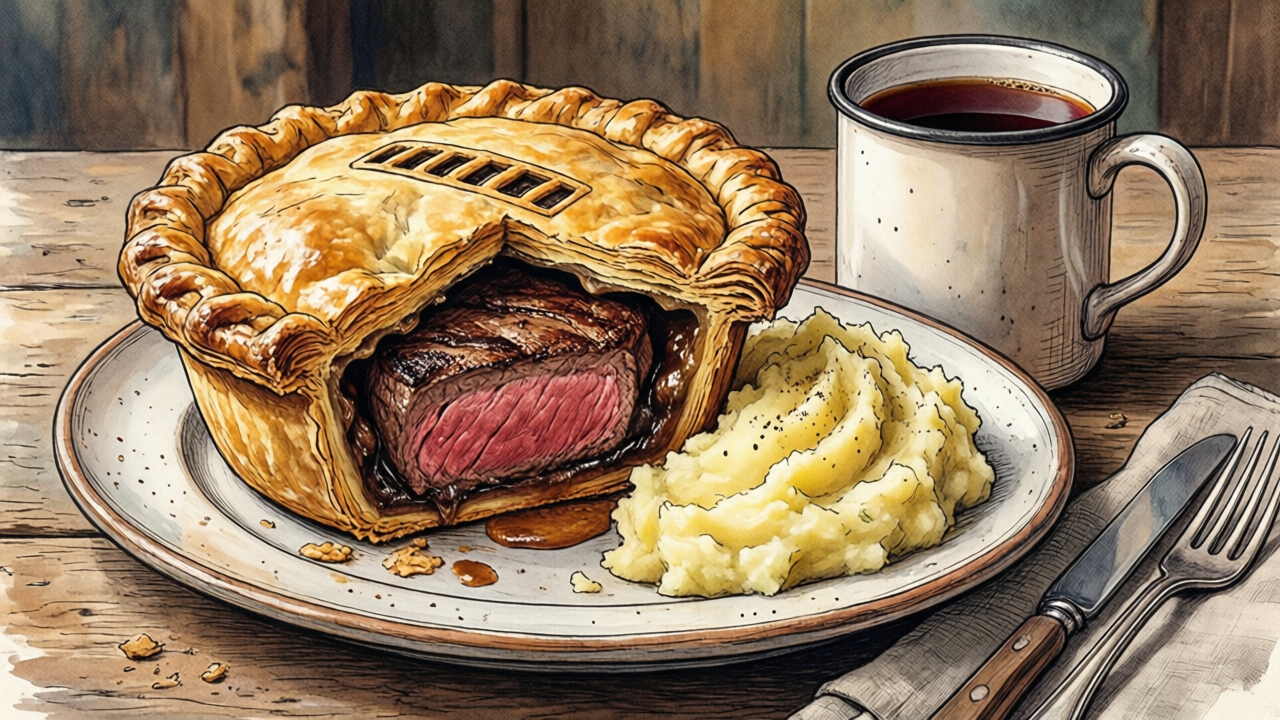
So this is a steak-and-ale pie with mash, which is to say it’s the meal that was actually on the table. The posh tiered stand can keep its finger sandwiches. This one is high in the only way that matters — at table height, lid on, with the ale in the filling doing the work of a second helping.
Ingredients
- 500g beef mince (or coarsely chopped stewing beef, if you’re feeling committed)
- 1 large onion, chopped
- 1 tbsp butter
- 1 tbsp plain flour
- 100ml dark ale or stout
- 200ml beef stock
- 1 tbsp Worcestershire sauce
- 1 tbsp tomato purée
- 1 sheet ready-rolled puff pastry
- 500g potatoes, for the mash
- Butter and milk, for the mash
- 1 egg, beaten (to wash over the top)
- Salt and black pepper
Method
- Get the onion going in a knob of butter over a medium heat until it’s soft and sweet and has given up most of its opinions. This is the part that can’t be rushed — nobody ever improved a pie by hurrying the onions.
- Add the beef and break it up, cooking until it’s browned all the way through. You want proper colour on it, not the pale, under-achieved look of a dish that gave up halfway. High standard. The mince should be the colour of the good kind of muddy, which is to say: proper.
- Spoon over the flour and stir it into the meat for a minute to cook the rawness out of it. It’ll thicken the mixture and make it a little more committed, the way a pie should be.
- Pour in the dark ale and the beef stock, add the Worcestershire and a spoon of tomato purée, season, and let it all bubble away for about ten minutes. The ale is doing the real work here — it’s the filling’s idea of a second helping, and it takes the edge right off the beef. It should smell like the back of a pub, only in a good way.
- While that goes, make the mash: peel and chop the potatoes, boil them in salted water until they fall apart, then beat in the butter and a splash of milk until smooth. You want the consistency of a soft landing, not a concrete slab. It’s the base the pie sits on, the way the high table was the base everything else was served from.
- Spoon the filling into a pie dish, leaving a little headroom — you want the lid to sit on top, not fight it. Roll out the puff pastry to cover the dish with a rim to spare, drape it over, press the edges down, and poke a couple of little vents in the top for the steam to get out, because a pie with nowhere to go will make a mess of your oven.
- Wash the top with a little beaten egg, and it’ll come out of the oven with a proper high colour — golden, a bit shiny, the kind of finish that earns a second look. Cook at 200°C for about 30–35 minutes, until the pastry is puffed and the filling is bubbling through the vents.
- Serve the pie with the mash alongside, a good spoonful of the gravy spread over the top, and a mug of strong tea within reach. That’s the lot. That’s high tea the way it was meant to be — not the scone thing, the pie thing.
For the vegetarian version, swap the beef for finely chopped mushrooms and a tin of drained red lentils, and the beef stock for vegetable stock. Everything else holds — the ale still does the work. The filling keeps happily for a few days in the fridge, which is more than can be said for most British afternoons. And if anyone calls this “high tea” and reaches for the finger sandwiches, just point at the high table and tell them the low stuff is for other people.