There are few things in the modern British landscape as quietly triumphant as a community hall on a Saturday morning, full of people soldering. That is where the Raspberry Pi lives — not in a laboratory, but in a hall, with a kettle. The first board, a green rectangle no bigger than a credit card, went on sale on 29 February 2012, a leap day, because of course it did. It cost £35, which is the price of a decent pint and a chip butty, and the reason it exists at all is a Cambridge man named Eben Upton watching schoolchildren lose the plot over computers.
The name was Upton’s. He liked raspberries. The logo is a raspberry. More than 60 million units have shipped since 2012 — a number a few nations would be proud to call a population — and the entire operation, from the credit-card-sized board to the little laptop they eventually bolted on, is named after the fruit in your freezer aisle. The fruit is the brand. The brand is the fruit. It is the most British naming scheme going, and it is completely unmarketable, which is precisely why it works.
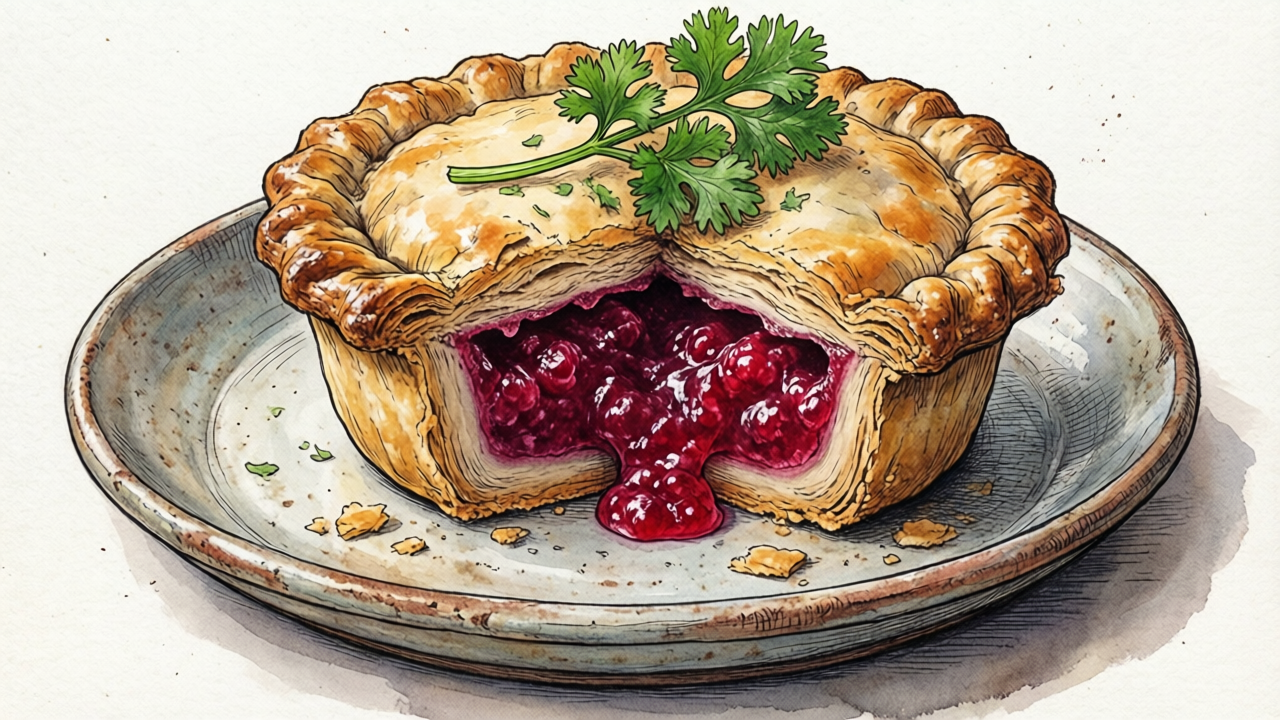
A pork pie with a layer of raspberry jam is the only dish where the fruit on the lid isn’t there for decoration. It is load-bearing. Much like the foundation’s logo.
Ingredients
- 400g pork mince (or coarsely chopped pork shoulder, if you are feeling brave)
- 1 onion, finely chopped
- 400ml good stock — chicken or pork; the carton in the fridge aisle, the one you are pretending is for soup
- 4 gelatine leaves (about 8g) — or 4 teaspoons of granulated gelatine, same aisle, less ceremony
- 120g jar of raspberry jam
- 1 tablespoon Worcestershire sauce
- Salt, black pepper, a grating of nutmeg
- A 1.5-litre (1½-pint) pudding basin or pie tin
- Cling film
- Cornichons, a plain salad and crusty bread, to serve
Method
- Line the tin with cling film, letting the ends hang over the edge. The tin is the case, and the case is the most important part of a computer — and the most important part of a pork pie. Everything else is optional. The tin is the whole point.
- Brown the pork mince in a large, deep pan until the juices run clear — no more pink in there than a Raspberry Pi logo, and that is a deep magenta. Add the chopped onion and a good pinch of salt, and let it go golden. This is the part where the kitchen sounds like a fan unit, and the smell is the smell.
- Deglaze with the stock and the Worcestershire sauce, bring to a simmer, and season with pepper and a grating of nutmeg. Meanwhile, soak the gelatine leaves in iced water for a few minutes until floppy. Squeeze them dry and stir them into the pan until dissolved. The gelatine is the setting agent — the thing that makes a pork pie a pork pie rather than a very expensive soup, which is what you get when you skip it. Nobody ever skips it.
- Pack the pork mixture into the prepared tin, pressing it down with the back of a spoon until it sits firm. Then spread the raspberry jam across the middle in a single, even layer. This is the moment the pie becomes a Raspberry Pi pork pie, and the tin becomes a case with a logo.
- Top with the remaining pork and press down again, then pour in the stock-and-gelatin liquid from the pan until the tin is full. Smooth the surface with the back of a spoon. It should look like a fresh install — flat, unmarked, and full of quiet potential.
- Leave at room temperature for 30 minutes, then chill for at least 4 hours, preferably overnight. This part cannot be rushed. Nobody ever built a computer by rushing, and nobody ever set a pie by microwaving it. The tin sits in the fridge doing nothing, which is the most British thing about the whole recipe.
- To serve, run a thin knife around the edge, peel the cling film off the sides, and invert the tin onto a plate. The moment of unboxing. If the pie sticks, hold the tin under hot water for 20 seconds — a warm boot, not a factory reset. The jam should appear as a clean layer through the middle: the raspberry on the lid, except it’s inside, which is where fruit belongs.
- Serve with cornichons, a plain salad and crusty bread for mopping. The pie feeds eight, which is a decent club-night attendance, and the tin — the case, the whole point — goes in the recycling, where all good cases end up.
The pie keeps happily for four or five days in the fridge, which is more than can be said for most beta firmware. No vegetarian variant this time — a pork pie is a pork pie, and the last few episodes have been veggie-heavy enough to warrant a break. Serve it with the same quiet confidence you would bring to a club night, and if anyone asks about the jam layer, the answer is: it’s the raspberry on the lid, except it’s inside, which is where fruit belongs.