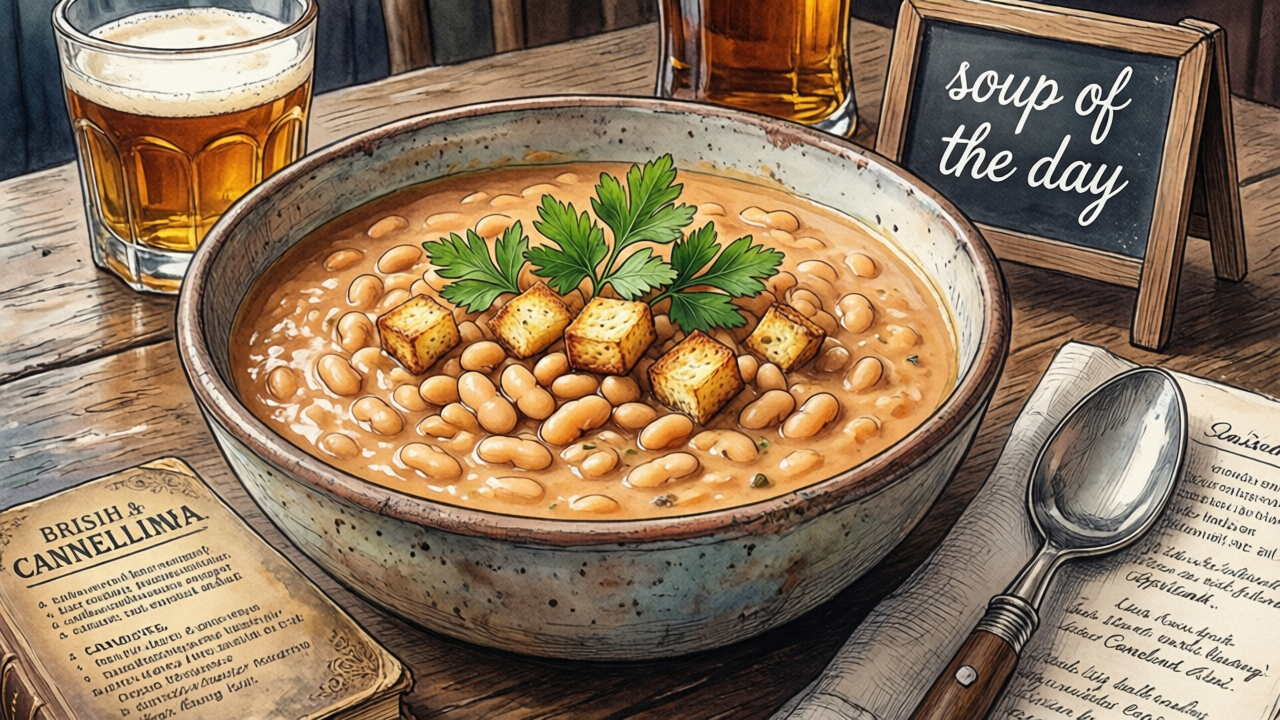
There is a blackboard by the door of almost every pub in the country, and on it, in handwriting that has not changed in a decade, is the phrase Soup of the Day. The soup is the same soup it was when you were a child, and it will be the same soup when you are an old man, and the day it refers to is a day that has, on the evidence, not arrived since roughly 1987. This is not a bug. It is the entire point.
There are about 45,000 pubs left in the UK — down from a peak of over 60,000, which is to say the blackboard is slowly going out of business too, one village at a time. And the soup it advertises is a national mystery in its own right: the great Brown Windsor Soup has been on pub menus for a hundred years and, according to the BBC, “likely never existed at all”. A whole national institution has been built on top of a soup that, as far as anyone can work out, was a rumour with a ladle. The Soup of the Day is the heir to that tradition — a dish defined less by what it is than by the fact that it is, permanently, on the board.
So here is the Soup of the Day, properly made, the way it should have been made all along: a creamy cannellini bean soup, thick enough to support a crouton, honest enough to stand on its own, and available for the price of a pint round. It is the dish the blackboard has been promising you for years. The blackboard does not lie. It is just extremely slow to update.
Ingredients
- 2 tbsp olive oil (or vegetable oil, if you’re feeling democratic)
- 2 onions, chopped
- 2 garlic cloves, chopped
- 1 carrot, chopped (optional, but the blackboard would want it)
- 2 medium potatoes, peeled and diced small
- 2 x 400g tins cannellini beans, drained and rinsed
- 1.2 litres vegetable stock (or four stock cubes to a litre of water)
- 1 bay leaf
- A few sprigs of fresh thyme
- 100ml milk or single cream (optional — for the creamy school of thought)
- Salt and black pepper
- Day-old bread, cubed, for the croutons
- A drizzle of olive oil and chopped parsley, to finish
Method
- Heat the olive oil in a large heavy pot over a medium heat. Add the onions and a pinch of salt, and cook them gently until soft and golden — about ten minutes. They should go soft the way the bar stools have gone soft over the years: slowly, and with a certain earned dignity.
- Stir in the garlic and the carrot and cook for another two or three minutes, until the kitchen smells like the last hour before closing. The garlic should be just at the edge of burning, which is the correct amount of drama for a soup that has been on the menu for decades.
- Add the potatoes, the bay leaf and the thyme, then pour in the stock. Bring to a boil, then tip the heat down and let it simmer for about fifteen minutes, until the potatoes have completely given up. You want them at the stage where a fork goes in without a conversation.
- Tip in the cannellini beans and simmer for another five minutes. The beans join the pot the way a regular joins the queue — without asking, and with the quiet confidence of someone who has been here before.
- Fish out the bay leaf and the thyme — they have had their say and can go. Then take a fork or a potato masher and crush roughly half the soup against the side of the pot, leaving the rest whole. Half smooth, half chunky: the soup’s equivalent of a pub’s opinion on football, which is to say firm but not entirely consistent.
- If you’re going creamy, stir in the milk or cream now — a splash, not a flood. A little cream is the soup’s version of one last round on the house. Season with salt and pepper to taste, and taste it again, because it will ask you to.
- While it’s going on, toast the bread cubes in a dry pan or in the oven until they’re crisp at the edges — they should resemble the structural integrity of a motorway service station, which is to say: adequate, and a little bit sad. Ladle the soup into warm bowls, pile on the croutons, and finish with a drizzle of olive oil and a scatter of parsley.
Serve it with a proper crusty roll and the same nonchalant air with which the blackboard serves the soup — as though it had only just arrived, as though no one had been expecting anything else. The Soup of the Day will be on the board tomorrow, and the day after, and for years to come. That’s not the recipe failing. That’s the institution working exactly as intended.