The pillar box is the only piece of street furniture in Britain that you can be late to. The shop can close, the bus can leave, the bank can do its little 4pm thing — but the pillar box is right there, standing in front of you, with the collection times painted in white on the front: 10:15, 12:30, 4:45. You do the arithmetic in your head while you walk. You’ve got four minutes. You’ve got one letter. And suddenly you’re jogging, which is the only time most of us ever run without being chased by something.
The first pillar box appeared in London in 1853, and it was red from the start — a practical decision, so that the collection times painted on the front could be read from a distance. Before that they were green, the same green as the post office, which is a bit like painting the smoke alarm the same colour as the wallpaper. They’re still red today. There are roughly 100,000 of them across the UK, which is more boxes for letters than there are letters left to put in them, and the largest one, with four slits, is in Liverpool, built for a city that once sent so much mail it needed a postbox the size of a phone booth.
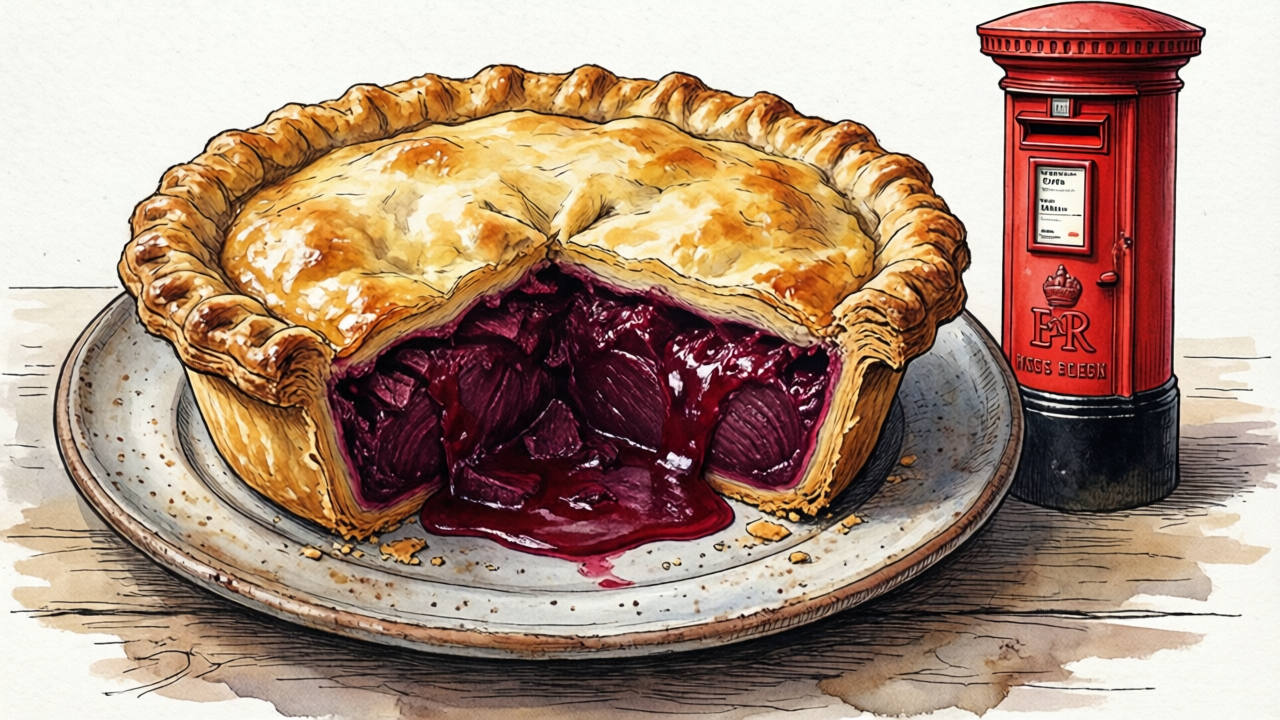
This pie honours the pillar box in the only way a pie can: a deep red beetroot glaze, a letter slot cut into the top, and a strict rule about the last collection. Both reward the people who turn up before it closes.
Ingredients
- 450g beef shin, cut into small dice (or beef mince if you’re short on time — the glaze won’t judge)
- 1 onion, finely chopped
- 2 carrots, cut into small dice
- 2 tbsp plain flour
- 300ml beef stock
- 200ml dark ale — any supermarket dark will do; mild is even better, as if the pie needed to be understated
- 2 tbsp tomato purée
- 1 tbsp Marmite, optional but strongly recommended — it’s the postmark flavour
- 150g cooked beetroot, finely chopped (jarred is fine — this is a pie, not a thesis)
- 2 sheets ready-rolled puff pastry
- 1 egg, beaten, for glazing
- A little flour for dusting
Method
- Heat a good splash of oil in a large pan and brown the beef in batches. Don’t crowd the pan — it will steam instead of colour, and a steamed pie is what happens when you miss the collection.
- Add the onion and carrots and cook for 10 minutes until soft. They’re not going anywhere. They’ve all got somewhere to be, but not before 4:45.
- Stir in the flour and cook for a minute, just to take the raw taste out — a short spell, not a detention.
- Pour in the stock, the ale, the tomato purée and the Marmite. Simmer for 45 minutes until the beef gives in. This part cannot be rushed. Nobody ever posted a letter on time by running.
- Take the pan off the heat and let the filling cool for 10 minutes. A hot filling will steam the pastry into something limp and regretted — the pastry equivalent of a letter lost in the post.
- Line a pie dish with one sheet of pastry, pour in the filling, and cover with the second sheet. Trim the edges, crimp them with a fork, and cut a narrow slot down the centre of the top. That’s the letter slot. It’s for the steam, and it’s also, in an emergency, for a letter. The pie will do both jobs.
- Brush the top with the beaten egg, then mix the chopped beetroot with a tablespoon of the cooking liquid and smear it over the top in one go. It should be the colour of the box on your corner, not the colour of the post office before 1853.
- Bake at 200°C (180 fan) for 30–35 minutes, until the pastry is golden and the glaze has gone proper red. The steam will come out of the slot like a small, smug announcement.
- When it comes out, press the tines of a fork into the four corners of the crust. That’s the postmark. Without it, the pie is technically unposted.
- Rest for 10 minutes before serving. The last collection for a hot pie is ten minutes after it leaves the oven — miss it and the gravy ends up all over the table, and the Royal Mail does not compensate for gravy.
Serve with mash or peas, depending on your relationship with vegetables. The pie keeps for two or three days in the fridge and reheats well, though the glaze comes out a shade muddier on the second round, like a letter that’s been lost in the post and found in a drawer. The best part is the waiting — 35 minutes in the oven, which is exactly long enough to stand by the box and watch the last collection.