Picture the mess deck, 11 o’clock in the morning. The bell goes, the messman opens the hatch, and a line of sailors forms with the discipline of men who have nowhere else to be for the next six weeks. At the end of the line is the tot — a half pint of rum, issued daily from 1655, when the capture of Jamaica made rum suddenly easy to stow and beer suddenly a logistics problem, until 31 July 1970. On the last day, crews aboard some ships held a mock funeral procession for the empty rum cask, gave it full honours, and then threw the rest over the side. The Royal Navy has had worse PR moments, but not many better ones.
The rum was the morale. The stew was the reason you could keep working between tots — a big pot of beef, potatoes and whatever the ship’s stores had, cooked by whoever in your mess of eight was unlucky enough to be the cook that week. Get it wrong and you faced the mess cook’s court-martial, which is a formalised punishment so absurd that the rest of the fleet spent a century perfecting it. This recipe is the stew part. The rum part is a splash, and entirely optional, but the pot knows what it’s missing without it.
Ingredients
- 750g beef shin, cut into bite-sized chunks (chuck is a fine substitute)
- 2 large potatoes, peeled and cut into chunks
- 2 carrots, chopped
- 1 medium swede, peeled and chopped
- 1 onion, chopped
- 2 cloves garlic, crushed
- 2 tbsp plain flour
- 2 tbsp tomato purée
- 600ml beef stock (about two cartons’ worth of good things)
- 2 tbsp dark rum (a dash of brandy works in a pinch, or omit — the stew forgives, the fleet won’t)
- 1 tbsp Worcestershire sauce
- Flaky salt, black pepper, a bay leaf
Method
- Heat a knob of butter or a glug of oil in a heavy pot — heavy, like the mess deck after a storm — and get the beef browning properly on all sides. It should look like it’s seen a war, because on a ship it probably has. Season heavily; the pot is a small country with no borders.
- Pull the beef out, tip in the onion and garlic, and let them soften for a few minutes. This is the part where the ship’s cook used to be judged, and where the court-martial was usually being drafted in the corner.
- Stir the flour into the onions for a minute, then the tomato purée for another. You’re building a roux, which is the nautical term for “a decision you can’t take back”.
- Return the beef with all its juices, pour in the stock, Worcestershire and the splash of rum, drop in the bay leaf, and get it to a lazy simmer. The rum goes in like the morning tot — quickly, and slightly before anyone can object.
- Cover and let it go for about an hour and a half. Gentler than the morning watch, less patient than the cook’s court-martial, which could take all afternoon and still end with a sentence of “extra duty in the scullery”.
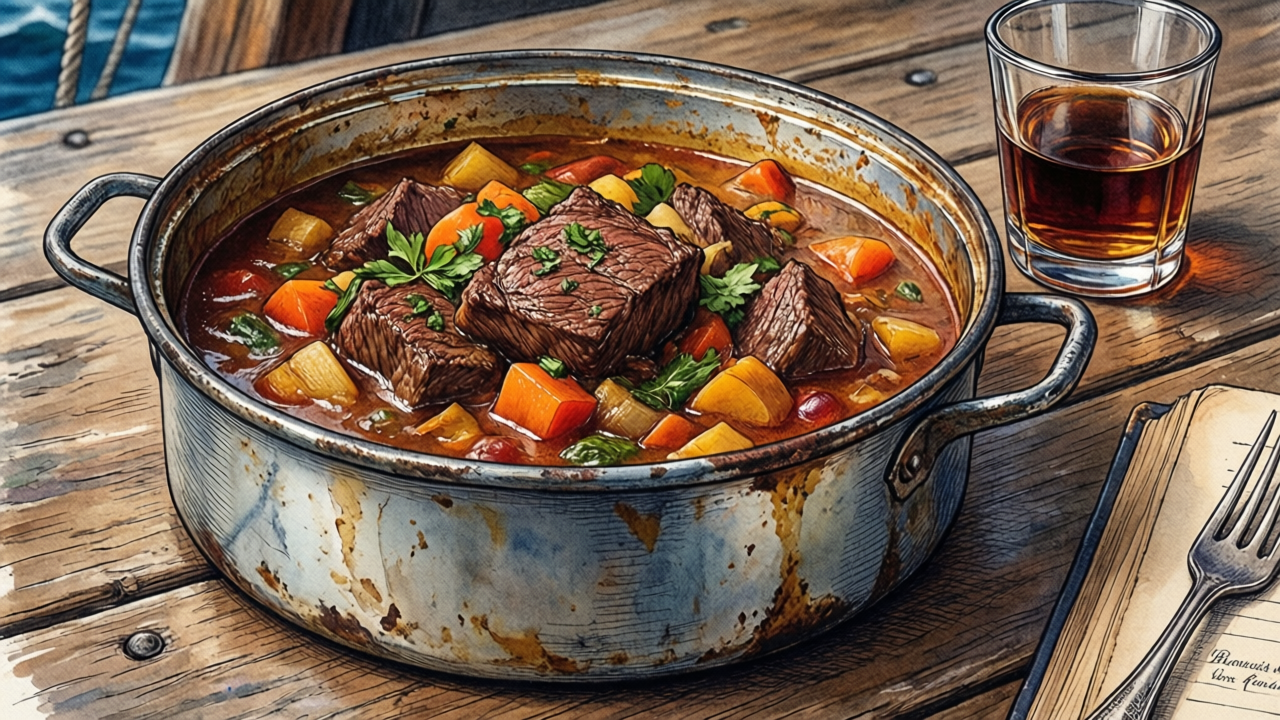
- Add the potatoes, carrots and swede and simmer for another 30–40 minutes, until the vegetables yield to a spoon and the gravy has thickened to the consistency of a decision the captain has finally made. Check the seasoning — the mess tin doesn’t do apologies.
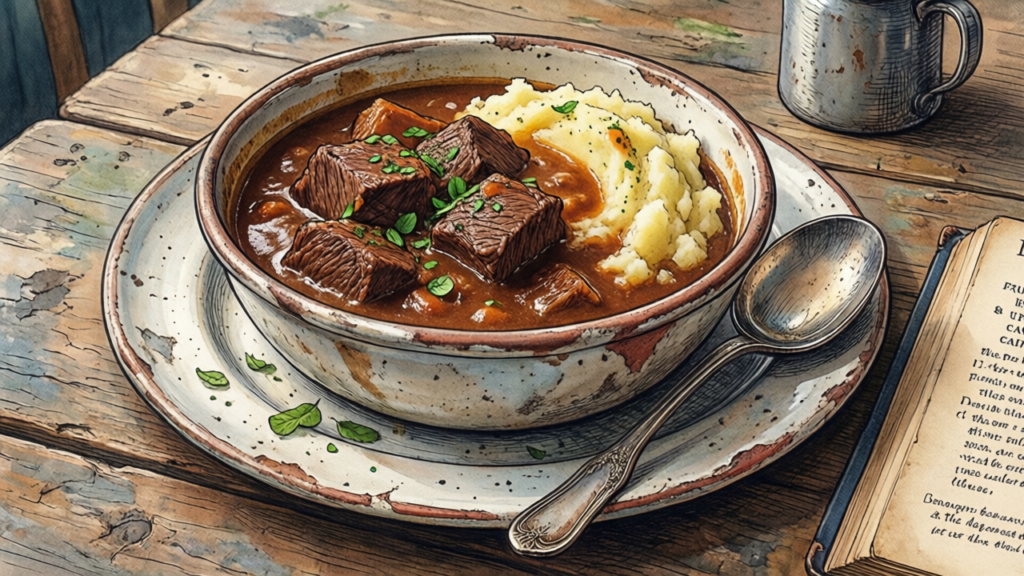
- Serve it up in a thick bowl, with crusty bread for mopping and the bay leaf fished out with the discretion of a sailor who knows what’s in the scuttlebutt. If the stew turns out wrong, don’t throw the pot out — convene the court-martial, read out the sentence, and try again next week. That’s what the rotation was for.
Veggie variant: finely chopped button mushrooms and a tin of drained red lentils stand in for the beef shin — brown the mushrooms instead, use vegetable stock, and everything else is unchanged. The court-martial applies equally to both versions.
The stew keeps for three days in the fridge, which is more than can be said for most naval traditions. On 31 July 1970 the last tot went over the side; this pot, if you make it, goes down the hatch instead.