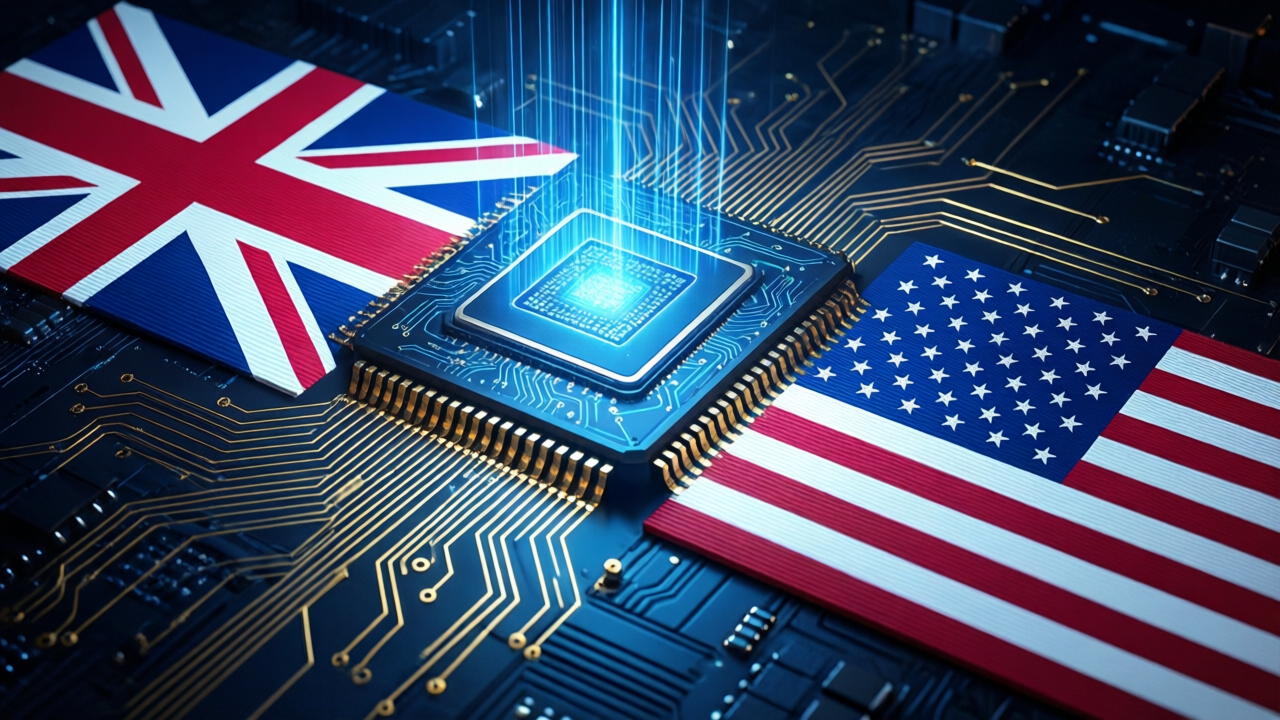
Trump Snubs Starmer — and the AI Sovereignty Problem Britain Ignored for Too Long
Three days ago, the US government ordered Anthropic to cut off all foreign access to its most advanced AI models, Claude Fable 5 and Mythos 5. Yesterday, Sir Keir Starmer asked Donald Trump for a British exemption. This morning, Trump said no.
The headline from The Telegraph, published at 6am BST today: “Trump snubs Starmer plea for Anthropic AI exemption.” The message is blunt. Britain’s closest ally has just demonstrated that when it comes to the technology Britain needs most, the UK has no leverage at all.
What Happened
On Friday 13 June, the US Commerce Department served Anthropic with an export control directive banning all foreign nationals — including foreign nationals working at Anthropic — from accessing Fable 5 and Mythos 5. The stated concern: a potential jailbreak vulnerability. A security researcher known as “Pliny the Liberator” had posted screenshots on X showing Fable 5 being prompted to share details on attacking Linux systems. Amazon CEO Andy Jassy raised the concern directly with the White House.
Anthropic’s response was to disable the models for everyone. As the company put it: “The net effect of this order is that we must abruptly disable Fable 5 and Mythos 5 for all our customers to ensure compliance.”
The irony is almost poetic. The models were released on Tuesday, June 10. By Friday, they were gone. Anthropic had described Fable 5 as “too powerful to release” — and the US government apparently agreed, but for entirely different reasons.
The Snub
Over the weekend, Downing Street — with Jade Leung, the PM’s AI adviser, coordinating — pushed for a British carve-out. The logic was simple: the UK and US share Five Eyes intelligence, NATO defence cooperation, and what Starmer calls “our special relationship.” Surely that counts for something.
It didn’t. According to today’s Telegraph report, Trump will reject the plea. No exemption. No carve-out. The models stay blocked.
Tom Tugendhat, former Conservative security minister, called the ban “the inevitable result of technology shaping warfare so that software is the weapon.” He warned it exposed “the UK’s lack of sovereign control of cutting-edge AI.”
UK AI minister Kanishka Narayan put it more diplomatically on Saturday: “As we debate the future of national security and technological sovereignty, access to AI capabilities is crucial.”
The Scale of the Problem
Here’s what Britain actually has to show for its AI ambitions:
- £400m committed to buying AI chips from UK companies (announced 7 June)
- £500m Sovereign AI Fund for start-ups (announced 8 June)
- £1.1 billion total AI Hardware Plan
That sounds impressive until you put it in context. Nvidia is worth nearly $5 trillion. Its main customers — Amazon, Google, and Microsoft — spend hundreds of billions between them on Nvidia chips alone. The UK’s entire AI hardware plan is roughly what Microsoft spends in a quarter.
Britain has no AI giants of its own. No control over chip manufacturing. No sufficient GPU infrastructure to train frontier models. The UK’s AI Security Institute at GCHQ is genuinely world-leading for safety testing — but testing someone else’s models isn’t the same as building your own.
As Gina Neff, Professor of Responsible AI at Queen Mary University London, told the BBC: “We’re in uncharted territory at this point.”
What This Means in Practice
The ban doesn’t just affect researchers. It affects anyone on an H1-B visa at a US company. It affects European universities collaborating with American labs. It affects British businesses using Anthropic’s Claude to integrate their databases — including financial services firms like S&P Global.
The EU, which had only just gained access to Mythos earlier in June after weeks of negotiations, called the development further proof of “Europe’s need for technological sovereignty.” Commission spokesman Thomas Regnier said they were “assessing” the situation.
The Pentagon’s CIO, Kirsten Davies, summed up the administration’s position in a post on X: “Some things are simply more important than revenue cycles, clickbait and pre-IPO valuation. America First. Always.”
Is There a Resolution?
Maybe. Anthropic has flown senior technical staff to Washington, and Politico reports that Trump officials met with Anthropic on Sunday to “discuss a truce.” The company believes there was a “misunderstanding” and is working to restore access.
But even if Fable 5 comes back online, the precedent is set. The US government has demonstrated it can — and will — cut off allied nations from cutting-edge AI on a geopolitical whim. For years, export controls focused on hardware: chips, tools, the physical infrastructure of AI. Now the controls extend to the software itself.
Britain spent decades accepting that it could buy technology rather than build it. That worked fine when the technology in question was car engines or washing machines. When it’s the most consequential technology of the century, the arithmetic changes.
The £1.1 billion AI Hardware Plan is a start. But it’s a start that arrived three days after the White House demonstrated exactly why Britain needed it yesterday.
Sources:
– BBC: Anthropic suspends new AI tools over US government security concerns
– The Guardian: Anthropic to disable its most advanced AI models after US order
– Al Jazeera: US asks Anthropic to block global access to top AI models
– Politico: Trump officials meet with Anthropic to discuss a truce
– Telegraph: Trump snubs Starmer plea for Anthropic AI exemption