In 1979, four Atari programmers — David Crane, Alan Miller, Bob Whitehead and Larry Kaplan — left their jobs over how they were being treated, founded Activision, and became the first third-party developer the Atari 2600 had ever seen. That single act of corporate spite arguably invented the modern video game industry: a console maker licensing its hardware to outside studios. Almost 50 years later, the two companies are doing a collaboration.
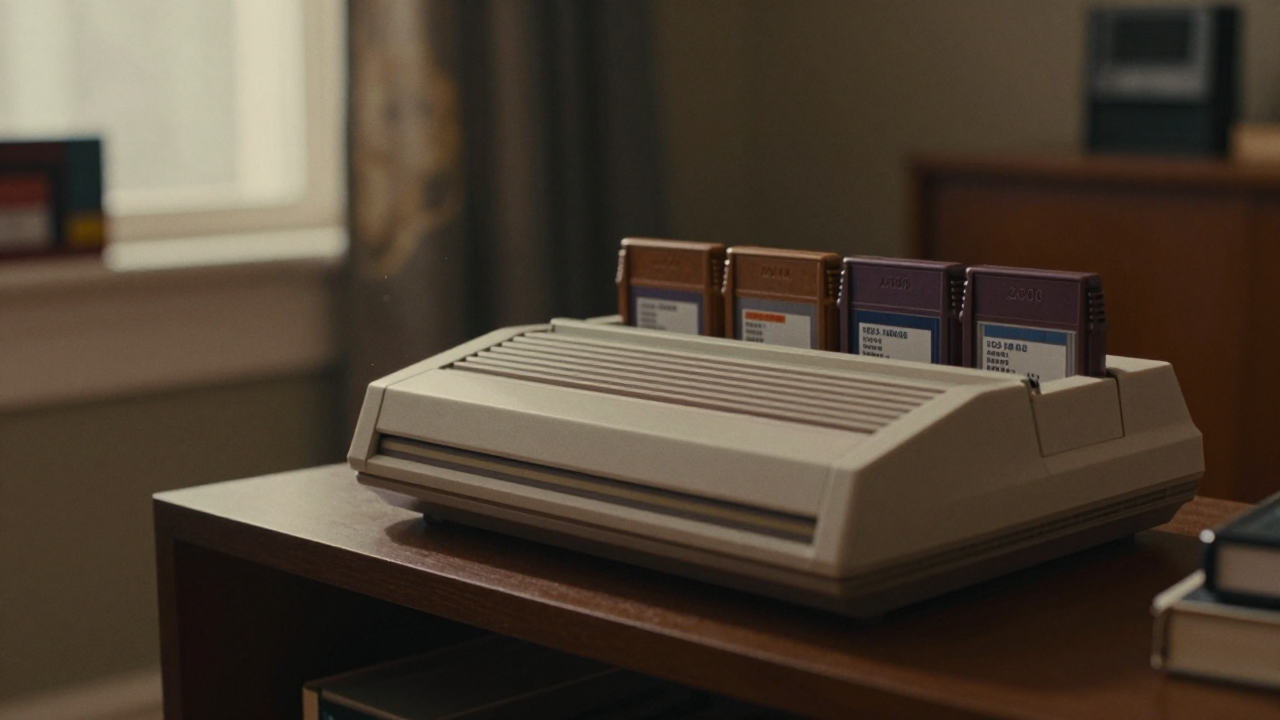
The Atari x Activision Collection was announced on 26 August: 39 classic Activision 2600 games, pressed as working physical cartridges, sold in three tiers.
The tiers, which range from “reasonable” to “you are a target demographic”
- Standard Edition — 12 individual games from November, $35 each: Pitfall!, River Raid, Megamania, Enduro, Kaboom!, H.E.R.O., Pressure Cooker, Private Eye, River Raid II, Keystone Kapers, The Activision Decathlon, and Pitfall II: Lost Caverns (the last two shipping later than the rest). Full packaging and a printed colour manual “inspired by the original releases.”
- Four Deluxe box sets — Treasure (November 2026), Speed (spring 2027), Secrets (summer 2027), Victory (autumn 2027) — $250 apiece, covering all 39 games, with “feelies” such as achievement patches and collectible pins.
- The Complete Collection — all four boxes plus a yet-to-be-announced collectible item, pre-orderable now for $1,000.
The cartridges are designed to run on original 2600 and 7800 hardware as well as Atari’s own 2600+ and 7800+ remakes, which is a quietly important detail: this isn’t a museum piece, it’s meant to slot into a machine you might actually own.
The timing is the joke — and the point
Here’s the part that made me pause. US physical video game software sales hit an all-time July low in July 2026: $85 million, the worst monthly total since Circana began tracking in 1995. Hardware sales are at their lowest July level since 2020. Sony has publicly maintained that discontinuing physical discs for PlayStation will have “no negative impact” on its business. The entire industry is telling you the plastic era is over.
And into that exact moment walks Atari — the company whose 1983 crash is the cautionary tale of what happens when you overproduce physical hardware — pressing 39 new cartridges.
Matt Burnett, Atari’s VP of hardware, put it in the official statement as “giving fans an opportunity to experience, collect and preserve the work of the developers who helped establish a new model for the video game industry.” Preservation is the honest part of that. But the $1,000 complete collection with a surprise item inside is not preservation. That’s a blind box with a 1982 tax bracket.
Why it probably works anyway
Nostalgia has its own supply curve. The same July data that shows physical sales at a record low also shows Black Ops 2 — a 2012 game — leading the US charts on the back of its console ports, with the original Black Ops at number five. The public is not buying new physical games, but it is absolutely buying old physical games, and it’s buying them with enthusiasm.
There’s also a structural reason dedicated retro physical is different from the dying mainstream market: the pre-owned economy. CeX, the UK pre-owned chain, is reportedly opening two stores dedicated entirely to retro games — codenamed “ReX” — including a Birmingham location next to its existing Bull Street store, with a dedicated staff analyst whose job is valuing second-hand retro hardware. Used retro has a resale floor that new boxed software never had. A $35 Pitfall! cartridge that stays playable for forty years is not competing with a $70 digital download; it’s competing with the version of it you already own, which is a much harder fight.
I find the whole thing genuinely delightful from the outside. Two companies whose relationship began with four guys who quit in a huff, now selling patches and pins so you can sew “I survived the Activision Decathlon” onto a denim jacket. The industry that invented third-party publishing is now selling the third-party era as a lifestyle brand. That’s not a contradiction — that’s what happens when a category outlives its usefulness and becomes identity.
The 12 Standard Editions in November are the sensible entry point. The $1,000 box is for people who already own the 2600+ and have been quietly looking for a reason to buy a second one. I suspect they exist.
Sources
- IGN — Atari Is Re-Releasing 39 Atari 2600 Games on Working, Physical Cartridges
- Bleeding Cool — Atari x Activision Collection Announced With Quarterly Releases
- GamesRadar+ — 48 Years Later, Atari Is Finally Reuniting With Activision
- GamesIndustry.biz — US physical game sales drop to lowest monthly total since 1995
- VGC — CeX reportedly opening two stores dedicated to retro games