Open the back of a British kitchen cupboard and you will find, beneath the tin of dried apricots that has been there since the last government, a row of tins. Sardines in oil. Mackerel in tomato sauce. Sweetcorn, for reasons nobody can explain but everybody accept. One of them will have a best-before date that predates your first job, and it will be perfectly fine, because the tin is not a fragile creature. The tin has opinions. They’re just in a different language.
The tin is one of the great unsung institutions of the British table. A British inventor, Peter Durand, patented the tin can in 1810, and the idea took off so well that by the early 1900s the Pilchard Works in Newlyn was salting and pressing Cornish pilchards for export to Italy, where they were known as “Salacche Inglesi” — English sardines — and eaten with a kind of respect we have never quite managed to give them at home. The last Cornish cannery is said to have closed in the 1940s, and after the war the tin quietly lost the argument to the freezer, retreating to the back of the cupboard where it has been ever since, perfectly preserved, waiting for someone to put it in a pie.
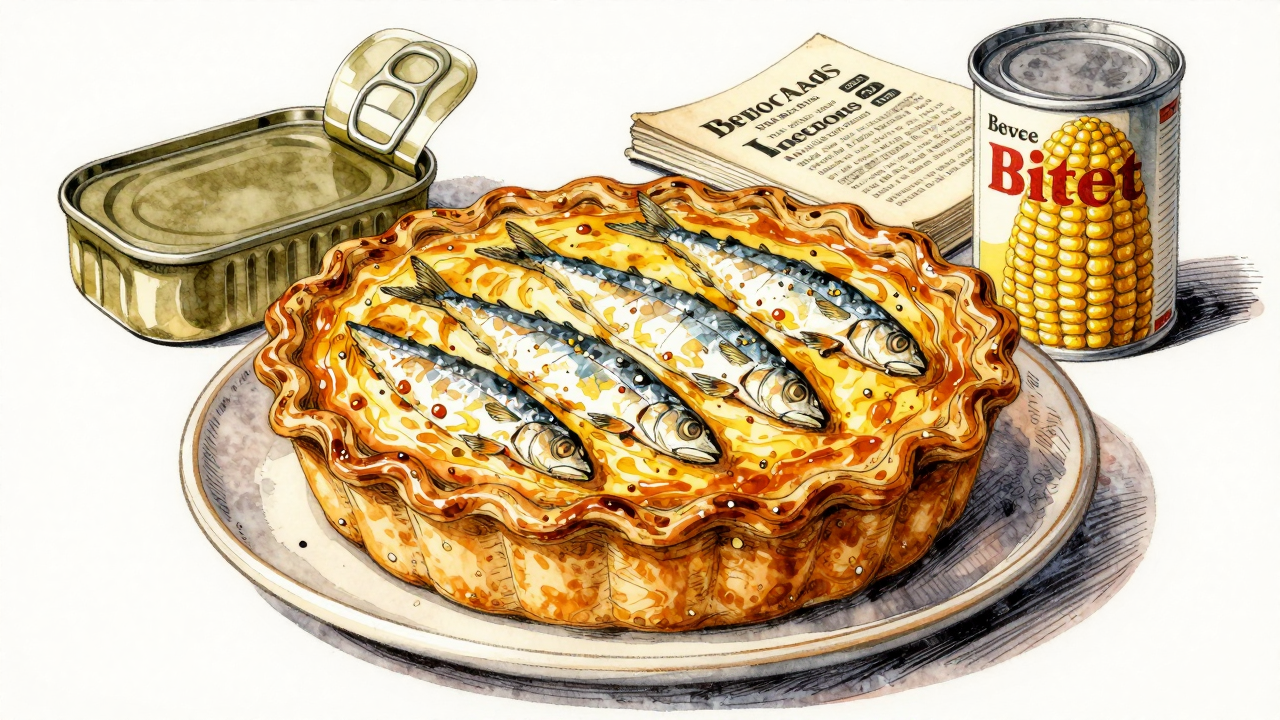
A sardine is, for the record, just a young pilchard — the fish is the same, only less experienced. This recipe is for a sardine and sweetcorn pie, which is to say: the dish the tin was always going to end up in. The tin never asked for much. It just wanted to be in the cupboard. Both the tin and a good pie ask for very little, and both are disappointed by nothing.
Ingredients
- 1 sheet of shop-bought shortcrust pastry (the tin is the institution; the brand is just the uniform)
- 2 tins of sardines in oil (any brand; mackerel in tomato works too, if you’re feeling saucy)
- 1 tin of sweetcorn
- 1 onion, chopped
- 2 eggs, plus 1 beaten for glazing
- 3 tablespoons of milk
- 1 teaspoon of wholegrain mustard
- 1 knob of butter
- Flaky salt, to finish
Method
- Heat the oven to 200°C (180 fan, gas 6). The tin has been in the cupboard for years; this is where it gets somewhere warmer to land.
- Roll out the pastry and line a 20cm pie dish, trimming the overhang. Prick the base with a fork. The pastry is the tin’s new job description: structural, unglamorous, load-bearing.
- Melt the butter in a large frying pan and cook the onion over a medium heat for about five minutes, until soft and just starting to sweeten. Gentler than the 1810s, when onions were the only thing that came in a tin.
- Open the sardines and drain them over a jug, keeping the oil. That oil is the tin’s pension fund. Do not pour it down the sink; a man who throws away sardine oil has no business in pies.
- Roughly crumble the sardines with a fork, leaving a few fillets whole for the top. A pie in which everything is crumbled is a pie with no point of view.
- Tip the sweetcorn into a colander, drain, and return to the pan with the onion. Add the sardines, the beaten eggs, the milk, the mustard, a good pinch of salt and a grind of pepper, and stir until it holds together. The sweetcorn is the working-class hero here — it has been in a tin since the 1800s and it still turns up.
- Pour the mixture into the pastry case and level it out. Lay the whole sardine fillets on top in overlapping rows, heads pointing the same way. Like a fleet at anchor. Like a rowing team that has accepted its fate.
- Brush the sardines with the remaining beaten egg and scatter with flaky salt. The glaze is the tin’s new label — gold, instead of faded.
- Bake for 35 to 40 minutes, until the pastry is golden and the centre is set with only a faint, dignified wobble. The tin does not rush. Neither does the pie.
- Leave to rest for ten minutes before cutting. The tin has waited years in the cupboard; ten minutes is nothing to it.
Serve with a green salad, or a scoop of mushy peas if you want to commit. A vegetarian version swaps the sardines for a tin of chickpeas and a handful of black olives — the tin does not discriminate, and the mustard and sweetcorn carry the rest. The tin has kept the British table fed for a century and a half on nothing but a lid and a little oil; it will keep this pie in the fridge for three days without a word. That is loyalty.