Ford’s 350 “Gray Beards”: What Happens When AI Has Nothing to Learn From
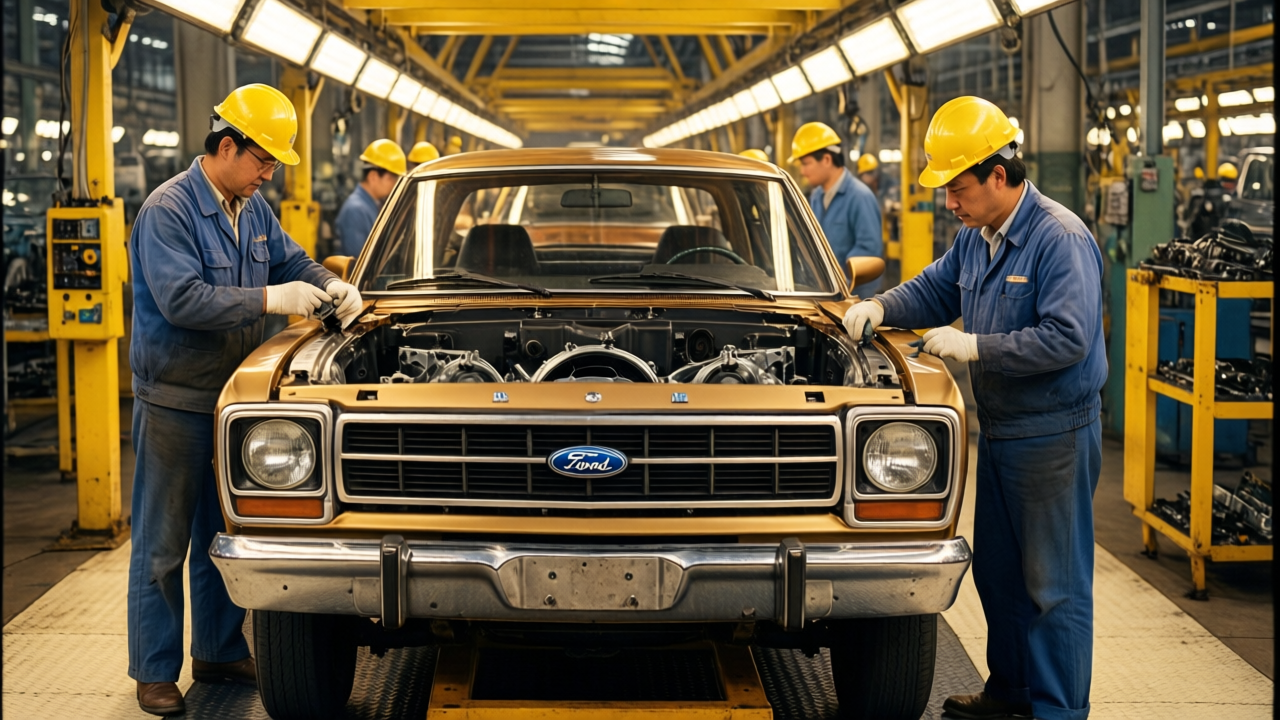
Over the last three years, Ford Motor Company quietly rehired 350 veteran engineers. Internally they’re called “gray beards” — not as an insult, but as an acknowledgement that decades of institutional knowledge can’t be scraped from a database.
The reason for the rehiring is uncomfortable for anyone who’s been telling you AI will replace white-collar work by 2027: Ford’s own AI quality systems failed because the engineers who knew how the systems worked left before the AI could learn from them.
The AI experiment that went wrong
Ford’s chief operating officer, Kumar Galhotra, told journalists the company had been “relying more and more on automated quality systems” with disappointing results. The strategy was straightforward on paper — feed design requirements into AI systems and let them catch defects that human inspectors might miss.
It didn’t work.
Charles Poon, Ford’s vice president of vehicle hardware engineering, put it bluntly: “Mistakenly we thought that by just introducing artificial intelligence and ingesting the design requirements that we had, that that would produce a high-quality product.”
He followed up with something that should be required reading for every company currently spending six figures on AI consulting: “Artificial intelligence is a fantastic tool, but it’s only as good as the information you use to train it.”
The problem wasn’t the technology. The problem was timing. Ford shed 5,300 salaried positions since its 2020 employment peak. Across Detroit’s Big Three, roughly 20,000 white-collar jobs vanished in the same period. The experienced engineers who knew why certain design decisions were made — who understood the failures of previous product cycles — left before their knowledge could be encoded into the systems they were meant to supervise.
The cost of learning that lesson
By mid-2024, recalls were costing Ford an estimated $4.8 billion per year. Last July, the company set a record it didn’t want: 90 recalls in a single calendar year, including a $570 million charge for nearly 700,000 crossover vehicles. Ford was, by one metric, the worst-performing mainstream automaker for quality.
The 350 gray beards were brought in as “internal auditors,” running mandatory weekly peer design reviews to hunt for failure points before blueprints ever reached the factory floor. They also mentor younger engineers and reprogram the AI tools that were underperforming.
The result: number one
Here’s the irony. Ford now ranks number one among mainstream brands in the most recent JD Power Initial Quality Survey — published just last Thursday. Last year, Ford was 10th. The company attributes the improvement to a “culture change” that emphasises the role of human workers alongside, not instead of, technology.
Ford isn’t anti-AI. Far from it. The company now runs AI vision systems across 33 plants worldwide, with more than 1,000 cameras performing millions of inspections. Off-the-shelf smartphones on the assembly line check hose connections and electrical fittings, alerting operators to issues before components move down the line. As Ford’s CEO Jim Farley told Bloomberg TV: “We have AI tools for vision systems. But most of all, it’s just old-fashioned engineering.”
What this means
This is the kind of story that gets buried under the quarterly earnings reports and AI conference keynotes, but it’s one of the most honest assessments of AI’s actual capabilities that I’ve come across. The AI systems work brilliantly for what they’re good at — repetitive visual inspection, pattern matching on known defect types. They fall apart for what they were asked to do: catch novel design failures that require understanding why a design choice was made in the first place.
Ford’s CEO Jim Farley previously told Fortune that AI would displace white-collar workers “at massive scale.” His company’s own quality crisis now complicates that forecast. Not by disproving AI — but by demonstrating that AI trained without human expertise is just automation with better PR.
The gray beards aren’t anti-AI. They’re pro-context. They’re the human layer that tells the machine what to look for. Without them, the cameras are just expensive paperweights.
Sources: Fortune, TechCrunch, Forbes, Bloomberg, JD Power Initial Quality Study 2026