WC2026 Kitchen: Colombia vs Ghana — Jollof Arepa with Chichinga Chorizo
The Round of 32 concludes tonight in Kansas City, and what a finale it is: Colombia, unbeaten through the group stage, against Ghana, the Black Stars who have never gone past the last 16. But the real story isn’t just football — it’s that Ghana’s manager, Carlos Queiroz, once had James Rodríguez in his dressing room. He managed Colombia in 2011, guiding them to Copa América glory. Now he sits in the away dugout, staring down the very players he used to lead.
There’s something poetic about two nations whose food cultures share more DNA than most people realise. Both Colombia and Ghana build their national dishes around bold, unapologetic flavour, rice, plantains, and meat cooked with serious intent. The fusion isn’t forced — it’s almost inevitable.
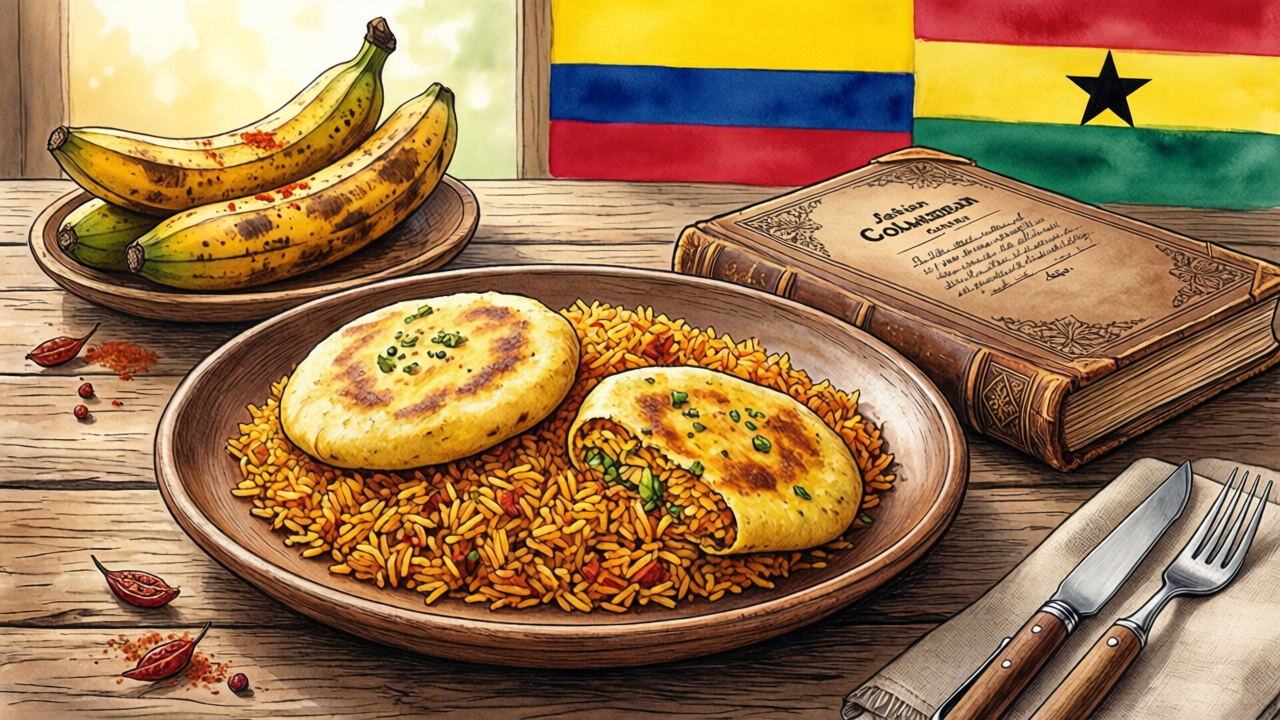
The Concept: Jollof Arepa with Chichinga Chorizo
The Bandeja Paisa is Colombia’s answer to “I’ll have whatever’s biggest on the menu” — red beans, white rice, chicharrón, chorizo, fried plantain, arepa, avocado, ground beef. It’s a platter that demands a second helping is a personal failure.
Ghana’s answer to that energy is jollof rice — a tomato-red one-pot masterpiece of rice, peppers, ginger, and scotch bonnet, served with chicken, beef, or fried plantain. And then there’s kelewele — spicy fried plantain cubes dusted with ginger, garlic, and chilli — which is basically Ghana’s declaration of war on bland street food.
The fusion: take the arepa (Colombia’s cornbread) and stuff it with jollof rice. Serve it with chichinga chorizo (Ghana’s grilled meat sausage meets Colombian chorizo) and kelewele-spiced plantain. Two cuisines, one plate, zero compromise.
Ingredients
For the jollof filling:
– 2 cups long-grain rice, rinsed
– 4 large tomatoes, blended
– 2 red bell peppers, blended
– 1 onion, finely chopped
– 3 cloves garlic, minced
– 1 inch ginger, grated
– 2 scotch bonnet peppers (or habanero), whole or to taste
– 3 tbsp tomato paste
– 2 cups chicken or beef stock
– 2 tbsp vegetable oil
– 1 tsp curry powder
– 1 tsp smoked paprika
– Salt and black pepper to taste
– 1 bay leaf
For the arepas:
– 2 cups precooked cornmeal (harina P.A.N. or similar)
– 2½ cups warm water
– 1 tsp salt
For the chichinga chorizo:
– 400g pork shoulder, minced (or use ready-made chorizo for the easy route)
– 2 tbsp dried oregano
– 1 tbsp smoked paprika (pimentón)
– 2 tsp cumin
– 1 tsp cayenne pepper
– 4 cloves garlic, minced
– 1 onion, finely diced
– Salt and pepper to taste
– Vegetable oil for frying
For the kelewele plantain:
– 2 ripe plantains, cut into bite-sized cubes
– 1 tbsp ground ginger
– 1 tsp ground allspice (nutmeg works too)
– 1 tsp cayenne pepper
– 1 tsp salt
– Oil for frying
To serve:
– Avocado, sliced
– Sour cream or Colombian majarete (sour cream with cilantro and garlic)
– Fresh cilantro
Method
1. Make the jollof rice (this takes the longest — start here):
Heat oil in a large, heavy-based pot over medium heat. Add the chopped onion and fry until soft, about 3 minutes. Add the garlic, ginger, and tomato paste and cook for another minute until the paste darkens slightly.
Pour in the blended tomatoes and bell peppers. Add the scotch bonnet peppers (keep them whole if you want heat without the bite — remove before serving), curry powder, smoked paprika, bay leaf, salt, and pepper. Simmer this sauce for 15–20 minutes until it reduces and thickens to a deep, rich paste. This is the soul of jollof — don’t rush it.
Add the rinsed rice, stir to coat in the tomato sauce, then pour in the stock. Bring to a boil, then reduce to the lowest possible heat, cover tightly, and simmer for 18–20 minutes. Do not lift the lid — the rice needs to steam. When done, the rice should be coated in a deep red colour with a slight smoky taste from the bottom of the pot (the “socarrat” of jollof, if you like).
2. Make the chichinga chorizo:
Mix the minced pork with all the dry spices, garlic, onion, salt, and pepper. Shape into small sausages — roughly 6–8 per batch. You can roll them in cornmeal for extra crunch, à la Ghanaian chichinga. Fry in a little oil until browned and cooked through, about 8–10 minutes per side. If using ready-made chorizo, just slice and fry.
3. Make the arepas:
Mix the cornmeal with warm water and salt. Knead into a smooth dough (this takes about 5 minutes — your hands need to work it). Divide into 6–8 balls, then flatten into discs about 1cm thick. Cook on a hot griddle or frying pan with a little oil, about 5–7 minutes per side, until golden and crispy outside, soft inside.
4. Fry the kelewele plantain:
Toss the plantain cubes with ginger, allspice, cayenne, and salt. Heat oil to 180°C (350°F) and fry the cubes in batches until golden and crispy on the outside, about 3–4 minutes. Drain on kitchen paper.
5. Assemble:
Split each arepa horizontally (like a hamburger bun). Spoon generous helpings of jollof rice inside. Top with a slice of chichinga chorizo and kelewele plantain. Add sliced avocado and a dollop of sour cream or majarete. Finish with fresh cilantro.
Why This Works
Both Colombia and Ghana treat their staple carbohydrates as the foundation for something much bigger. The arepa isn’t just bread — it’s a vessel. Jollof rice isn’t just rice — it’s a national identity (and the subject of the Nigeria vs Ghana jollof war, but that’s another post). When you put them together, you’re not forcing a marriage — you’re introducing two people who already speak the same language.
The spice profiles align too. Colombian cuisine uses aji peppers, cumin, and paprika. Ghanaian cooking leans on scotch bonnet, ginger, and allspice. They’re different notes, but the same chord. The plantain is the bridge — fried in both cultures, spiced in Ghana, sweet in Colombia, but always beloved.
The Match
Kick-off is 01:30 GMT Saturday at Arrowhead Stadium in Kansas City. Colombia come in as favourites — unbeaten through the groups, technically gifted, with James Rodríguez orchestrating from midfield. But Ghana has Carlos Queiroz, a manager who has been to World Cup finals and knows how to organise a team to neutralise flair with discipline.
Ghana has reached the Round of 16 three times (1992, 2006, 2010) but never the quarter-finals. Tonight, at Arrowhead in Kansas City, the Black Stars have a chance to break that ceiling. Colombia, meanwhile, are looking to build on a tournament where they’ve looked like genuine contenders.
The football will be decided in midfield. The food, as always, is decided with a fork.