WC2026 Kitchen: Portugal vs Croatia — Bacalhau Fuži with Piri-Piri Truffle Butter
Thursday 2 July brings the first-ever World Cup meeting between Portugal and Croatia in Toronto, and with it comes a culinary collision that shouldn’t work on paper but absolutely does in practice. Two Mediterranean nations with obsessive relationships with seafood, olive oil, and the kind of dishes your grandmother insists she’s making “properly” while eyeing yours with deep suspicion.
The Matchup
Portugal arrived here with the kind of squad that makes pundits lose sleep. Coach Roberto Martínez — who took them through qualifying with the calm of a man who’d already seen this movie — has assembled a side that blends Cristiano Ronaldo’s final-dance determination with a young core that actually runs for a living. They finished second in Group K (5 points from 3 games), drawing 1-1 with DR Congo, then dismantling Uzbekistan 5-0 in a match that felt like a tactical warm-up rather than a World Cup game.
Croatia are the team that never quite arrives and never quite leaves. Three World Cup finals appearances, none won — a track record that’s either inspiring or tragic depending on which side of the border you’re from. They bring that trademark Croatian midfield mastery, the kind of technical, patient football that makes every match feel like a chess game where both sides have grandmasters but only one has the right opening book.
The Opta supercomputer gives Portugal a 54.5% chance of winning inside 90 minutes. That’s the kind of razor-thin margin that screams “goes to extra time.”
The Fusion Concept
Here’s what makes these two cuisines fascinating: they’re neighbours in flavour philosophy but speak completely different languages.
Portuguese cooking is built around bacalhau — salted, dried cod that the Portuguese claim they have 365 recipes for (one for every day of the year). The most iconic preparation is bacalhau à Brás: flaked salt cod tossed with scrambled eggs, fine shoestring potatoes, onions, black olives, and parsley. It’s essentially Portugal’s answer to “what do we do with the ingredients already in the kitchen?” — comforting, cheap, and somehow always perfect.
Croatian cooking, meanwhile, is a tale of two halves. The coast (Dalmatia) does Mediterranean seafood and grilled fish. But it’s Istria in the north that gives us the dish we’re borrowing from: fuži, a hand-rolled pasta shape made from thick squares of fresh dough twisted into little cylindrical spirals, traditionally served with black truffle sauce, olive oil, and garlic. Istria is Croatia’s truffle capital, and the fuži-with-truffle combination is the kind of thing locals do without thinking the way Italians do carbonara.
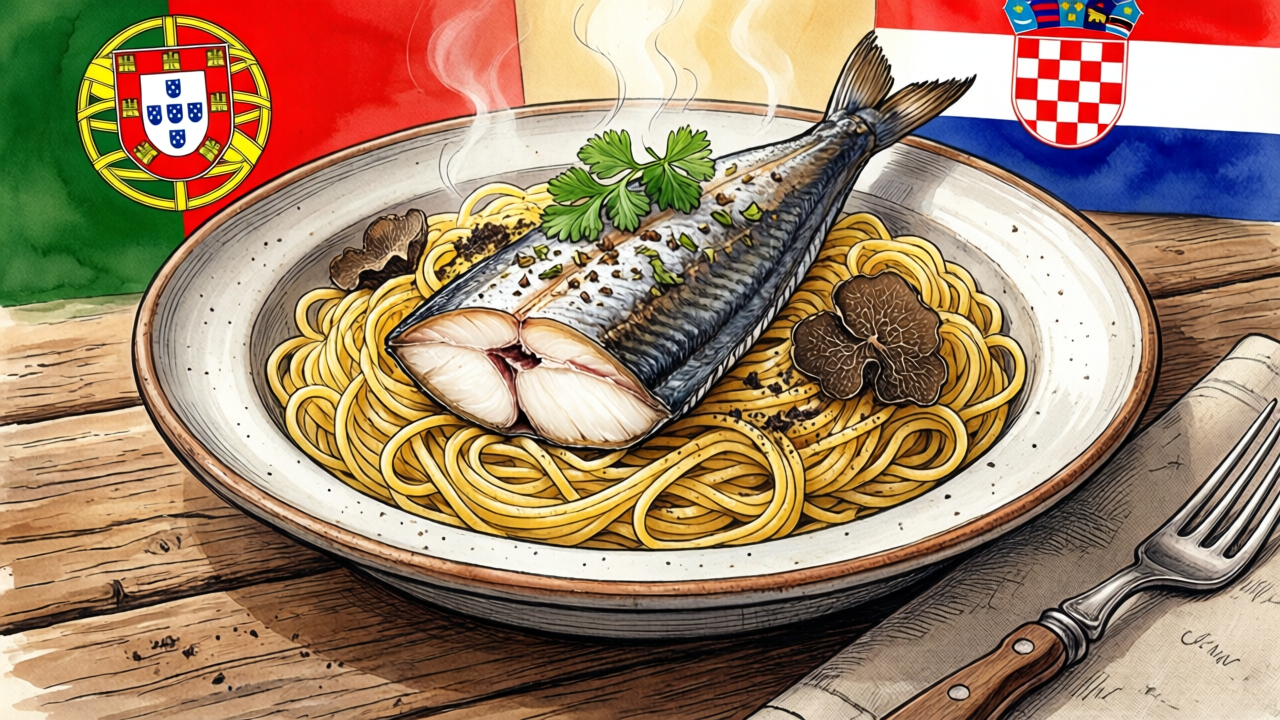
The fusion: Take the technique of bacalhau à Brás — flaked salt cod, eggs, aromatics — but serve it over Croatian fuži pasta instead of potato matchsticks. Finish with a butter that combines Portuguese piri-piri chilli heat with Istrian truffle. The pasta absorbs the egg and cod just like the potatoes do, but the truffle adds an earthy depth that the original doesn’t have, and the piri-piri gives it a kick that straight truffle butter lacks.
Two cultures, one plate. Both obsessed with cod, both obsessed with olive oil, both convinced their way is the only way.
Ingredients
- 200g salted cod (bacalhau), soaked overnight and flaked
- 250g fresh fuži pasta (or use pappardelle cut into short pieces as a substitute)
- 3 eggs, lightly beaten
- 1 large onion, finely sliced
- 4 cloves garlic, minced
- 60g butter (divided)
- 2 tbsp piri-piri paste or peri-peri seasoning
- 15g black truffle paste (or truffle oil if you can’t find paste)
- Good-quality extra virgin olive oil (Istrian if you’re feeling fancy)
- Black olives (Kalamata or Portuguese azeitão), roughly chopped
- Fresh parsley, chopped
- Sea salt and black pepper to taste
- A squeeze of lemon at the end
Method
-
Prepare the cod. Soak the salted cod in cold water overnight (changing the water 3-4 times) to remove excess salt. Drain and flake into small chunks, removing any bones.
-
Make the fuži. If you’re making fresh fuži (and you should — it’s not actually that hard), roll out a simple dough of flour, eggs, and a splash of olive oil until thin, cut into 4cm squares, then twist each square around a rolling pin and slide it off into boiling salted water. Cook 2-3 minutes until al dente. If you’re using a substitute like short pappardelle or wide tagliatelle, cook according to packet.
-
Sweat the aromatics. In a large frying pan, gently cook the sliced onion in 2 tbsp olive oil over low heat for 10 minutes until soft and sweet — not coloured. Add the garlic for the final minute.
-
The piri-piri truffle butter. In a small pan, melt the butter and stir through the piri-piri paste and truffle paste until combined. Set aside. This is the flavour engine of the whole dish — the heat of Portuguese chilli meeting the earthiness of Istrian truffle.
-
Combine. Add the flaked cod to the onions and cook gently for 2-3 minutes. Tip in the drained pasta and toss everything together. Remove from heat.
-
The egg. Pour the beaten eggs over the cod and pasta mixture. Stir vigorously and continuously — this is the key technique from bacalhau à Brás. You want the eggs to coat everything in a creamy, silky scramble, not set into firm curds. Keep going until you have a glossy, cohesive dish.
-
Finish. Drizzle over the piri-piri truffle butter, scatter with black olives and parsley. A final drizzle of olive oil and a squeeze of lemon to cut through the richness.
-
Serve immediately on warm plates. A glass of Portuguese Alvarinho or Croatian Malvasia Istrian would be the sensible choice. A pint of Guinness would be the honest choice.
The Verdict
This is the kind of fusion that works because both cuisines share a DNA of simple, ingredient-led cooking. Neither Portuguese bacalhau à Brás nor Croatian fuži with truffle is a complicated dish — they’re both about getting a handful of quality ingredients right and letting them speak. The piri-piri truffle butter is the bridge: heat and earth, Portuguese fire and Croatian soil, in one emulsion.
As for the match itself? Portugal on paper, Croatia on heart. The Opta says 54.5% for the home side — but football has a habit of ignoring statistics the same way my attempts at fuži ignore whatever recipe I started with.
Sources: Al Jazeera — Portugal vs Croatia preview, BBC Sport — WC2026 fixtures, FIFA — Portugal vs Croatia match preview