Bet you didn’t know this: the British bookmaker and a pot of slow-simmered bolognese have more in common than you’d think. Both reward the people who don’t chase their losses.
For a few years at the end of last century, you could walk into a high street and find more bookmakers than butchers, and the shops were hard to mistake. A red fascia that read like a warning, a window you had to duck under, a queue that stretched out the door and then turned the corner, and inside, a board of numbers updating so fast it looked like the shop was arguing with itself. The bookmaker had started life taking bets on horse racing from anyone with a coin and a hunch, but in 1960 — the year the government finally legalised fixed-odds betting shops — they took over the high street proper, and a whole nation discovered it was possible to stand in a queue and be happy about it. The betting slip is a British artefact in its own right: a small grid of numbers you fill in yourself, which means you can blame the wobbly handwriting when it doesn’t come in. At the height of it in the mid-eighties there were roughly eight thousand of the shops in Britain, and for a stretch a new one opened about every two days. The ones that are left still do the same job, with the queue usually shorter and the odds usually longer.
For decades the betting shop was the Sunday afternoon control centre of British football: the 2pm kick-off, the 4pm kick-off, the man by the window keeping the odds on things that will never happen. Bolognese — officially ragù alla bolognese, a recipe the Italians guard with an intensity that would make a bookie proud — has been the standby dish for exactly that kind of day. It takes roughly as long to make as a match takes to finish, and it keeps, which means it survives until you see the result. This week’s version is a proper slow ragù, with an each-way option for people who don’t do beef.
Ingredients
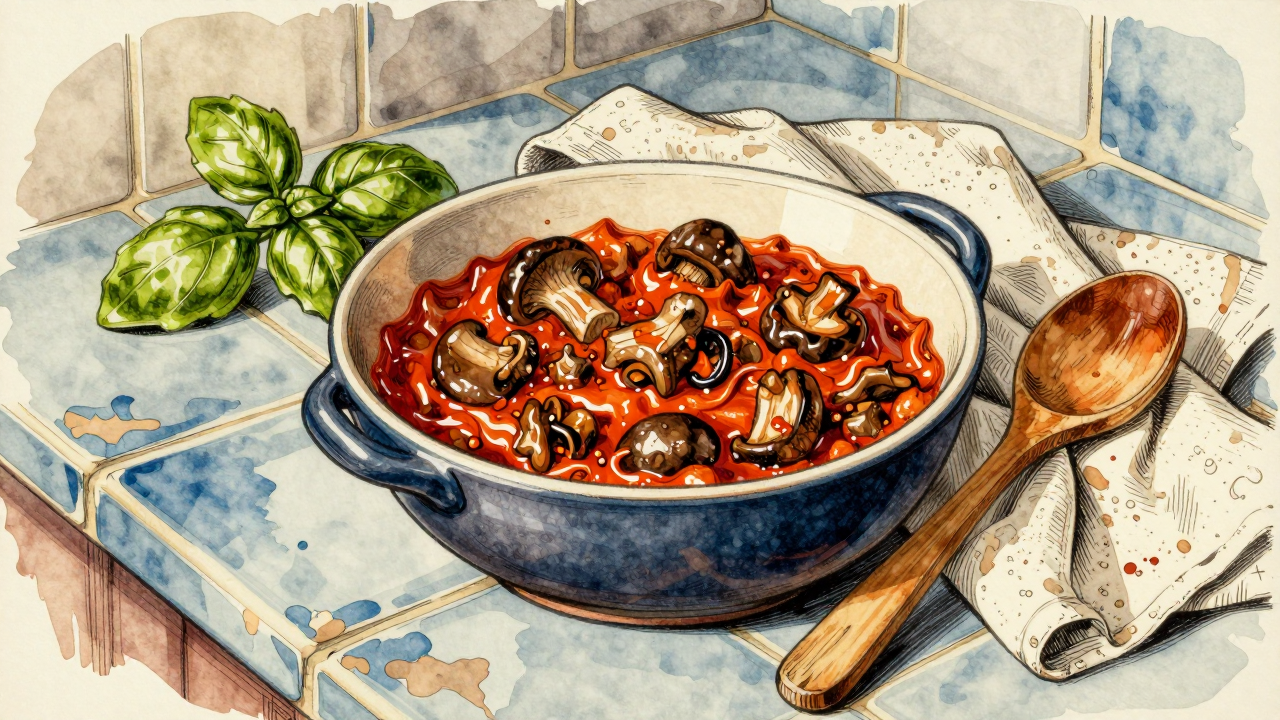
- 500g beef mince (or the each-way: 300g brown lentils, well rinsed, plus 200g mushrooms, finely chopped)
- 2 tbsp olive oil
- 1 onion, 2 carrots, 2 celery sticks, all chopped fine
- 4 garlic cloves, minced
- 1 tin (400g) chopped tomatoes
- 2 tbsp tomato purée
- 150ml red wine (or beef stock, plus a small splash of vinegar for the edge)
- A good handful of Parmesan, plus more to serve
- 1 bay leaf, if it’s in the cupboard — they’re cheap and they never complain
- Salt, black pepper, a pinch of sugar
- Spaghetti or any pasta that survives a Sunday (bread, for the brave)
- Fresh basil to finish
Method
- Warm the olive oil in a big heavy pan over a medium heat. Gentler than the 2pm, more patient than the 4pm.
- Sweat the onion, carrot and celery for about 10 minutes until soft and faintly sweet. This part cannot be rushed. Nobody ever won at the bookies by rushing.
- Turn the heat up and add the mince, cooking until it’s properly browned and the edges are starting to crisp. Break it up as it goes. (Each-way bet: fry the mushrooms first until the water has gone, then add the lentils with enough hot stock to cover.)
- Add the garlic for the final minute of browning, just until it starts to smell like a decision.
- Pour in the wine and scrape up all the browned goodness from the bottom of the pan. That’s where the flavour lives, and that’s where the bookies keep their margin.
- Stir in the tinned tomatoes, the tomato purée, the bay leaf and a pinch of sugar. Bring to a lazy simmer, put the lid on and leave it for at least an hour — two if the match is on and you want the sauce to have a story. Stir now and then; a splash of stock if it dries out.
- Season properly: salt, pepper, and a generous grating of the Parmesan. Taste it. It should taste like something worth staking on.
- Cook the pasta in well-salted water, drain it, and toss it through the sauce with a splash of the pasta water. Finish with basil and the rest of the Parmesan.
Place the lentil bet and you still get the full flavour of the thing; the only thing you lose is the beef. The sauce keeps happily for three or four days in the fridge, which is more than can be said for most British fortunes. Good luck with the fixtures — the odds are decent.