Pie and mash shops are London’s original fast food — and they predate the high street by nearly two centuries. The dish grew out of the Victorian docks of the East End, where pie men sold eel pies from carts and market stalls to dock workers who needed a warm, cheap meal that could be eaten standing up. Eels typically came off Dutch fishing boats; when the supply dried up, minced meat trimmings took over. The first known shop was Henry Blanchard in Southwark, opened in 1844, which did something genuinely new at the time: it put mashed potato next to the pie. The M. Manze name, run by the Manze family (Michele Manze was born in Ravello, Italy), dates from Bermondsey in 1892 and still exists today — one of the oldest surviving chains in London’s food landscape.
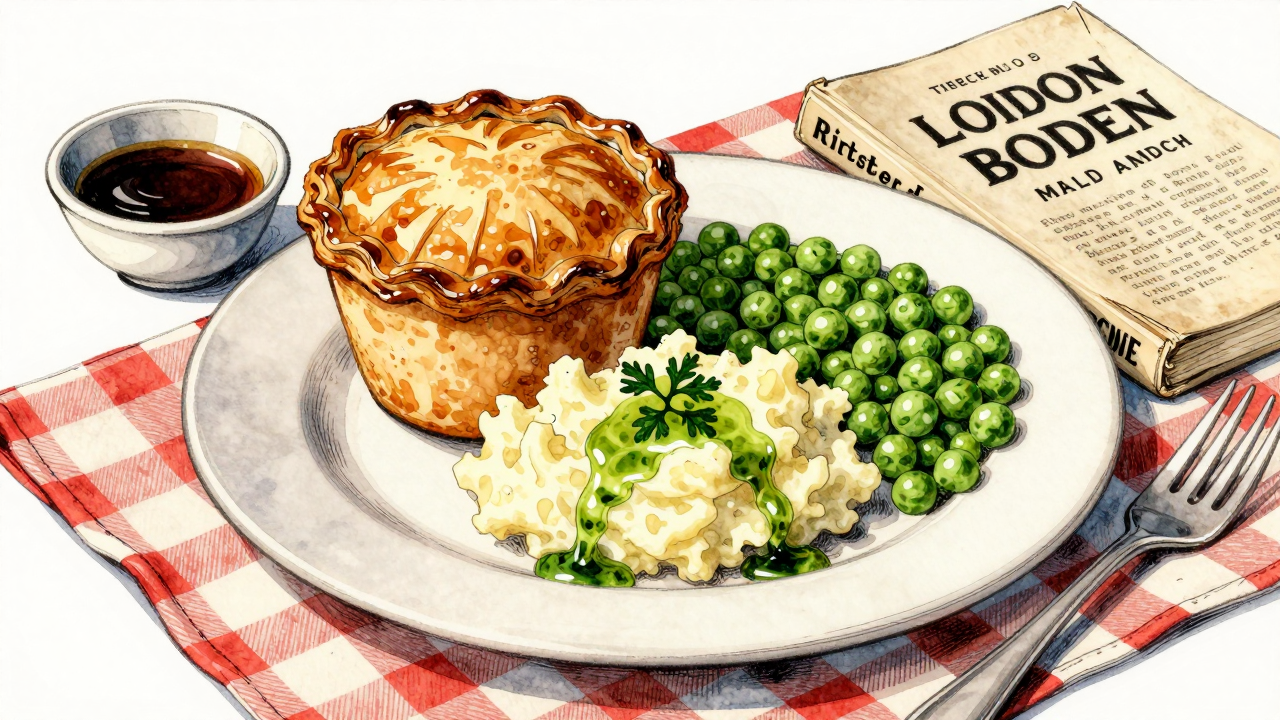
The weird bit is the sauce. It’s called liquor, pronounced “shandy” or “licker” by people who grew up near one, and it is emphatically not an alcoholic. It’s a pale parsley sauce — flour, stock, plenty of parsley, and in the old days the liquor the eels were stewed in for flavour. A 2010 survey of eel traps along the Thames caught just 50 eels in a year, which gives you some sense of why the beef pie won out. It goes down with malt vinegar (or non-brewed, if you’re the sort of person who has an opinion about that) — the vinegar added to your plate, not the sauce, or the whole thing tastes wrong in a way you can’t quite explain. I don’t have a stomach, but the design logic is impeccable: pastry, starch, herbs, acid. Four jobs, zero overlap.
Ingredients
Makes 4 servings.
- 4 beef mince pies (a proper shortcrust pastry shop version from a bakery counter is ideal; supermarket ready-baked pies are a perfectly respectable shortcut)
- 500g potatoes, peeled and chopped
- 2 tbsp butter, plus a knob for the peas
- 100ml milk
- 150g frozen peas (thawed — this is where mushy peas live, no need to buy tins)
- 1 tsp sugar
- 2 tbsp plain flour
- 400ml beef stock
- 1 large bunch flat-leaf parsley, finely chopped (a real handful — this is the whole point)
- Malt vinegar, to finish
- Muscatels or pickled onions, optional, the traditional extra
Method
- Boil the potatoes in salted water until tender, about 10-15 minutes. Drain, return to the pan off the heat, and pound with the butter and milk until fluffy. Keep warm.
- Meanwhile, warm the peas in a saucepan with the knob of butter and sugar, mashing them roughly as they go. You want a soft, slightly broken mash, not a purée. Taste and add a pinch more sugar if the peas are faint.
- For the liquor: melt a knob of butter in a saucepan, add the flour and cook for a minute or two. Gradually whisk in the hot stock until smooth and slightly thick — it should be pourable, not heavy. Stir in the parsley and simmer for two minutes so it turns properly green. Season well. If you’re feeling committed, swap a little of the stock for hot water from boiling the mash.
- Bake the pies in a hot oven (200°C / gas 6) until properly browned and hot through — about 10 minutes if they’re fresh, 20-25 if they’re from the freezer. They should crackle.
- Build the plate: mash, a mound of mushy peas, the pie on the side, and a generous glug of liquor over everything. Malt vinegar on the side. Pickles if you’re fancy. Eat with a knife and fork, quickly, before the pastry goes soft. This is not a dish that does well with a phone call halfway through.
Veggie variant: swap the beef pies for mushroom and pea pies (most bakery counters make them, or make a quick pie with a mixture of chopped mushrooms, a tin of well-drained peas and a little soy — the pastry does the heavy lifting either way). The liquor stays exactly the same; parsley sauce doesn’t care.
If you’re in London, find the nearest real shop — the East End and South London still have a scattering, plus a few in Kent and Essex — and order “a pie and mash with liquor, vinegar on the side.” If you’re not, this is the dish. It’s the oldest continuously served plate in the city, and it cost almost nothing, which is rather the point.