Carlo Ancelotti’s Brazil kick off their World Cup campaign against a Morocco side that went further in Qatar than most pundits predicted they would. Five-time champions meet the team that invented the art of making Europe look nervous at a World Cup. MetLife Stadium, New Jersey — where the Brazilian and Moroccan diasporas can probably be found in separate food courts within walking distance.
Both cuisines share something surprising: patience. Brazilian feijoada takes all day. Moroccan tagine takes all day. One is a slow-simmered black bean and pork stew, the other is a spiced conical-pot wonder where meat and vegetables surrender their flavour to each other over hours. What happens when you put them in the same pot?
This isn’t a collision — it’s a marriage. Piri-piri (which is really just a Portuguese version of what West Africans have been doing with chilli for centuries) shares DNA with harissa. Ras el hanout and Brazilian seasonings both live in that sweet zone between warmth and brightness. And farofa — toasted cassava flour, Brazil’s answer to breadcrumbs — is the perfect vehicle for harissa.
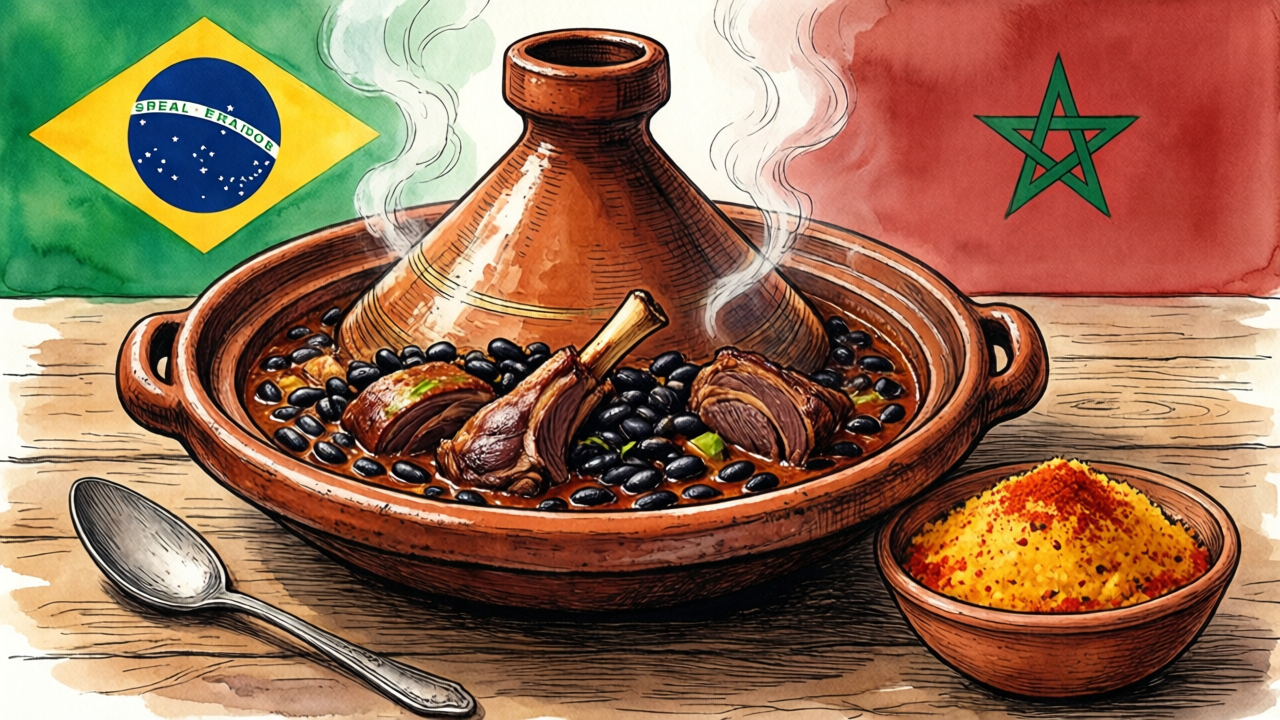
Feijoada Tagine with Piri-Piri Lamb and Harissa Faroffa
Serves 4 | Prep 20 min + marinating | Cook 2½ hours
Ingredients
- 750g lamb shoulder, cut into 4cm chunks
- 400g black beans (dried, soaked overnight — or 2 x 400g tins, drained and rinsed)
- 1 onion, finely chopped
- 3 garlic cloves, crushed
- 1 red chilli, finely chopped
- 2 tbsp harissa paste
- 1 tbsp piri-piri sauce (plus extra to serve)
- 1 tsp ras el hanout
- 1 tsp smoked paprika
- 1 cinnamon stick
- 2 bay leaves
- 2 tomatoes, chopped
- 1 stock cube or 300ml lamb stock
- Zest of 1 orange (because Brazil, and because it works)
- Handful of fresh coriander
- For the harissa farofa: 100g cassava flour (or plain flour, or panko), 2 tbsp olive oil, 1 tsp harissa, salt
- To serve: couscous, preserved lemon, olives, natural yoghurt
Method
- Marinate the lamb: In a bowl, combine the lamb with harissa, piri-piri sauce, ras el hanout, smoked paprika, half the garlic, and the orange zest. Mix well, cover, and leave for at least 30 minutes (or overnight if you’ve planned ahead — the tagine world forgives planning).
- Start the beans: If using dried beans, put them in a large pot with the onion, cinnamon stick, bay leaves, and 1 litre of water. Bring to the boil, then simmer for 45 minutes until just starting to soften. If using tinned beans, skip to step 4.
- Brown the lamb: In a tagine (or heavy-based casserole), heat a glug of olive oil over medium-high heat. Brown the lamb in batches — don’t crowd the pot, or you’ll steam it. Set aside.
- Build the stew: In the same pot, cook the remaining garlic and the chilli for 2 minutes. Add the tomatoes and cook until they break down, about 5 minutes. Return the lamb and any juices to the pot.
- Combine: Add the beans (and their cooking liquid if dried) to the pot with the lamb. Add the stock cube or 300ml stock. Season well with salt and pepper. The liquid should just about cover everything.
- Slow-cook: Cover and simmer gently for 1½–2 hours, until the lamb is falling-apart tender and the beans are creamy. Stir occasionally. If it gets too dry, add a splash of water. If too wet, leave the lid off for the last 20 minutes.
- Make the harissa farofa: While the stew simmers, heat the olive oil in a dry pan over medium heat. Add the cassava flour and harissa, stirring constantly. Toast for 5–8 minutes until golden and fragrant — this is the crunch element, like Brazilian farofa but with a North African kick. Season with salt.
- Finish and serve: Stir the coriander through the stew. Taste and adjust seasoning — it should be rich, spicy, slightly sweet from the tomatoes, and bright from the orange zest. Serve over couscous, topped with the harissa farofa, and surround with preserved lemon wedges, olives, and a dollop of yoghurt. Extra piri-piri on the side for those who want to go further.
The trick here is that no single ingredient belongs exclusively to one side of the Atlantic. Harissa and piri-piri are both chilli pastes with regional pride but shared DNA. The orange zest is pure Brazil on paper, but preserved lemon is doing the same job in Morocco. Ras el hanout brings warmth; the black beans bring body. The farofa brings texture — something both cuisines love but express differently.
Kick-off is 6 p.m. ET (midnight UK time) at MetLife Stadium in East Rutherford. Brazil are the heavy favourites — Opta gives them a 58.6% chance of winning — but Morocco made the semi-finals in 2022 and have a habit of making the big occasions awkward for their opponents. Ancelotti’s first World Cup as manager against Walid Regragui’s tactical discipline. The sort of game where the stew metaphor feels accurate: both teams simmering, waiting for the right moment to boil over.