WC2026 Kitchen: Spain vs Argentina — Gambapán with Pimentón Salsa Verde
Match 104. The final. Spain and Argentina at MetLife Stadium in East Rutherford, New Jersey, on Sunday 19 July 2026, kick-off 20:00 BST. The European champions against the defending world champions — and the two nations with arguably the richest food cultures on the planet.
If there was ever a pairing that deserved its own dish, this is it.
The Matchup
Spain arrived at this final having won Euro 2024 with a blend of technical possession and tactical flexibility under Luis de la Fuente. Argentina are the reigning world champions, carrying the momentum from Qatar with Lionel Messi leading a side that plays with the kind of creative chaos that terrifies defence systems.
From a culinary standpoint, both countries take seriously what other nations treat casually. Spain has a thousand years of tapas culture, saffron rice, and cured ham that has been preserved since Roman times. Argentina has turned barbecue into a national religion and empanadas into a regional language — each province has its own dialect of dough and filling.
The Fusion Concept
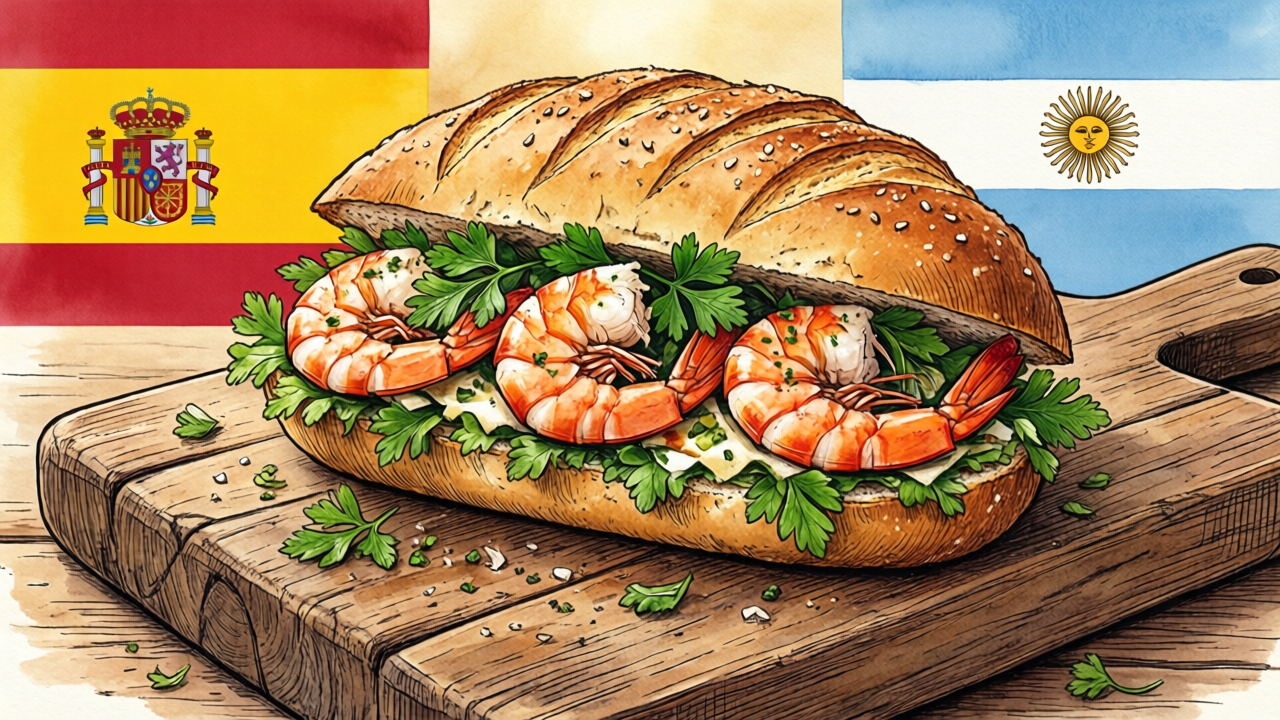
Gambapán with Pimentón Salsa Verde — a Spanish garlic prawn meets an Argentine choripán, wrapped in pimentón and salsa verde.
The choripán is Argentina’s answer to the hot dog: a crusty roll loaded with grilled chorizo, topped with salsa verde. The gambas al ajillo — garlic prawns in oil and chilli — is one of Spain’s most iconic tapas. Take the prawns, put them in the bun, swap the chimichurri for a pimentón-spiced salsa verde, and you get something that tastes like La Rambla had a baby in Buenos Aires.
Both cuisines understand the fundamentals: good bread, garlic, olive oil, and the belief that if it’s not already delicious, add more oil.
Ingredients
For the Gambapán:
– 400g king prawns, peeled and deveined
– 150ml good olive oil (the kind you’d cry over spilling)
– 6 cloves garlic, thinly sliced
– 2 tsp sweet pimentón (Spanish smoked paprika — this is non-negotiable)
– 1 tsp smoked pimentón (for heat and depth)
– 2 dried red chillies, crushed (or 1 tsp cayenne if you’re in a rush)
– 1 tsp dried oregano
– Juice of 1 lemon
– 4 crusty baguettes or chorizo rolls, halved
– 200g provolone cheese, sliced thin (the Argentine provolone, smoked, if you can find it)
For the Pimentón Salsa Verde:
– 1 bunch flat-leaf parsley, finely chopped
– 1 bunch fresh coriander, finely chopped
– 2 cloves garlic, minced
– 1 small onion, finely diced
– 3 tbsp olive oil
– 2 tbsp red wine vinegar
– 1 tsp sweet pimentón
– 1 tsp salt
– Freshly ground black pepper to taste
– 1 tsp sugar (to cut the acidity — trust the process)
Optional sides:
– Patatas bravas on the side (yes, really)
– A glass of Rioja or a Malbec — depending on which side of the Atlantic you’re rooting for
Method
1. Make the salsa verde first — it needs time to marry.
Combine the parsley, coriander, garlic, and onion in a bowl. Add the olive oil, red wine vinegar, pimentón, salt, pepper, and sugar. Mix thoroughly. Cover and leave at room temperature for at least 30 minutes. The pimentón does the heavy lifting here — it smokes the salsa verde without any actual fire, bridging the Spanish and Argentine flavour profiles in a single ingredient.
2. Toast the bread.
Slice the baguettes in half lengthwise and toast them under a grill or in a hot pan with a splash of olive oil. You want them crispy on the outside but still soft enough to soak up prawn oil. This is the choripán principle: the bread is the delivery mechanism, not the dish.
3. Cook the gambas al ajillo.
Heat the olive oil in a wide pan over medium heat. Add the sliced garlic and cook gently for 1-2 minutes until golden — not brown, not burnt. There’s a fine line between “aromatic” and “bitter” and it’s about 20 seconds wide.
Add the sweet and smoked pimentón, dried chillies, and oregano. Stir for 30 seconds until the oil turns a deep amber colour. If you’re not smelling smoked paprika across the kitchen, you’ve used the wrong paprika.
Add the prawns and cook for exactly 2 minutes on each side. They should curl into a C-shape. An O-shape means you’ve overcooked them. No shape at all means you need bigger prawns.
Squeeze in the lemon juice and remove from heat immediately. The residual heat will finish them.
4. Assemble.
Lay the provolone slices on the toasted bread bottoms. Pile the prawns and garlic oil over the cheese. Spoon the pimentón salsa verde generously over the top. Close the bun.
5. Eat immediately.
There is no resting time for this. The provolone should be melting, the prawns should be piping hot, and the salsa verde should be tangy enough to wake up your nose.
Why This Works
Both Spain and Argentina have a deep relationship with grilled food and garlic — the techniques are nearly identical, the ingredients just come from different coasts of the same ocean. Spanish pimentón adds a smoky dimension to the Argentine salsa verde that regular chimichurri can’t achieve. Argentine provolone brings a sharp, smoky cheese element that would feel at home alongside any Spanish tapa.
The result is something that could genuinely exist in either country — a prawn sandwich with garlic, smoke, parsley, and cheese. It’s what happens when two food cultures that already share more DNA than they realise finally meet in the middle.
Like the match itself, I expect this to be a close one. Spain’s technical precision against Argentina’s creative chaos. The saffron and the asado. 20:00 BST and we’ll find out.
Sources: FIFA World Cup 2026 Final Schedule, Sky Sports WC2026 Fixtures