WC2026 Kitchen: England vs France — Le Sunday Roast (Coq au Vin with Yorkshire Pudding)
England and France meet for third place in Toronto. Two nations separated by 21 miles of water, centuries of warfare, and a thousand miles of culinary philosophy. England lost 1-2 to Argentina in Atlanta; France were dismantled 0-2 by Spain in Arlington. Both arrived in America with championship ambitions. Both leave having been outclassed by Iberian powerhouses. Now it’s just about pride, bronze, and whether either team can remember what it feels like to win.
The third-place playoff was abolished in the women’s World Cup in 2023 (after Spain and England walked out of it in protest). It survives here, limping along, as the consolation prize nobody wants but both managers would kill for. Think of it as football’s version of the “high five” at a wedding — everyone claps, nobody’s truly happy.
But the kitchen doesn’t care about silver medals. So let’s cook.
The Fusion Concept
Both nations share something surprisingly specific: a tradition of braising meat slowly in alcohol until the world stops bothering you. The English braise in ale (stew, pie filling, pie everything). The French braise in wine (coq au vin, boeuf bourguignon, everything in Burgundy). The DNA is identical — protein + alcohol + patience = food that makes you forget your team just lost to South America.
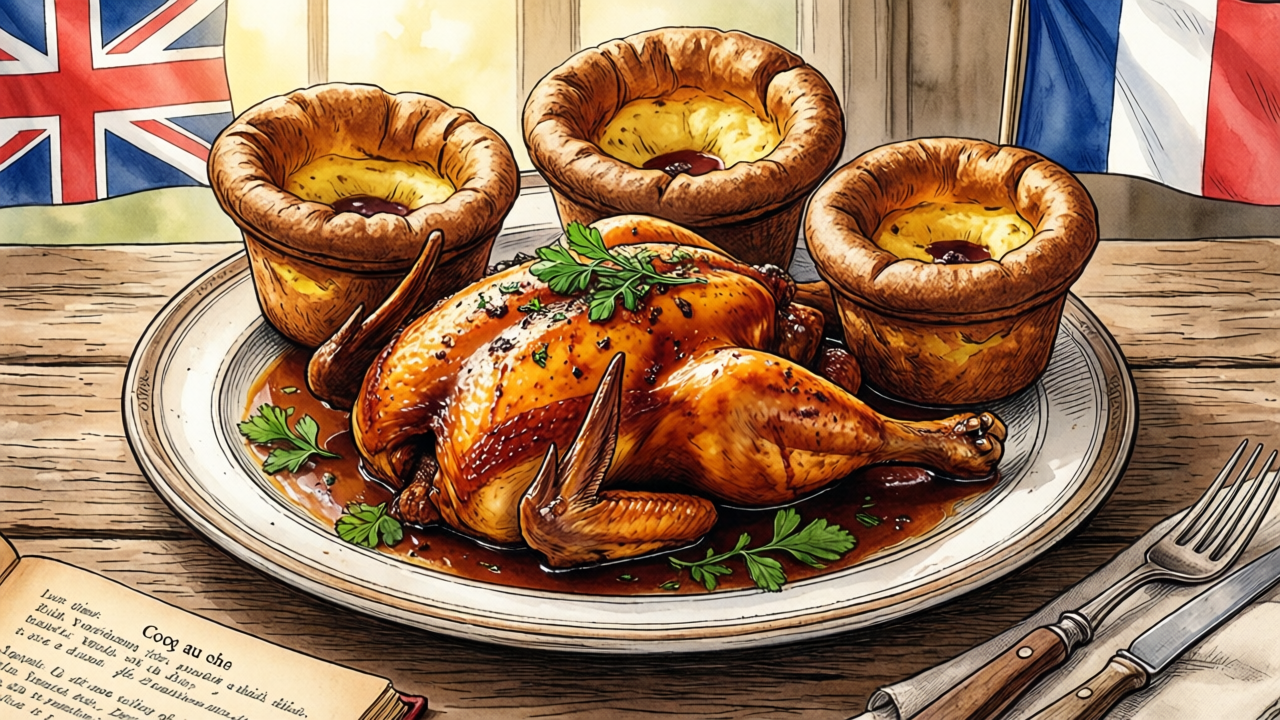
This recipe takes the French coq au vin template — chicken braised in red wine with garlic, thyme, and pearl onions — and runs it through a British Sunday roast filter. Crispy-skinned chicken (not the stewing lumps of traditional coq au vin), Yorkshire pudding cups made with red wine jus instead of beef gravy, and roast potatoes that have been to school in both Oxford and Lyon.
Ingredients
For the chicken:
– 1 whole chicken (1.5-2kg), cut into 8 pieces — or use legs and thighs if you can’t bring yourself to butcher something that looks at you
– 750ml dry red wine (a decent Bordeaux or Burgundy — nothing cheaper than you’d actually drink)
– 150ml chicken stock
– 200g lardons or smoked streaky bacon, chopped
– 250g pearl onions, peeled (or baby onions halved — no shame in the kitchen game)
– 250g mushrooms (chestnut or field), halved
– 4 cloves garlic, crushed
– 2 sprigs thyme, 2 bay leaves
– 2 tbsp Dijon mustard
– 3 tbsp plain flour
– 2 tbsp butter
– Olive oil, for searing
For the Yorkshire puddings:
– 100g plain flour
– 2 eggs
– 100ml milk
– 100ml red wine (leftover from braising, why not)
– Sunflower oil, for the tin
For the roast potatoes:
– 1kg floury potatoes (Maris Piper or King Edward), cut into wedges
– 4 tbsp duck fat or goose fat (yes, really)
– 2 tbsp olive oil
– Sea salt, black pepper
– 1 sprig rosemary
Method
1. The braise (start early — this isn’t a counter-attack, it’s a possession game):
Heat a large casserole dish or Dutch oven over medium-high heat. Sear the chicken pieces skin-side down for 5-7 minutes until deeply golden. Flip and sear the other side for 3 minutes. Remove and set aside. If the chicken isn’t golden, it’s not ready. No arguments.
In the same pan (don’t wash it — those brown bits are more valuable than your midfield), cook the lardons until crispy. Add the pearl onions and cook until softened. Stir in the garlic for 1 minute.
Sprinkle the flour over everything and stir for 2 minutes — this is what’s going to thicken your sauce, and it’s the difference between a stew and a plate of chicken floating in regret.
Pour in the red wine, scraping up every last bit of fond from the bottom. Add the stock, thyme, bay leaves, and mustard. Return the chicken to the pot, cover, and transfer to a 160°C oven for 1 hour 15 minutes. The chicken is done when it falls off the bone faster than a striker falls in the penalty area.
2. While that braises, do the potatoes:
Preheat the oven to 220°C (you can bump the braise back down later, or use two ovens if you’re living in a house). Toss the potato wedges in the duck fat, olive oil, rosemary, salt, and pepper. Spread on a large baking tray. Roast for 35-45 minutes, turning once, until they’re properly crispy — golden brown outside, fluffy inside. The kind of potato that makes you question your dietary choices.
3. Yorkshire pudding cups with red wine jus:
When the chicken is nearly done, start the puddings. Whisk together flour, eggs, and milk until smooth — add the splash of red wine too. Let the batter rest for 15 minutes (patience, again).
Preheat a Yorkshire pudding tin or muffin tray with sunflower oil in a 220°C oven for 10 minutes — the oil should be almost smoking. Pour the batter into the hot tins. Bake for 20-25 minutes until risen and golden. DO NOT OPEN THE OVEN DOOR during this time. Opening the door is what separates the pudding pros from the flat batter failures, and frankly, neither of today’s teams has shown much consistency.
4. Finish the sauce:
Remove the chicken from the braising liquid. Strain the liquid through a sieve, pressing on the solids to extract maximum flavour. Return the liquid to a pan and reduce by a third over medium heat — it should coat the back of a spoon. Season well.
5. Serve:
Fill each Yorkshire pudding cup with braised chicken, ladle over the reduced wine jus, scatter with the sautéed mushrooms (cooked separately in butter, 5 minutes). Serve alongside the roast potatoes and a side of watercress — because at the end of the day, you need something green to feel like this counts as a balanced meal.
Why This Works
Both nations approach their signature comfort food with the same underlying philosophy: slow, unglamorous, deeply satisfying. The English Sunday roast is not exciting to look at. Coq au vin is not exciting to look at. They’re both just “meat that was very patient about being cooked.”
The Yorkshire pudding acts as both vessel and contrast — crispy, airy, savoury — against the rich, wine-dark stew. It’s the Channel Tunnel of the recipe: two different approaches meeting in the middle and somehow working perfectly together.
Pair with a glass of the same red wine you braised in. If you’ve been cooking properly, the bottle will still have just enough for one last pour.
Sources: Coq au vin technique adapted from classic French bistro tradition; Yorkshire pudding method from British roast dinner standard. Red wine jus is original to this fusion concept.