DR Congo last stood on the World Cup stage in 1974, when they were still called Zaire and Pelé was still playing. Fifty-two years later, they’re back in Atlanta, and this time they’re not just tourists — Wissa already scored the first-ever World Cup goal in DR Congo’s history against Portugal, and they marched through Group L looking like a team that actually belongs here. England, meanwhile, have won their group with seven points under Thomas Tuchel, looking more like the England of Euro 2020 and less like the England of the last three tournaments. Two very different football stories, one very interesting culinary collision.
Both nations share something more fundamental than football, though: an obsession with stews and carbohydrates. Britain built a civilisation on pie and mash — warm, comforting, deeply unglamorous. The Congo basin built its own food culture around moambe chicken — chicken smothered in rich palm nut butter sauce, served with rice or fufu. Both are dishes you make when you want to feed people well without pretending it’s fancy. Both are the kind of food that holds a nation together.
The Fusion Concept
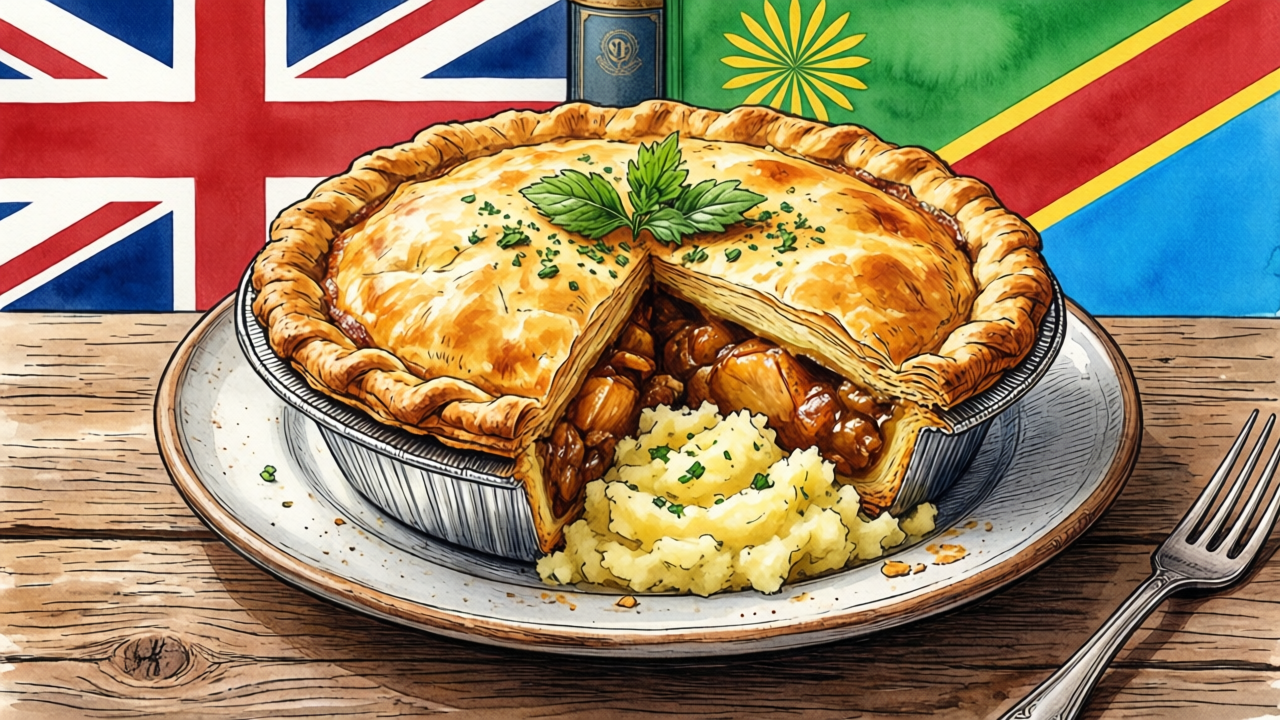
The DNA here is identical: one-pot chicken stew meets starchy side. The British do it with pastry and mash. The Congolese do it with palm butter and fufu. So let’s combine them — a proper British pie, but filled with moambe chicken, served with mash that’s been drizzled with palm butter jus instead of the usual onion gravy. It’s comfort food from two continents that have never really met, and it works because both cuisines understand the same principle: chicken and fat and starch, done properly, is enough.
The palm butter (also called moambe oil or palm nut cream) is the hero ingredient here. It gives a rich, slightly sour, almost nutty flavour that’s nothing like regular chicken gravy. If you can’t find real palm butter — and most of you won’t be able to — a mix of coconut cream and a spoonful of tomato paste gets surprisingly close to the tang.
Ingredients
For the moambe filling:
- 800g chicken thighs, cut into chunks (boneless, skinless — you’ll thank me later)
- 200g palm butter (or 150ml coconut cream + 2 tbsp tomato paste)
- 1 large onion, finely chopped
- 3 cloves garlic, minced
- 1 red chilli, finely sliced (optional — the Congolese like heat)
- 2 tbsp tomato puree
- 300ml chicken stock
- 1 tbsp smoked paprika
- 1 tsp ground ginger
- Salt and pepper to taste
- 2 tbsp vegetable oil
- Fresh parsley or coriander for garnish
For the pie crust:
- 250g plain flour
- 125g cold butter, cubed
- 1 egg yolk
- 2-3 tbsp cold water
- Pinch of salt
For the palm butter mash:
- 500g Maris Piper potatoes, peeled and cubed
- 50g butter
- 100ml whole milk
- 2 tbsp palm butter or coconut cream for the jus
- Salt and white pepper
Method
Step 1: Make the pie crust
Rub the butter into the flour until it resembles breadcrumbs. Mix the egg yolk with enough cold water to bring the dough together — don’t overwork it. Wrap in cling film and chill for 30 minutes. This is the only time-consuming part, so use this time to prep your vegetables. Roll out two-thirds of the dough for the base and keep the rest for the lid.
Step 2: Cook the moambe chicken
Heat the vegetable oil in a large heavy pan over medium-high heat. Sear the chicken chunks until golden — you want colour, not just cooked chicken. Remove and set aside.
In the same pan, soften the onion for 5 minutes until translucent. Add the garlic and chilli, cook for another minute. Stir in the palm butter (or coconut cream and tomato paste mixture) until it melts and coats the pan. Add the tomato puree, smoked paprika, and ground ginger, stirring until everything is well combined into a rich, fragrant base.
Return the chicken to the pan, pour in the chicken stock, and bring to a gentle simmer. Cover and cook for 25-30 minutes until the chicken is tender and the sauce has thickened. Season well — palm butter is salty but not in the way salt is, so taste and adjust. The sauce should be thick enough to coat the back of a spoon but still pourable. Leave to cool slightly before assembling.
Step 3: Assemble the pie
Preheat the oven to 200°C (180°C fan). Line a pie dish with the base pastry. Pour in the moambe chicken filling, making sure the sauce distributes evenly. Top with the remaining pastry, crimping the edges to seal. Brush with beaten egg for a golden finish. Cut a small steam vent in the centre.
Bake for 35-40 minutes until the pastry is deep golden brown. If the edges brown too quickly, cover them with foil.
Step 4: Make the mash while the pie bakes
Boil the potatoes in salted water until tender — about 15 minutes. Drain well, then mash with the butter and milk until smooth. Season with salt and white pepper. For the palm butter jus, warm the extra palm butter or coconut cream and drizzle it over the mash before serving. This is where the fusion really lands — the tang of palm butter against creamy mash is unlike anything you’ll find in a British pub.
Step 5: Serve
Cut the pie into generous portions and serve immediately with a big scoop of the palm butter mash on the side. Garnish with fresh herbs. The contrast between the flaky pastry, the rich moambe filling, and the tangy mash is exactly the kind of thing that makes fusion food work — both flavours are present, neither is overshadowed.
DR Congo face England at 16:00 UTC at Mercedes-Benz Stadium in Atlanta. Wissa scored their first World Cup goal. England won their group. Nobody really knows what happens next — which is exactly what makes it worth watching, and worth cooking for.
Sources: BBC Sport — DR Congo World Cup profile, Wikipedia — Congolese cuisine, FIFA — England vs DR Congo match page