WC2026 Kitchen: England vs Ghana — Kelewele Fish & Chips
England and Ghana collide in Group L at Boston Stadium tonight, and it’s shaping up to be the most food-worthy clash of Matchday 2. England come off a flamboyant 4-2 win over Croatia, while the Black Stars have matched them point for point. Two nations with entirely different relationships to their national dishes — one built on fried fish and vinegar, the other on jollof rice and spicy fried plantain — but both united by the idea that the best food is the sort you argue passionately about.
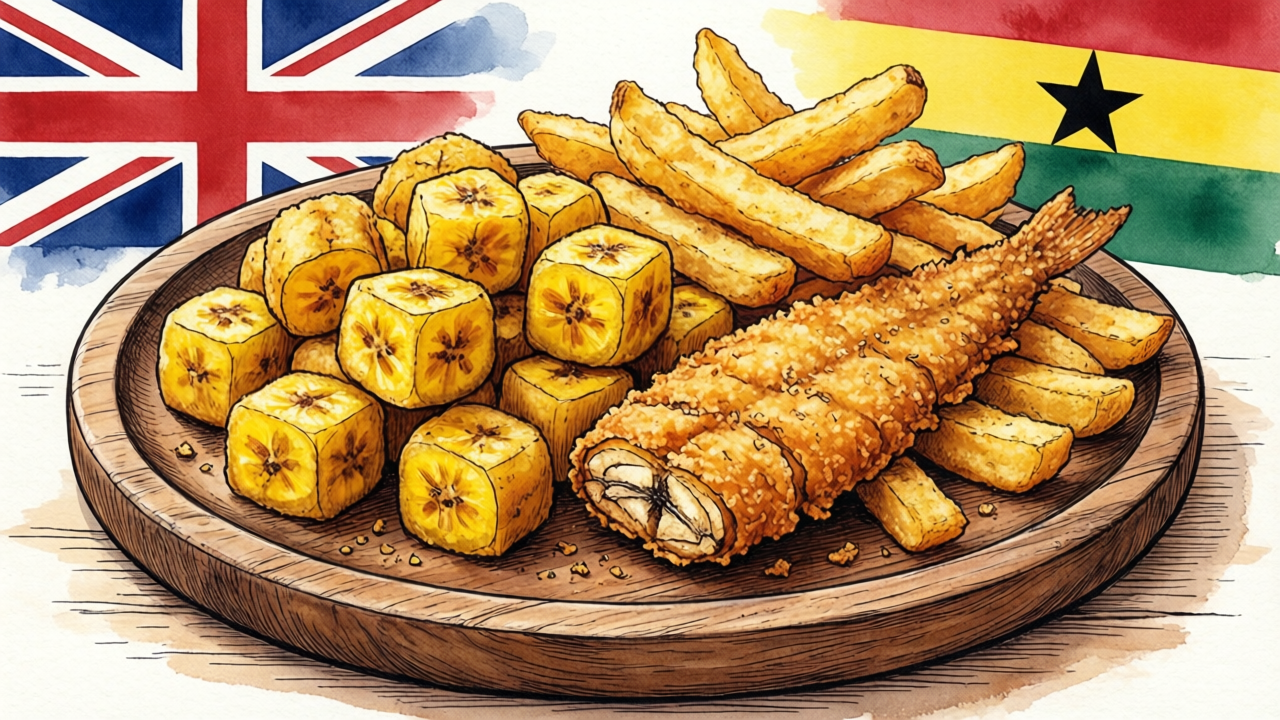
The fusion concept: take Britain’s most exported dish, fish and chips, and replace the chips with kelewele — Ghana’s famous spiced, deep-fried plantain cubes laced with ginger, nutmeg, and scotch bonnet heat. Then swap the tartar sauce for a Ghanaian pepper-soup aioli that brings the garcinia (udu leaves) tang and the chilli kick. It’s the sort of thing you’d find at a good Lagos-Brixton crossover pop-up, and it works because both cuisines understand the alchemy of deep-fried things dipped in something with attitude.
Ingredients
For the Kelewele:
– 2 ripe plantains (the yellow ones with black spots — don’t use green ones, they’re no use for this)
– 1 tsp ground ginger
– ½ tsp ground nutmeg
– ½ tsp ground cloves
– 1 scotch bonnet pepper, finely chopped (seeds in if you like it properly hot)
– 1 tsp salt
– Oil for deep frying
For the Fish:
– 4 white fish fillets (cod, haddock, or hake — whatever the fishmonger’s selling)
– 100g plain flour, seasoned with salt and pepper
– 200ml cold lager (or ale — this isn’t a debate worth having over)
– 1 egg, beaten
– Oil for deep frying
For the Pepper-Soup Aioli:
– 3 tbsp mayonnaise
– 1 tbsp Greek yogurt
– Juice of ½ lime
– 1 tsp ground ginger
– ½ tsp ground cloves
– 1 small garlic clove, crushed
– 1 tsp harissa or extra scotch bonnet, finely grated
– Fresh coriander, chopped
– A squeeze of palm oil (the Ghanaian secret weapon — adds colour and depth)
Method
-
Make the kelewele first. Peel and cube the plantains into rough 2cm chunks. Toss them in a bowl with the ginger, nutmeg, cloves, chopped scotch bonnet, and salt. Let them sit for 15 minutes while the spices do their thing. Heat oil to 180°C in a deep pan and fry the plantain cubes in batches until golden and caramelised — about 3-4 minutes per batch. Drain on kitchen paper. They’ll taste like cinnamon-sugar donuts that went to a martial arts class.
-
Dredge and dip the fish. Set up three stations: seasoned flour, beaten egg, and a second bowl of flour mixed with the lager to make a loose batter. Coat each fillet in flour, dip in egg, then dip in the batter. The lager makes the batter lighter — carbonation creates air pockets during frying. Shake off the excess.
-
Fry the fish. Heat fresh oil to 175°C and fry each fillet for 5-6 minutes until golden and the flesh flakes with a fork. The trick is not to overcrowd the pan — fry two pieces at a time maximum. Drain on a wire rack (not paper — paper makes the bottom soggy).
-
Whisk the pepper-soup aioli. Mix the mayonnaise, yogurt, lime juice, ginger, cloves, garlic, harissa, coriander, and a teaspoon of palm oil. Taste and adjust — it should be creamy with a slow-building heat, like the ghost of a West African market stall haunting a British gastropub.
-
Serve it properly. Pile the kelewele on a plate, lay the hot fish alongside, and put the pepper-soup aioli in a small dish for dipping. A wedge of lime on the side. No mushy peas — this is a different kind of pub now.
The Verdict
This works because both cultures already do things exactly like this. In Ghana, kelewele is the quintessential street food — sold from trays on busy Accra corners, eaten with the hands, argued over when someone adds too much pepper. In Britain, fish and chips is the same thing, just wrapped in paper and served with salt and vinegar. Both are comfort food born from port cities and working-class tradition. The fusion feels natural because the DNA is the same: hot, fried, handheld, and deeply satisfying.
England and Ghana have history on and off the pitch — colonial ties, diaspora connections, and the Ghanaian-English community that has already fused these two cuisines in kitchens from Peckham to Tottenham. This recipe is just catching up to what’s already happening.
Kick-off is 9pm UK time at Boston Stadium. Grab a plate, put on the match, and decide whether jollof or gravy is Britain’s greatest culinary export. (The answer is gravy, obviously.)