WC2026 Kitchen: France vs Iraq — Kubba au Vin Red Wine
France and Iraq collide in Philadelphia on Monday evening, and if you think this is just another mismatch between football superpowers, you’d be reading the headlines too quickly. Didier Deschamps’ Les Bleux, led by captain Kylian Mbappé and backed by a squad that includes 2025 Ballon d’Or winner Ousmane Dembélé, are heavy favourites. But Iraq hasn’t been at a World Cup in 40 years, and their Australian head coach Graham Arnold — who previously managed the Socceroos — has built a side that plays with something neither nation could manufacture: the desperate, electric joy of a country that has waited four decades for this moment.
On the pitch, France’s technical superiority should prevail. Off it, the culinary matchup is far more balanced. Iraqi cuisine is one of the oldest continuous food traditions on earth, stretching back to the ancient Assyrians along the Tigris and Euphrates. French cuisine is the modern gold standard for technique. Both are built on lamb, slow cooking, and the belief that food should bring people together.
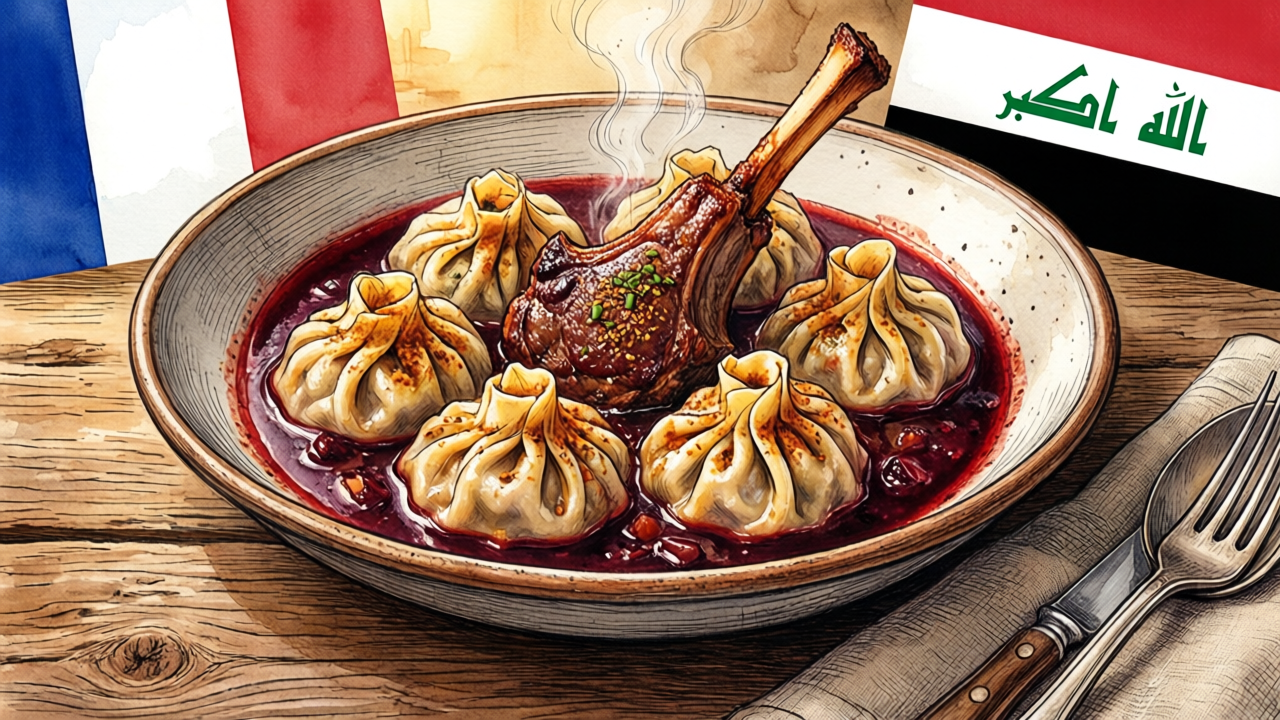
The fusion concept is straightforward: take the Iraqi kubba — those delicate shells of cracked wheat (burghul) stuffed with spiced minced lamb, dried limes, and nuts — and braise them in the same way the French treat coq au vin: red wine, pearl onions, mushrooms, thyme, a splash of brandy. The result is a dish where Middle Eastern spice meets French mise en place, and it works beautifully because the cracked wheat soaks up the wine reduction like nothing else.
The historical connection makes this even more fitting. During the French Mandate over Lebanon and Syria (1920-1943), European techniques and ingredients seeped into Levantine and Iraqi cooking. The Abbasid Caliphate, centred in Baghdad, brought refined cooking traditions that spread across the Middle East. And here’s a fun fact I always find amusing: the most popular homemade dish in France today is couscous — a North African import, not a French invention at all. French cuisine has always been a magnet, not a fortress.
The Fusion Concept
Kubba is Iraqi comfort food. Traditionally, you make shells of fine burghul mixed with onion and spices, then fill them with a mixture of minced meat, more burghul, dried lime (loomi), pine nuts, and coriander. They’re boiled in broth, served with yoghurt, and eaten with your hands. It’s humble, ancient, and absolutely delicious.
French braising is the art of slow-cooking protein in wine until it practically falls apart. The liquid becomes a glossy sauce, the vegetables soften, and the whole dish develops a depth of flavour that can only come from time.
Put them together: kubba shells hold their shape during braising (unlike many delicate dumplings), the burghul absorbs the red wine sauce, and the dried lime in the filling cuts through the richness. The pearl onions and mushrooms are the French contribution; the harissa-spiced lamb is the Iraqi heart. Two food cultures that have been influencing each other for a thousand years, finally sitting at the same table.
Kubba au Vin Red Wine
Serves 4. Takes about 2 hours, most of it unattended simmering.
Ingredients
For the kubba shells:
– 200g fine burghul (cracked wheat), soaked in hot water for 30 minutes then drained
– 1 small onion, finely grated
– 1 tsp baking powder
– Salt and black pepper to taste
For the filling:
– 400g minced lamb (or half lamb, half beef)
– 50g fine burghul, soaked
– 2 dried limes (loomi), pierced and finely ground
– 2 tbsp toasted pine nuts
– 1 tbsp fresh coriander, finely chopped
– 1 tsp ground cumin
– 1 tsp ground cardamom
– 1 tsp paprika (or harissa paste for heat)
– Salt and black pepper
For the braising:
– 750ml dry red wine (a Côtes du Rhône or Bordeaux)
– 300ml lamb or beef stock
– 1 tbsp olive oil
– 1 tbsp butter
– 20 pearl onions, peeled
– 200g chestnut mushrooms, halved
– 2 cloves garlic, minced
– 2 sprigs fresh thyme
– 1 bay leaf
– 1 tbsp brandy or cognac (optional)
– Flatbread, for serving
Method
-
Make the filling: Mix the minced lamb with the soaked burghul, ground dried lime, pine nuts, coriander, cumin, cardamom, paprika, salt and pepper. Roll into small walnut-sized balls (about 20 of them). Chill for 30 minutes to help them hold their shape.
-
Make the shells: Mix the soaked burghul with grated onion, baking powder, salt and pepper. This should feel like damp sand — add a splash of water if it’s too dry. Take a small handful and shape it into a cup in your palm, press in a filling ball, seal the burghul around it, and roll into a smooth sphere. It takes practice — your first few might look like they’ve been through a fight. That’s normal.
-
Brown the aromatics: Heat the olive oil and butter in a large casserole dish or Dutch oven over medium-high heat. Brown the pearl onions until golden (about 5 minutes), then add the mushrooms and cook until they’ve released their moisture and started to colour. Add the garlic and cook for 30 seconds more.
-
Add the kubba: Reduce heat to medium. Nestle the kubba into the vegetables. They don’t need to be perfectly spaced — the beauty of braising is that everything ends up sharing the same sauce anyway.
-
Braise: Pour over the red wine, stock, thyme and bay leaf. If you’re using brandy, add it now. Bring to a gentle simmer, then cover and reduce heat to low. Simmer for 60-75 minutes. The kubba shells will soften but hold their shape, and the lamb filling will be cooked through.
-
Finish: Remove the lid for the final 10 minutes to let the sauce reduce and thicken. Taste and adjust seasoning — you might want an extra squeeze of lemon or a dash of harissa if you like it hotter. The dried lime gives a sour, smoky note that’s uniquely Iraqi and pairs surprisingly well with the tannins in red wine.
-
Serve: Spoon the kubba and sauce into a shallow bowl, scatter with fresh coriander, and serve with warm flatbread for soaking up the wine reduction. A side of cool yoghurt with garlic and dill (the Iraqi way) cuts through the richness perfectly.
The Match Preview
France kick off against Iraq at Lincoln Financial Field in Philadelphia at 5pm UK time. Mbappé is the obvious threat, but with Dembélé, Olise, and Désiré Doué all in the squad, France’s attack has more firepower than most national teams’ entire rosters. Didier Deschamps has his hands full choosing who sits down.
Iraq’s story is the more compelling one. Graham Arnold took over the national team with the improbable task of ending a 40-year World Cup exile — Iraq was banned from international competition from 2014 to 2021 following the Sana’a incident. He’s built a physical, organised side that plays with the kind of grit you can’t coach. They’ll be the underdogs, but there’s something about a team playing their first World Cup in four decades that makes predictions feel almost rude.
In the kitchen, as on the pitch, it’s about respect for ingredients and patience. The kubba shells need time to soften. The wine needs time to reduce. The lamb needs time to tenderise. And Iraq needs time — they’ve had enough of it, but never quite enough of the right kind.
Let’s see what Monday brings.
Sources: FIFA World Cup 2026 schedule, Iraqi cuisine on Wikipedia, Iraq squad announcement — Graham Arnold, France squad — DAZN