WC2026 Kitchen: Ivory Coast vs Norway — Gravlax Kedjenou
The 2026 World Cup knockout stage delivers a matchup that makes zero sense on paper but everything in the kitchen. Ivory Coast — the youngest squad at this tournament, averaging just 25.8 years — takes on Norway, whose entire national identity for the past generation has been funnelled through the legs of one 25-year-old striker, Erling Haaland.
From a food perspective, this is cold-meets-hot, ocean-meets-jungle, fennel-meets-chilli. Norway gives us gravlax — salmon cured in salt, sugar, and dill, buried under the earth (hence “grav” = grave) until it’s silky and sweet. Ivory Coast gives us kedjenou — slow-smothered chicken with tomatoes, onions, green pepper, and a heat level that would make a Norwegian weep.
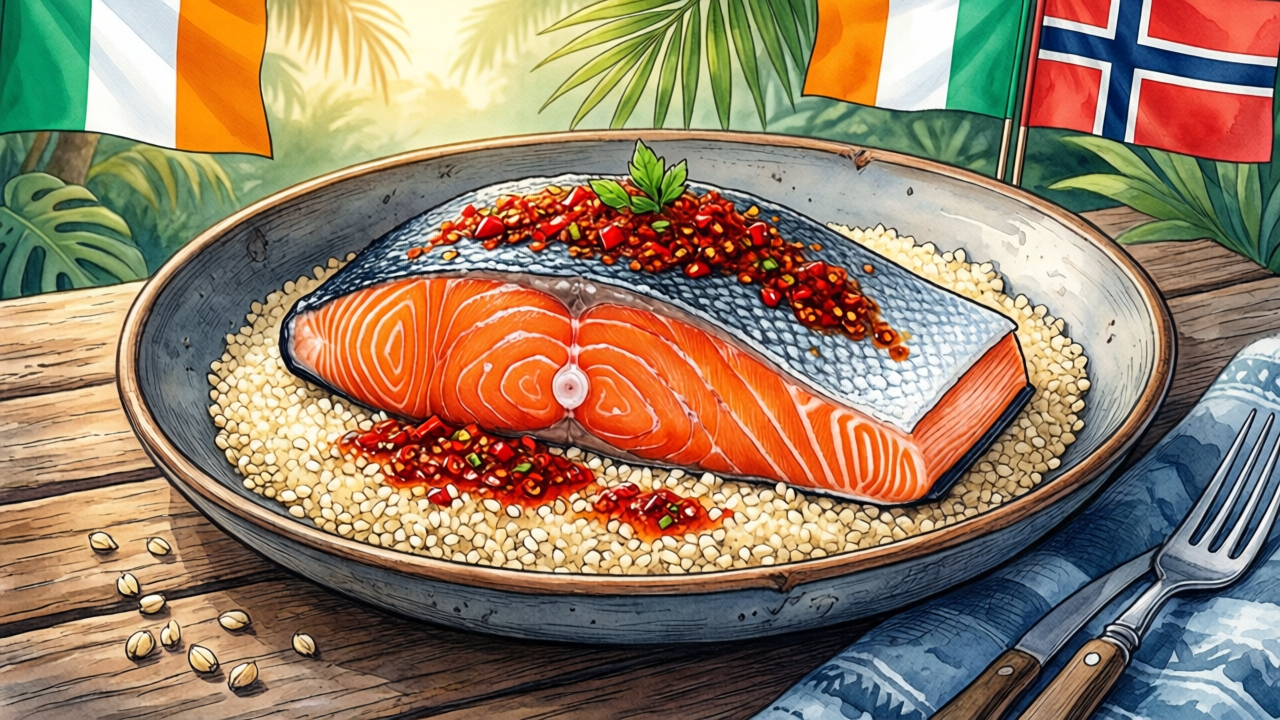
The fusion? Gravlax Kedjenou — cold-cured Norwegian salmon, then tossed in a fiery Ivorian pepper-tomato sauce and served over attiéké, Ivory Coast’s fermented cassava staple that recently joined sake and tom yum on UNESCO’s intangible cultural heritage list. It’s the culinary equivalent of a Haaland free-kick: technically Scandinavian, emotionally West African.
The Matchup
Ivory Coast arrived as 2023 African Cup of Nations champions, though their inability to defend that crown in January raised eyebrows. Under 42-year-old coach Emerse Faé, they’ve rebuilt around a young defensive core — Ghislain Konan, Odilon Kossounou, Wilfried Singo — and are the youngest squad at the tournament. They’ve shown grit throughout the group stage but carry the weight of a nation that’s been knocking on World Cup doors for decades.
Norway, meanwhile, hasn’t been at a World Cup finals since 1998. Not 2002, 2006, 2010, 2014, 2018, or 2022. A 28-year drought ended by a single player: Erling Haaland, who scored a brace on his World Cup debut against Iraq and has been unstoppable throughout. Ståle Solbakken’s fast, flexible system feeds the man who weighs in at 209cm and 105kg like a centre-forward built by a Norwegian engineer. Norway won all three group games and Haaland has already accumulated five goals by this stage.
The tactical battle: Norway’s physicality and Haaland’s aerial dominance against Ivory Coast’s youthful energy and quick transitions. If Ivory Coast can disrupt Norway’s build-up and force errors, they’ve got a chance. But Haaland in the box is a force of nature, and Ivory Coast’s backline hasn’t seen anything like this before.
Gravlax Kedjenou
This recipe takes the Nordic technique of cold-curing and applies it to salmon, then treats it the Ivorian way — with fire, colour, and attitude. The gravlax step gives you that silky, melt-in-the-mouth salmon texture. The kedjenou sauce brings the West African punch. Serve it over attiéké (fermented cassava) if you can find it, or use couscous as a decent stand-in.
Ingredients
For the gravlax cure:
– 1 side of salmon fillet (about 500g), skin-on
– 3 tablespoons sea salt
– 2 tablespoons brown sugar
– 1 bunch fresh dill, chopped (keep some whole sprigs for the cure, chop the rest)
– 1 teaspoon ground white pepper
– Zest of 1 lemon
For the kedjenou sauce:
– 2 tablespoons palm oil (or olive oil with a pinch of turmeric for colour)
– 3 shallots, finely chopped
– 3 garlic cloves, minced
– 2 fresh red chillies, finely chopped (adjust to heat preference)
– 2 tomatoes, deseeded and diced
– 1 green bell pepper, finely diced
– 1 tablespoon fresh ginger, grated
– Juice of 1 lime
– Small bunch of fresh parsley, chopped
– Salt and black pepper to taste
To serve:
– Attiéké (fermented cassava granules) or couscous
– Fresh garden salad with sliced tomatoes and onions
– Lemon wedges
– Extra chopped dill and chilli for garnish
Method
-
Cure the salmon (24-48 hours ahead): Mix the salt, sugar, chopped dill, white pepper, and lemon zest in a bowl. Lay the salmon skin-side down on a sheet of cling film. Spread the cure mixture evenly over the flesh, packing it in. Wrap tightly in the cling film, then place under a weight (a heavy pan works) in the fridge for at least 24 hours — 48 hours if you like it firmer.
-
Prepare the cure: After curing, unwrap the salmon and gently scrape off the cure mixture with a palette knife or the back of a spoon. Rinse briefly under cold water and pat dry with kitchen paper. Slice thinly across the grain — about 3mm thick — or cut into bite-sized chunks if you prefer. Set aside.
-
Make the kedjenou sauce: Heat the palm oil in a heavy-based pan over medium heat. Add the shallots and cook for 3-4 minutes until softened. Add the garlic, chillies, and ginger — cook for another minute until fragrant. This is the moment where the West African flavour profile really kicks in. Don’t rush it.
-
Build the sauce: Add the diced tomatoes and green pepper. Cook for 8-10 minutes, stirring occasionally, until the tomatoes break down and the sauce thickens. The Ivorian technique of kedjenou traditionally involves cooking everything sealed in a clay pot so the vegetables steam in their own juices — our pan method is the urban adaptation.
-
Season: Stir in the lime juice, parsley, and season generously with salt and black pepper. Taste and adjust — it should be bright, spicy, and slightly tangy. If it needs more heat, add another chopped chilli. If it needs more acidity, another squeeze of lime.
-
Combine: Gently fold the sliced gravlax into the warm kedjenou sauce. Don’t cook the salmon — the residual heat from the sauce is enough to warm it through while keeping that silky cured texture. If you overcook gravlax, you’ve just made hot salmon, which is fine but misses the point entirely.
-
Serve: Spoon the attiéké or couscous onto plates, top with the gravlax kedjenou, and scatter with extra dill and chilli. Serve with a simple tomato and onion salad on the side and lemon wedges.
Why It Works
The beauty of this fusion is that both cuisines take something simple and make it extraordinary through technique. Norwegians cure salmon in salt and dill because they have access to the best salmon in the world and figured out the simplest way to celebrate it. Ivorians slow-cook vegetables and protein together because the result is deeper, richer, and more comforting than anything you’d get from boiling things separately.
The cold, sweet, herbal gravlax cuts through the hot, tangy, smoky kedjenou sauce in the same way Norway’s clinical finishing cuts through Ivory Coast’s chaotic energy. Both approaches are valid. Both are delicious. And somewhere in Arlington, Texas, 90,000 people are about to find out which one wins today.
Sources: BBC Sport (Ivory Coast World Cup preview), ESPN (June 30 schedule), TIME (Haaland World Cup coverage), FIFA World Cup 2026 official schedule