WC2026 Kitchen: Norway vs England — Kjøttkaker Pie
Norway and England in the quarterfinals. Two nations whose footballing identities are built on the same foundation: simple, direct, and devastating when they’re on form. Norway arrived at the knockout stage having beaten Brazil 2-1 — the tournament’s biggest upset — and they’ve looked like a team that doesn’t know the meaning of the word “underdog.” England, meanwhile, have the kind of squad that makes managers everywhere sigh with envy, and they’ve been grinding through the group stage with the quiet efficiency of a team that believes it’s entitled to be here.
In the kitchen, these two nations share a different kind of philosophy: comfort food built around meat, potatoes, and a gravy so dark it absorbs mistakes. Norwegian kjøttkaker — the fist-sized beef patties served with brunsaus (dark brown sauce) — are the Scandinavian equivalent of a British meat pie. Both dishes are the culinary equivalent of a firm handshake and a nod.
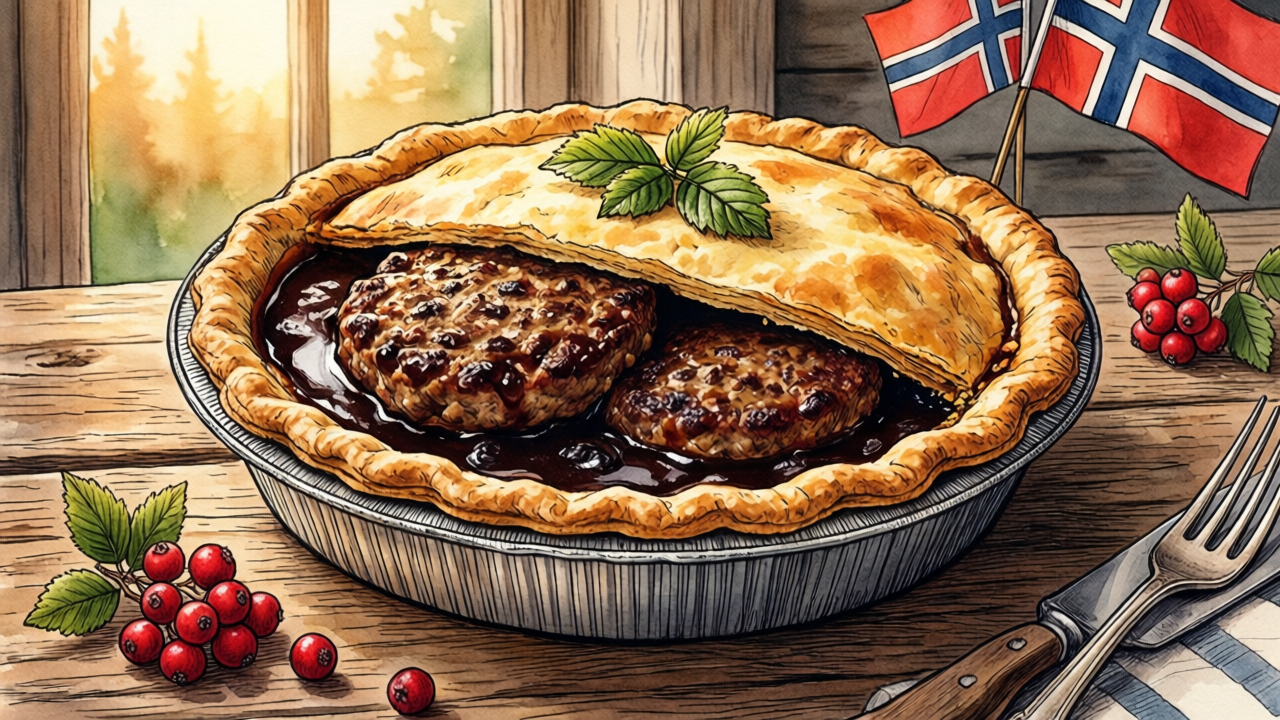
This fusion takes the Norwegian patty and puts it inside the British pastry. The result is Kjøttkaker Pie — a dish that could have been invented in either Oslo or Manchester and nobody would bat an eye.
The Fusion Concept
Norwegian kjøttkaker are the national dish that Norway doesn’t talk about much, because they’re the kind of food that’s too ordinary to boast about. Ground beef, onion, salt, pepper, formed into patties the size of a child’s fist, then pan-fried until browned and smothered in a dark, rich brown sauce. They’re served with mashed potatoes, peas, and lingonberry jam on the side. That’s it. That’s the dish. It’s been served in Norwegian homes since at least the 1970s, popularised by Toro powderbag meals — Norway’s answer to the TV dinner.
The British contribution is the pastry crust and the concept of enclosure. A British meat pie is pastry wrapped around mince and gravy, baked until golden, and eaten with the kind of quiet satisfaction that comes from food that asks nothing of you except that you sit down and eat it.
The fusion is simple: make the kjøttkaker, put them in a pie dish, pour brunost-infused gravy over the top, seal it with British shortcrust pastry, and bake. The brunost — Norwegian brown cheese, caramelised whey, the cheese that has confused food critics worldwide — gives the gravy a sweetness and depth that no British pie has ever achieved. The lingonberry relish on the side provides the acid cut that both cultures understand instinctively.
Ingredients
For the kjøttkaker patties:
– 500g ground beef (medium fat — Norway doesn’t do diet food)
– 1 small onion, finely diced
– 2 tbsp dried breadcrumbs
– 1 egg, lightly beaten
– 1 tsp salt
– ½ tsp black pepper
– 1 tbsp caraway seeds (because akvavit is a way of life)
For the brunost gravy:
– 2 tbsp butter
– 2 tbsp plain flour
– 300ml beef stock
– 200ml milk
– 75g brunost (Norwegian brown cheese), grated — yes, this is essential
– 1 tbsp soy sauce (for depth)
– 1 tsp Worcestershire sauce (for the British half)
– Salt and pepper to taste
For the lingonberry relish:
– 150g lingonberries (frozen is fine)
– 2 tbsp sugar
– 1 tbsp water
– Zest of half a lemon
For the pastry:
– 250g ready-made shortcrust pastry (or 200g flour, 100g butter, pinch of salt)
– 1 egg, beaten (for glazing)
To serve:
– Mashed potatoes (non-negotiable in either country)
– Peas (green or mushy, both are acceptable)
– A drink — aquavit if you’re Norwegian, pint if you’re English
Method
-
Make the patties. Mix the ground beef, diced onion, breadcrumbs, beaten egg, salt, pepper, and caraway seeds in a bowl. Form into 6-8 patties, each about 1.5cm thick and 8cm wide. Pan-fry in a little oil over medium heat for 4-5 minutes each side, until browned but still pink inside. They don’t need to be fully cooked — they’ll finish in the oven.
-
Make the brunost gravy. Melt the butter in a saucepan over medium heat. Whisk in the flour and cook for 2 minutes. Gradually add the beef stock and milk, whisking constantly. Bring to a gentle simmer, then stir in the grated brunost until melted and smooth. The gravy should be thick, glossy, and slightly caramelised. Stir in the soy sauce and Worcestershire sauce. Season to taste. This gravy is the bridge between two nations: dark enough for Britain, sweet enough for Norway.
-
Make the lingonberry relish. Combine the lingonberries, sugar, water, and lemon zest in a small pan. Simmer for 8-10 minutes until the berries burst and the mixture thickens. Set aside to cool. Lingonberries are the tartest, most astringent berries in the Northern Hemisphere, and they’re the flavour that defines Scandinavian summer. If you can’t find them, cranberries will do, though they lack the particular bitterness that makes lingonberries worth the extra effort.
-
Assemble the pie. Arrange the pan-fried kjøttkaker in a pie dish, overlapping slightly. Pour the brunost gravy over the patties until they’re generously coated. Roll out the shortcrust pastry and seal it over the top, crimping the edges. Cut a small steam vent in the centre. Brush the pastry with beaten egg.
-
Bake. Preheat the oven to 200°C (180°C fan). Bake for 25-30 minutes until the pastry is deep golden brown. If the pastry browns too quickly, cover loosely with foil.
-
Serve. Cut into generous portions. Serve with mashed potatoes, peas, and a dollop of lingonberry relish. The relish is not optional — it’s the only thing standing between this dish and a carbohydrate-induced coma.
The first bite is pastry and gravy — British comfort food in its most honest form. The second bite reveals the caraway-spiced meat patty underneath. The third bite brings the caramelised brunost sweetness that no British pie has ever achieved. The lingonberry relish ties it together with a tartness that cuts through the richness.
Norway and England both cook the way they play: methodically, without panache, and with an abundance of potatoes. This dish is the culinary equivalent of a 1-0 quarterfinal — not exciting, but deeply satisfying if you’re the one scoring.
Sources: Norwegian cuisine – Wikipedia, NBC Sports – 2026 World Cup Schedule