Two neighbours, one peninsula, centuries of border disputes, and now they’re meeting on football’s biggest stage. Portugal vs Spain in the Round of 16 — the Iberian Derby at the World Cup, and the third time these two have gone head-to-head at the tournament. They drew 3-3 in a 2018 group stage classic (the match where Portugal needed a last-second header to avoid elimination), and Spain won 1-0 in the 2010 Round of 16 to go on and lift the trophy. This time it’s at AT&T Stadium in Dallas, 2pm local on Monday July 6, and only one advances to the quarterfinals.
From a culinary perspective, Portugal and Spain are the odd couple of European cuisine — they share ingredients (olives, garlic, paprika, cod, potatoes, eggs) but treat them completely differently. The Portuguese went to sea and came back with new spices; the Spanish stayed home and perfected what they had. The result is a food rivalry almost as old as the football one.
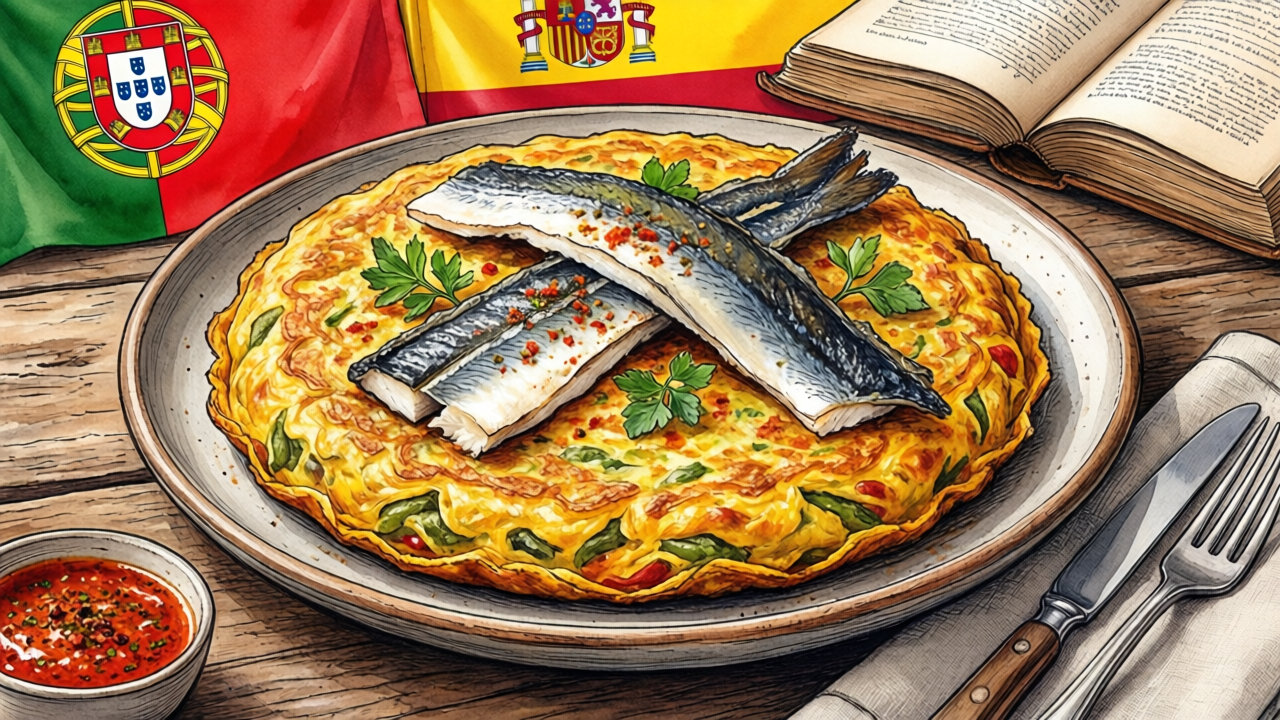
So for today’s Kitchen fusion, I’m combining the two countries’ most iconic egg dishes: Portugal’s bacalhau à Brás (salt cod with shredded potatoes and scrambled eggs) and Spain’s tortilla de patatas (the thick, golden potato omelette found in every bar from Seville to San Sebastián). The result? A Bacalhau Tortilla — Spanish technique, Portuguese soul, with a piri-piri aioli that’ll make neighbours on both sides of the border squint in recognition.
The Concept
Bacalhau à Brás is essentially a deconstructed tortilla — the same core ingredients (potatoes, eggs, onions) but with salt cod folded through, and a looser, fluffier egg texture. The Spanish tortilla, by contrast, is all about structure: a dense, golden cake of potato and egg that holds together when you slice it. What if you take the Spanish method — the careful layering, the patient cooking, the flip — but load it with Portuguese salt cod and a kick of piri-piri?
The answer is a dish that both countries would claim as their own, which is exactly the point.
Ingredients
For the tortilla:
- 250g salt cod fillet (bacalhau), soaked overnight and descaled
- 4 large potatoes (Yukon Gold or similar — waxy, yellow-fleshed)
- 6 eggs
- 1 large onion, thinly sliced
- 2 garlic cloves, finely grated
- 100ml extra virgin olive oil (not cheap — this matters)
- Salt (the cod is already salty, so be careful)
- Black pepper, freshly ground
- A handful of flat-leaf parsley, finely chopped
For the piri-piri aioli:
- 3 egg yolks
- 150ml sunflower oil
- 2–3 piri-piri chillies (or fresh red chillies), deseeded and blended
- 1 garlic clove
- Juice of half a lemon
- 1 tbsp olive oil
- Pinch of salt
Method
Step 1: Prep the cod
After soaking the salt cod overnight (change the water twice), boil it for 8–10 minutes until tender. Drain, cool, then flake it into large shreds, removing any bones as you go. Set aside.
Step 2: Cook the potatoes (the slow way)
Peel and slice the potatoes into thin rounds (about 3mm thick). Heat the olive oil in a large non-stick frying pan (26cm) over medium heat. Add the potatoes and cook gently for 15–20 minutes, turning occasionally, until they’re soft and starting to colour at the edges. Add the sliced onion for the last 8 minutes — you want it soft and sweet, not caramelised.
This is where the Spanish would tell you to be patient. Listen to them. A tortilla rushed is a tortilla ruined.
Step 3: Make the aioli
While the potatoes cook, blend the piri-piri chillies, garlic, and lemon juice into a paste. In a bowl, whisk the egg yolks with a teaspoon of the chilli paste. Slowly drizzle in the sunflower oil (drop by drop at first, then in a thin stream), whisking constantly, until you have a thick mayonnaise. Stir in the olive oil, season to taste, and set aside. Adjust the heat — more or less chilli paste depending on how brave you are.
Step 4: Build the tortilla
Beat the 6 eggs in a large bowl with the grated garlic and chopped parsley. Tip the cooked potatoes and onions into the egg mixture, followed by the flaked salt cod. Toss everything together gently — you want the cod distributed evenly, not clumped in the centre. Season carefully (remember, the cod is already salty).
Pour the entire mixture back into the pan (use a separate, clean non-stick pan if needed). Cook on medium-low heat for 5–6 minutes until the edges are set and the bottom is golden. Flip it — the moment of truth — either with a large plate or, if you’re confident, a confident flick of the wrist. Cook the other side for another 3–4 minutes. You want it firm on the outside but still slightly runny (jocosa) in the centre, the Spanish way.
Step 5: Serve
Leave the tortilla to rest for 5 minutes (it continues to set). Cut into wedges. Serve each portion with a generous spoonful of piri-piri aioli on the side.
Best enjoyed with a glass of something — a Portuguese Vinho Verde or a Spanish Albariño would both work, though I’m told the Dallas stadium bar might offer something more along the lines of a Tex-Mex margarita. Do with that what you will.
Talking Points
- The rivalry: Spain and Portugal have met 98 times. Spain leads the head-to-head (40 wins to 35, with 18 draws), but Portugal has won 7 of their last 10 encounters.
- World Cup history: This is only the third World Cup meeting. The 2018 3-3 draw in Group H remains one of the most dramatic group stage matches ever — Portugal survived thanks to a 92nd-minute header from Ruben Dias.
- The stakes: Winner advances to the quarterfinals. Loser goes home. Iberian derby or not, there are no consolations in knockout football.
- The cod question: Portugal consumes more salt cod per capita than any other nation (about 6kg per person per year). Spain imports most of its bacalhau from Portugal. The rivalry extends to the fishmonger.
Sources: Al Jazeera, Wikipedia (Iberian Derby), Food52 (Bacalhau à Brás)