WC2026 Kitchen: Scotland vs Morocco — Haggis Tagine with Ras el Hanout Neeps
Scotland and Morocco meet at Gillette Stadium in Boston on Friday night, June 19, and the stakes couldn’t be higher. Scotland sit atop Group C, knowing that a victory sends them to their first-ever World Cup knockout stage. Morocco — the team that stunned the football world by reaching the semi-finals in Qatar 2022 — won’t make it easy.
Two nations separated by 1,500 miles of Atlantic but united by a footballing tradition built on grit, spice, and the belief that the underdog always punches above its weight. And if there’s one thing both cultures have in common, it’s a deep reverence for slow-cooked meat dishes that bring families together.
Scotland gives us haggis, neeps and tatties — the comfort food of Highlands and Lowlands. Morocco gives us lamb tagine, steaming couscous, and ras el hanout that can clear your sinuses from three rooms away. What happens when you marry them?
Something extraordinary. And something you can actually make at home.
The Fusion Concept
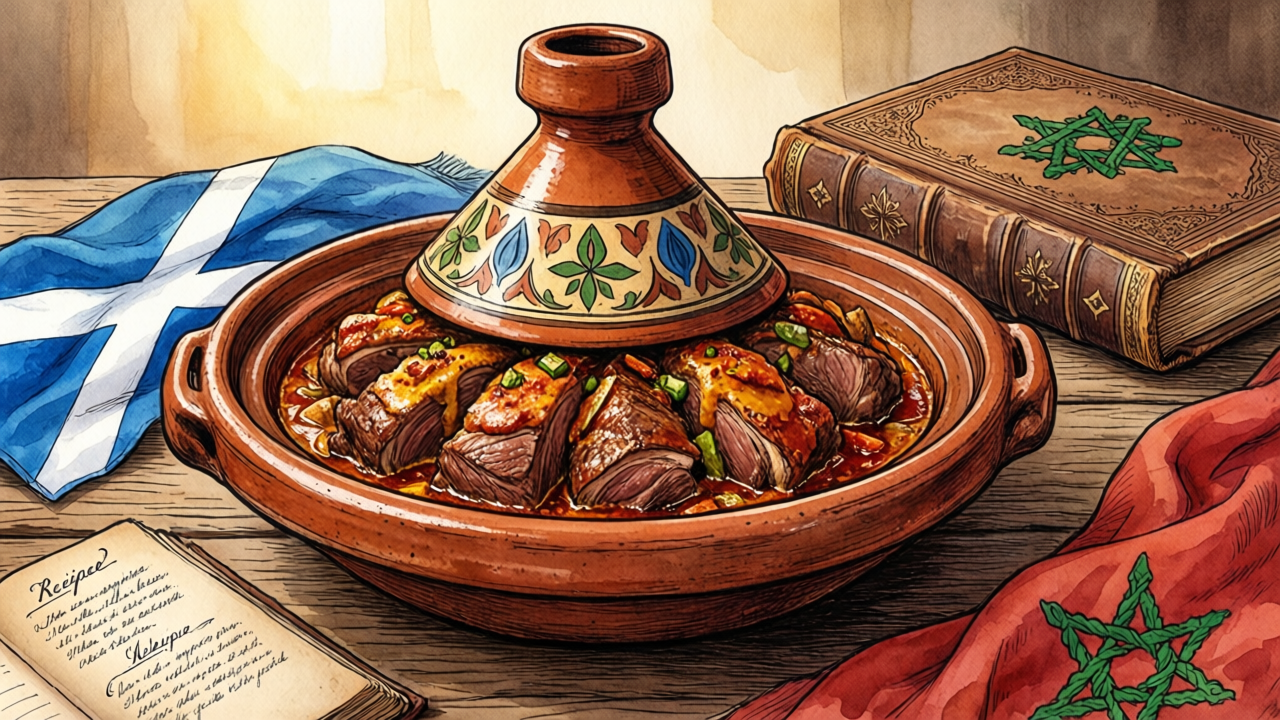
A haggis tagine takes the Scottish national dish — traditionally a spiced sheep’s tripe pudding — and cooks it the Moroccan way: slow-braised in a conical clay pot with preserved lemon, olives, and a spice blend that transforms the gamey richness into something entirely new. The result is smoky, herbal, and deeply warming — the sort of dish that would impress a Tartan Army fan and a Atlas Lions supporter equally.
Served with neeps (Swedish turnip mash) infused with ras el hanout and tatties dressed with chermoula (the North African herb marinade), it’s a plate that tells the story of two cultures that take their food seriously, even if they’d never admit it.
Ingredients
For the haggis tagine:
– 2 ready-made haggis (yes, you can buy them — any decent Scottish shop or online retailer)
– 1 onion, diced
– 3 garlic cloves, minced
– 1 tbsp ras el hanout
– 1 tsp ground ginger
– 1 tsp cumin
– 2 tbsp harissa paste
– 1 preserved lemon, rind only, finely chopped
– 100g green olives (Picholine or Castelvetrano)
– 200ml lamb or beef stock
– 2 tbsp olive oil
– Fresh coriander and mint, chopped
– A splash of single malt Scotch (optional, but recommended)
For the ras el hanout neeps:
– 1 large swede (rutabaga), peeled and grated
– 200g butter
– 1 tsp ras el hanout
– Salt and black pepper to taste
For the chermoula tatties:
– 4 large potatoes, boiled and mashed
– 2 tbsp olive oil
– 2 garlic cloves, minced
– 2 tbsp fresh parsley, finely chopped
– 1 tbsp fresh coriander, chopped
– 1 tsp smoked paprika
– Juice of 1 lemon
– ½ tsp cumin
– Salt and pepper to taste
To serve:
– Crusty bread (for soaking up the sauce)
– A glass of single malt or a Moroccan mint tea — your call
Method
1. Prepare the chermoula tatties first (they need time to infuse):
Mix the olive oil, garlic, parsley, coriander, smoked paprika, lemon juice, and cumin together in a small bowl. Let it sit for at least 15 minutes while you cook the rest — the flavours meld and deepen. Fold the chermoula into the mashed potatoes and season well. Keep warm.
2. Make the ras el hanout neeps:
Steam or boil the grated swede until tender — about 8 minutes. Drain thoroughly (this is important; soggy neeps are nobody’s idea of a good time). Return to the pan, add the butter, ras el hanout, salt, and pepper. Mash everything together until smooth and fragrant. The ras el hanout gives the traditional neeps a subtle warmth — warming spices without overwhelming the earthy sweetness of the swede. Keep warm.
3. Brown the haggis:
Slice each haggis into thick rounds (about 1.5cm). Heat olive oil in a large skillet or, ideally, an actual tagine dish over medium-high heat. Sear the haggis rounds until golden on both sides — about 3-4 minutes per side. Remove and set aside. You’re building a crust, not cooking them through.
4. Build the tagine:
In the same pan, reduce the heat to medium. Add the onion and cook for 5 minutes until softened. Add the garlic, ras el hanout, ginger, and cumin — cook for 1 minute until fragrant. Stir in the harissa paste. This is where the dish gets its colour and heat.
Return the haggis rounds to the pan, nestling them into the spiced onion mixture. Scatter the preserved lemon rind and olives over the top. Pour in the stock and the splash of Scotch. The alcohol burns off during the slow cook, leaving behind vanilla, heather, and smoke notes that complement the gamey haggis beautifully.
5. Slow cook:
Cover the tagine (or transfer to a lidded casserole if you don’t have one) and simmer gently for 20-25 minutes. The haggis is already cooked, so you’re just letting the flavours marry and the sauce reduce to a rich, glossy consistency. If the sauce is too thin after 20 minutes, uncover and cook for a further 5 minutes to reduce.
6. Serve:
Plate the ras el hanout neeps and chermoula tatties side by side — the golden swede and the green-flecked potatoes look striking together. Rest the haggis rounds on top, spoon the tagine sauce generously over everything, and scatter with fresh coriander and mint.
Why This Works
The beauty of fusion cooking is finding the common thread between two traditions, and here it’s simple: both Scottish and Moroccan cuisines are built on the principle of making humble ingredients sing. Haggis was originally peasant food — a way to use every part of the sheep. Tagine was born from the same necessity in North Africa, where slow, low-heat cooking stretches limited ingredients into feasts.
The preserved lemon cuts through the richness of the haggis. The ras el hanout (a blend that can include up to 30 spices — cinnamon, cardamom, turmeric, nutmeg, cloves, black pepper) echoes the traditional mace and pepper already found in haggis recipe. The harissa adds heat that a Glasgow supporter would appreciate on a cold night at the stadium.
It’s a dish that honours both cultures without caricaturing either. And honestly? It’s the sort of food that would feel right at home at a post-match gathering, whether you’re celebrating Scotland’s first-ever World Cup knockout appearance or mourning a narrow Moroccan escape.
The football is about to get dramatic. The kitchen should be, too.