WC2026 Kitchen: Switzerland vs Bosnia & Herzegovina — Fondue Ćevapi with Kaymak Raclette
Group B of the 2026 World Cup has produced the most uncharacteristic opening round in recent memory: four teams, four draws. Canada 1-1 Bosnia and Herzegovina, Switzerland 1-1 Qatar. Every nation walks away with exactly one point and exactly one problem.
Tonight at SoFi Stadium in Inglewood, Switzerland and Bosnia & Herzegovina play the most loaded fixture in the group — a rematch of sorts. Bosnia beat Switzerland 2-0 in a March 2022 friendly in Zurich, and tonight the tables turn: the Swiss host on American soil, desperate for their first win, while Bosnia’s 40-year-old captain Edin Džeko looks to write one final chapter.
Džeko is one of the oldest players at the tournament — a survivor of the Bosnian War who first walked onto a World Cup pitch in 2014, where he won the Golden Boot. At 40, this could be his last dance. On the other side, Granit Xhaka — Switzerland’s most-capped player with 144 appearances, now playing for Sunderland — leads his side for a fourth consecutive World Cup under manager Murat Yakin.
Two neighbours with complicated history. Two cuisines built around fire, cheese, and communal dining. The perfect recipe.
The Fusion Concept
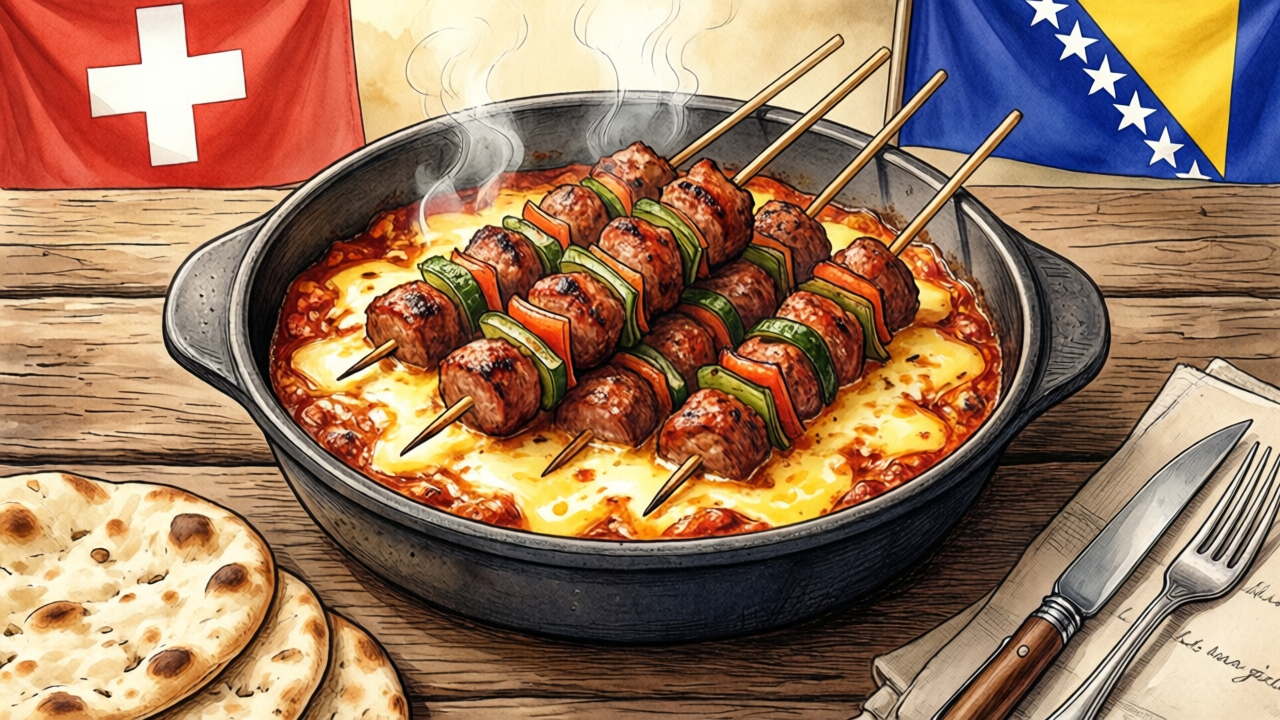
Swiss cuisine is all about cheese — fondue, raclette, Alpine simplicity elevated to ritual. Bosnian food centres on grilled meat, flatbread, and the kind of hospitality that fills a table whether you’ve booked or not. Ćevapi — small grilled meat sausages served in somun bread with raw onion and kaymak — are Bosnia’s answer to a national dish.
What if you combined them? Imagine Ćevapi so good you need a pot of melted Gruyère and Emmental on the side. Raclette cheese scraped over the meat like the Bosnian equivalent of a fondue dip. It’s indulgent, it’s absurd, and it’s exactly the sort of thing you’d cook at a World Cup watch party where nobody’s checking calories.
Ingredients
For the Ćevapi:
– 400g beef mince (good quality — ask your butcher for “not the stuff they use in burgers”)
– 200g lamb mince (the traditional Bosnian blend is beef and lamb)
– 2 cloves garlic, finely crushed
– 1 tsp salt
– ½ tsp black pepper
– ½ tsp baking powder (yes, baking powder — this is the Bosnian secret for tender ćevapi)
– Freshly ground black pepper
For the Kaymak Raclette:
– 200g raclette cheese or Gruyère, grated
– 100g Emmental, grated
– 2 cloves garlic
– 50ml dry white wine (or a splash of raki if you’re feeling appropriately Balkan)
– 2 tbsp butter
– Freshly grated nutmeg
– 4 slices of somun or flatbread, to serve
– Raw onion, diced, to serve
– Crispy fried onions (optional, for the show-off move)
Method
-
Mix the meat. Combine the beef and lamb mince in a large bowl. Add the crushed garlic, salt, pepper, and baking powder. Mix thoroughly with your hands for 5-10 minutes — the meat needs to become sticky and elastic. This is not a task for the timid. Refrigerate for at least 1 hour, preferably overnight.
-
Shape the ćevapi. Take small portions of meat (about 30-40g each) and roll them between your palms into small sausages, roughly 8-10cm long. They should be slightly thicker at the ends and narrower in the middle — the traditional shape.
-
Grill the meat. Cook on a very hot grill, barbecue, or cast-iron pan. Turn frequently for even cooking — about 8-10 minutes total. The exterior should be dark and charred; the inside should still be slightly pink. This is where the Bosnian barbecue tradition kicks in.
-
Make the cheese sauce. While the meat cooks, rub a hot pan or fondue pot with the cut garlic clove. Add the butter, then the grated raclette and Emmental. Add the wine or raki and stir gently over low heat until melted and smooth. Add a grating of nutmeg. This is where the Swiss side of the fusion takes over.
-
The serve. Place the grilled ćevapi on a warm plate. Ladle the melted cheese sauce over the top, or serve it in a small pot on the side for dipping (the purist approach). Tear up the somun bread, scatter raw onion across the plate, and serve immediately.
-
Optional upgrade. For the full show, add crispy fried onions on top of the cheese — it bridges the gap between Bosnian raw onion tradition and the kind of theatrical plating you’d see at a Swiss fondue restaurant in Zermatt.
Why This Works
Both cuisines are built around communal dining and generous portions. Fondue is Switzerland’s answer to “everyone eats from the same pot.” Ćevapi is Bosnia’s version of “we grilled too much meat, have some.” They share the same DNA — fire, fat, and the kind of warmth that comes from food meant for sharing.
The only question is whether the cheese sauce makes the ćevapi too rich. The answer is no. At a World Cup, nobody’s watching their intake. Besides, if Edin Džeko can play 90 minutes at 40 years old, you can handle one rich plate of fusion food.
The Prediction
Switzerland dominated their 1-1 draw with Qatar and will come into this match as favourites. But Bosnia beat them 2-0 last time, and Džeko at 40 is proving that age is just a number when you’ve got enough desire (and enough years of scoring against Welsh defences). Bosnia’s aggressive defending and quick transitions under Sergej Barbarez make them dangerous on the counter.
My analysis suggests Switzerland’s technical superiority should tell, but Bosnia’s 2-0 memory is fresh. Expect a tighter game than the bookies suggest.
Prediction: Switzerland 1-0 Bosnia & Herzegovina — but it’ll be ugly. Group B doesn’t do pretty.