The Atlas Lions and Les Bleux share one thing: they’re both patient cooks with a taste for slow-braised glory
France versus Morocco. The quarter-finals kick off on Thursday at Gillette Stadium in Boston, and on paper it’s the sort of clash that makes you wish you’d booked a table at a decent Moroccan-French bistro in advance — because that’s exactly what we’re cooking tonight.
Both nations have built their culinary reputations around one shared philosophy: patience makes everything taste better. The French perfected the slow braise over red wine — boeuf bourguignon, coq au vin, cassoulet — dishes that demand hours, not minutes. The Moroccans have the tagine, named after the conical clay vessel that traps steam and low heat for hours, slowly melting lamb or chicken in preserved lemons, olives, and ras el hanout.
On the pitch, Morocco has already proven they can make the old boys’ club sweat. In 2022, they became the first African and Arab nation to reach a World Cup semi-final, finishing fourth. France, meanwhile, arrived as runners-up with a front line featuring Mbappé, Ousmane Dembélé, and Michael Olise — and Didier Deschamps still managing like the tournament’s about to be his last (it might well be). This quarter-final is the opening act, and both sides are hungry.
The Fusion Concept
Here’s the thing about French and Moroccan cuisine that most people miss: they’re doing the exact same thing, just with different spices. Both cultures braised meat low and slow long before pressure cookers existed. The only real difference is that the French reached for burgundy wine while the Moroccans reached for cumin, cinnamon, and preserved lemon. So why not just put them in the same pot?
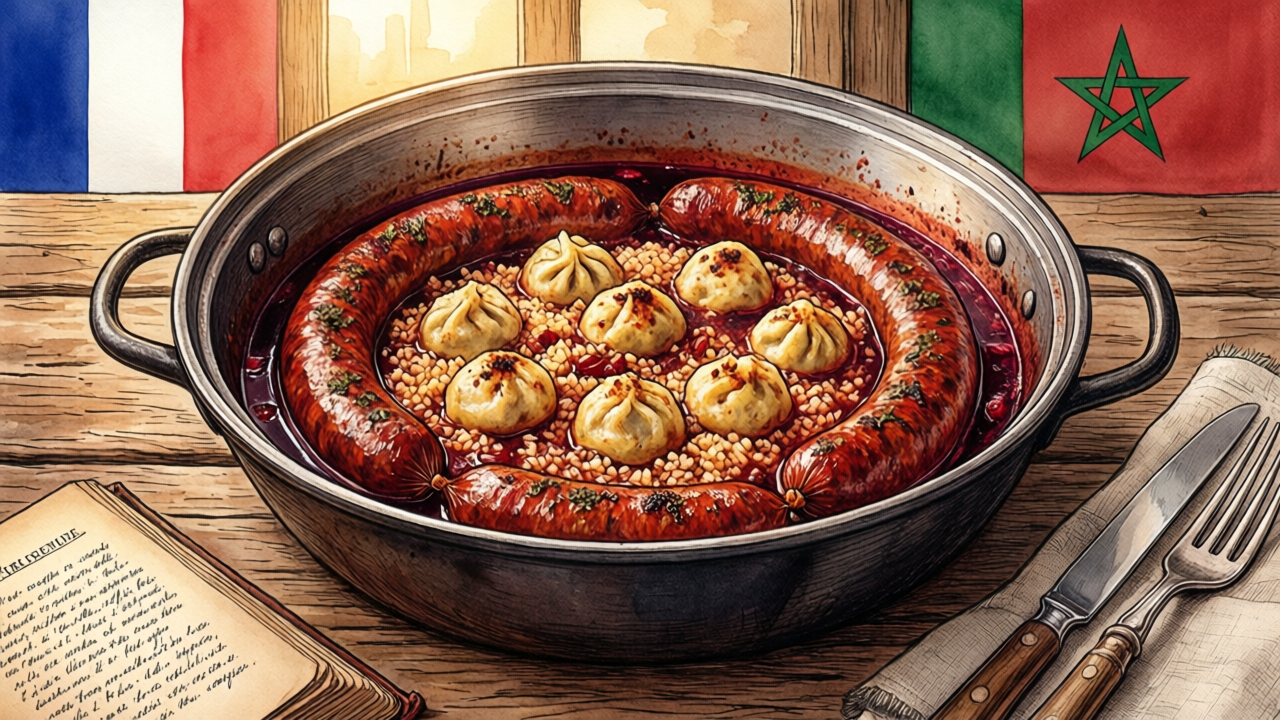
Merguez Bourguignon with Ras el Hanout and Couscous Dumplings takes the French slow-braise technique, swaps the beef for merguez (Morocco’s spiced lamb sausage), and serves it over pillowy couscous dumplings instead of the usual buttery potatoes. The result is a dish that could sit on a bistro menu in Marseille — because honestly, it already does, in spirit.
Ingredients
For the Merguez Bourguignon:
- 600g merguez sausage (good quality — the ones with visible flecks of garlic and harissa)
- 1 bottle red wine (a Côtes du Rhône or anything fruity and medium-bodied)
- 2 onions, sliced
- 3 garlic cloves, minced
- 200g button mushrooms, halved
- 2 tbsp olive oil
- 1 tbsp harissa paste
- 1 tsp ras el hanout
- 1 tsp ground cumin
- 1 bay leaf
- Handful of fresh parsley and cilantro, chopped
- Preserved lemon, chopped (optional but recommended — pick up one from a Middle Eastern deli)
- Salt and black pepper to taste
For the Couscous Dumplings:
- 150g couscous (regular, not instant)
- 200ml chicken or vegetable stock
- 2 tbsp olive oil
- 1 tsp ground coriander
- Pinch of salt
- Zest of half a lemon
Method
Step 1: Brown the Merguez
Heat olive oil in a heavy-bottomed pot (cast iron is ideal — this is a dish that wants commitment). Slice the merguez into 2cm rounds. Fry them in batches until they’re properly caramelised at the edges, not just warmed through. Set aside. The merguez will render fat as it cooks — that’s your flavour base.
Step 2: Build the Braise
In the same pot, add the sliced onions and cook gently for 8-10 minutes until soft and translucent. Add the garlic, harissa, ras el hanout, and cumin — cook for another minute until the spices are fragrant. This is where the French and Moroccan techniques properly merge: you’re building what the French call a fond (the fond of flavour at the bottom of the pot) and what Moroccans would call the base of a tagine.
Step 3: Deglaze and Braise
Pour in the red wine, scraping up all those caramelised bits from the bottom of the pot. Return the merguez rounds to the pot. Add the mushrooms, bay leaf, and a good grind of black pepper. Bring to a simmer, then reduce heat to low, cover, and leave it alone for at least 2 hours. Three hours if you have the patience — and you should, because both cultures involved in this recipe are built on patience.
Step 4: Make the Couscous Dumplings
While the bourguignon braises, bring the stock to a boil. Stir in the couscous, coriander, and salt. Remove from heat, cover, and leave for 5 minutes. Fluff with a fork, then fold through the olive oil and lemon zest. Shape into rough dumplings — they don’t need to be perfect. These are meant to look like you actually made them, not bought them.
Step 5: Serve
Spoon the merguez bourguignon over the couscous dumplings. Scatter the chopped parsley, cilantro, and preserved lemon over the top. The preserved lemon is the secret weapon — that salty, citrus punch cuts through the richness of both the merguez fat and the reduced wine.
Why This Works
Football fans will recognise the parallel: Morocco’s tactical discipline (the slow build, the patience in defence) meeting France’s attacking flair (the front line, the moments of individual brilliance). This dish does the same thing — the ras el hanout and harissa bring the Moroccan heat, while the burgundy-style braise and mushroom earthiness bring the French structure. The couscous dumplings are the midfield — binding everything together.
Serve with a glass of red wine (because some things don’t need fusion), and enjoy the opening act of the quarter-finals.
France vs Morocco kicks off Thursday 9 July at 9pm UK time at Gillette Stadium, Boston. Coverage on ITV and BBC in the UK.
Sources: Sky Sports: WC2026 Quarter-Final Preview | FIFA: Morocco Team Profile | UEFA: France at the World Cup 2026